5世纪印度笈多风格石雕佛首(克利夫兰艺术博物馆)
尺寸:30.6 x 16.6 cm
年代:5世纪
质地:砂岩石雕
风格:印度笈多
来源:克利夫兰艺术博物馆
参阅:外部链接
鉴赏:
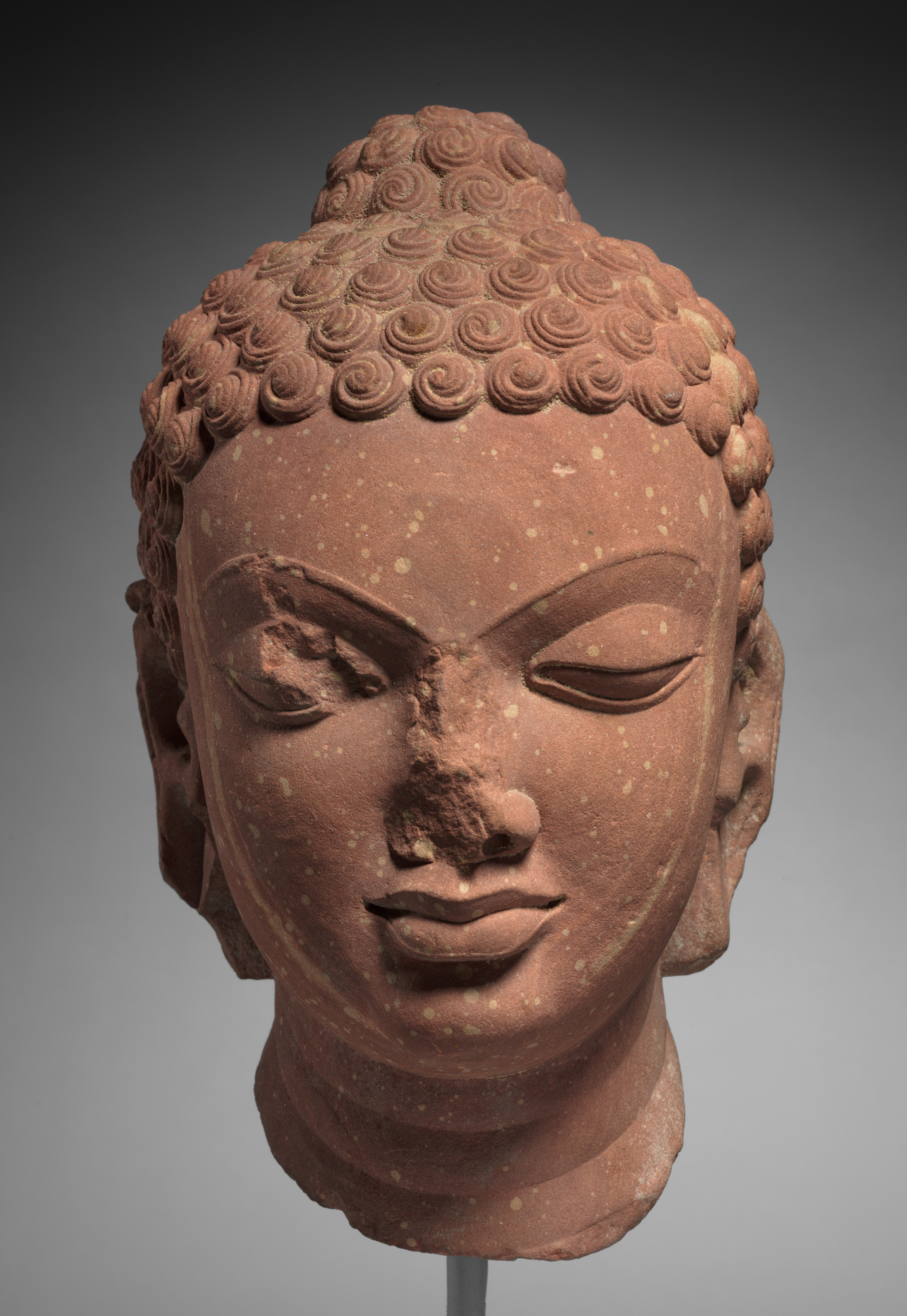
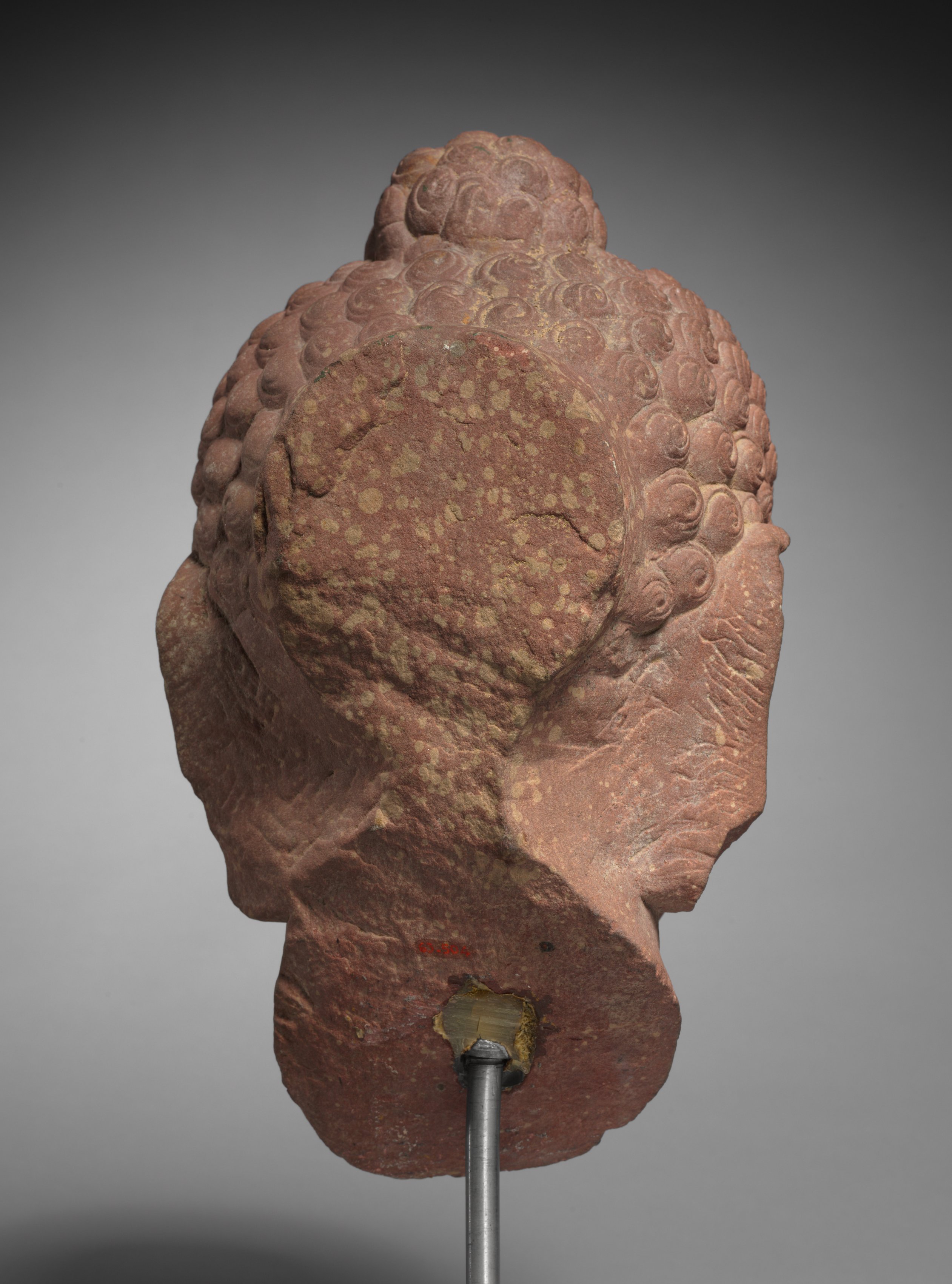 Head of Buddha
400s CE
Northern India, Uttar Pradesh, Mathura
The brows arch with tension and alertness, though the lids are half closed. Short curls cover his head and cranial protuberance, which during this period came to be interpreted as a mark of one who has reached enlightenment, his state of awareness having surpassed the boundaries of an ordinary human being. Sculptors working during the time when kings of the Gupta dynasty (c. 319–550 CE) ruled northern India achieved a balance between fleshy volumes and idealized linear features. This balance led scholars to consider the Gupta period to be a “classical” age of Indian art.