北魏正光五年(524年)弥勒佛立像鎏金青铜祭坛(纽约大都会博物馆)
尺寸:H. 76.8 cm; W. 40.6 cm; D. 24.8 cm
年代:北魏正光五年(524年)
质地:青铜鎏金
风格:中原
备注:有铭文:“牛猷为亡儿造金铜弥勒像”
来源:纽约大都会博物馆
参阅:外部链接
鉴赏:
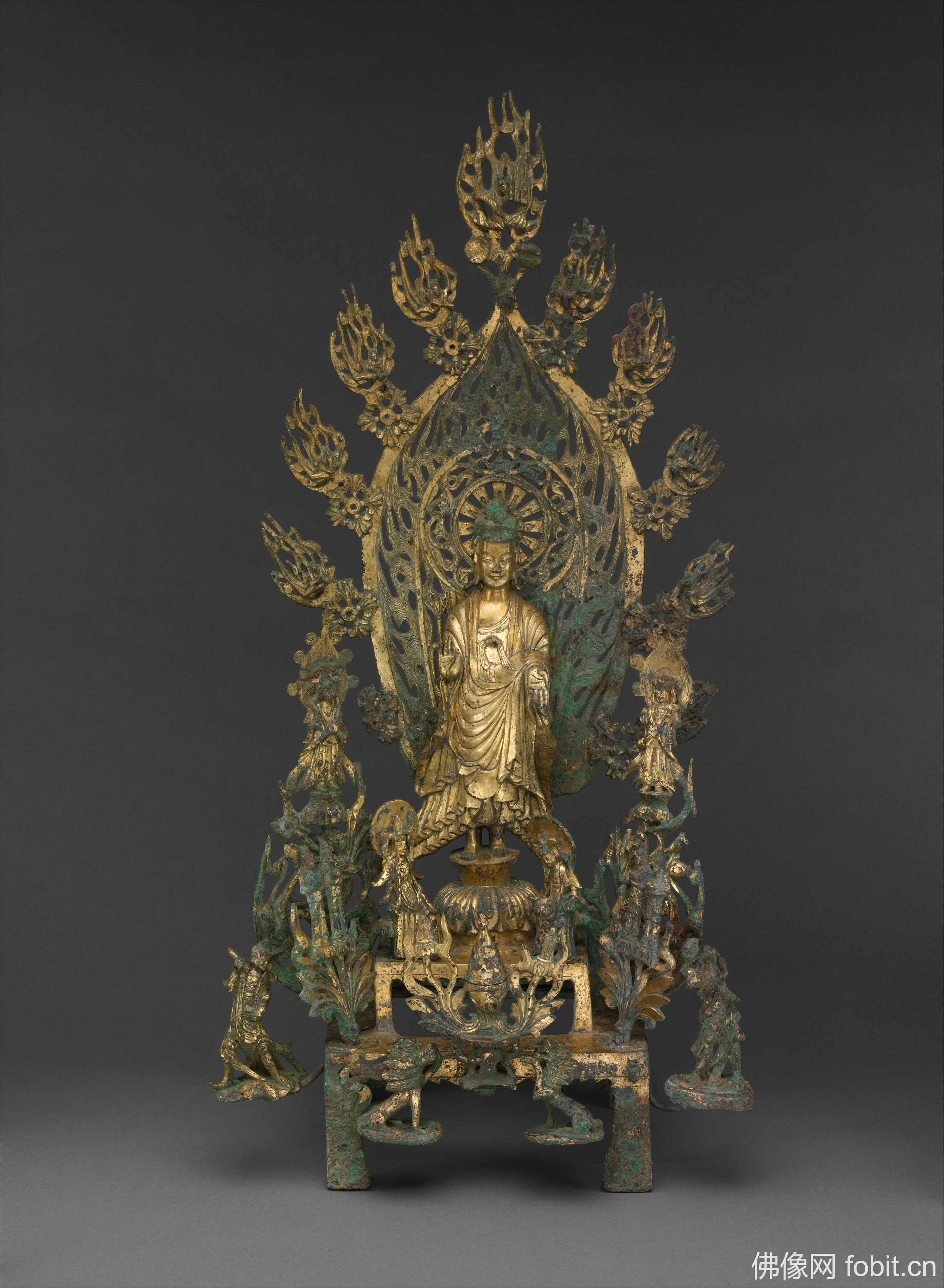
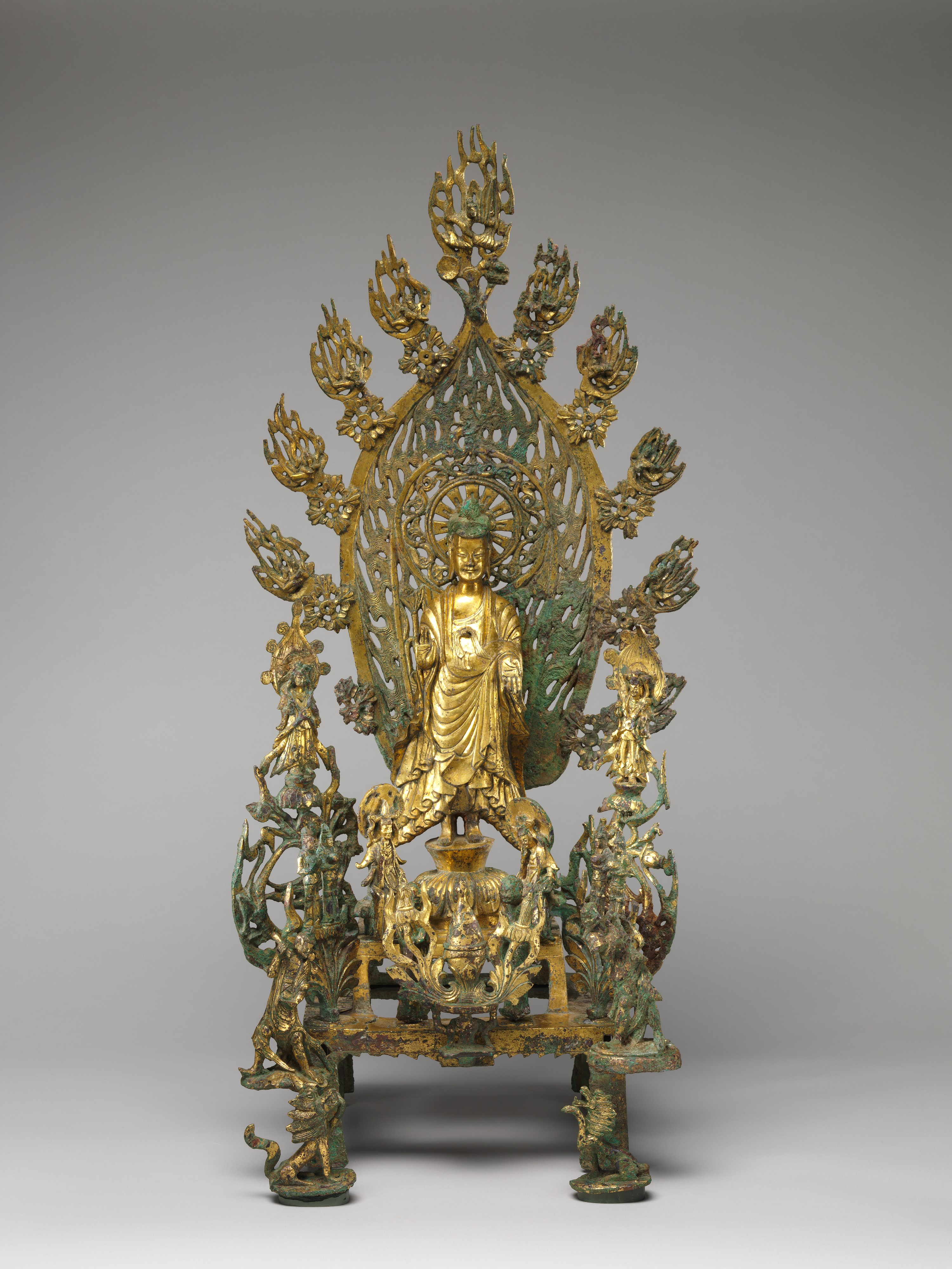
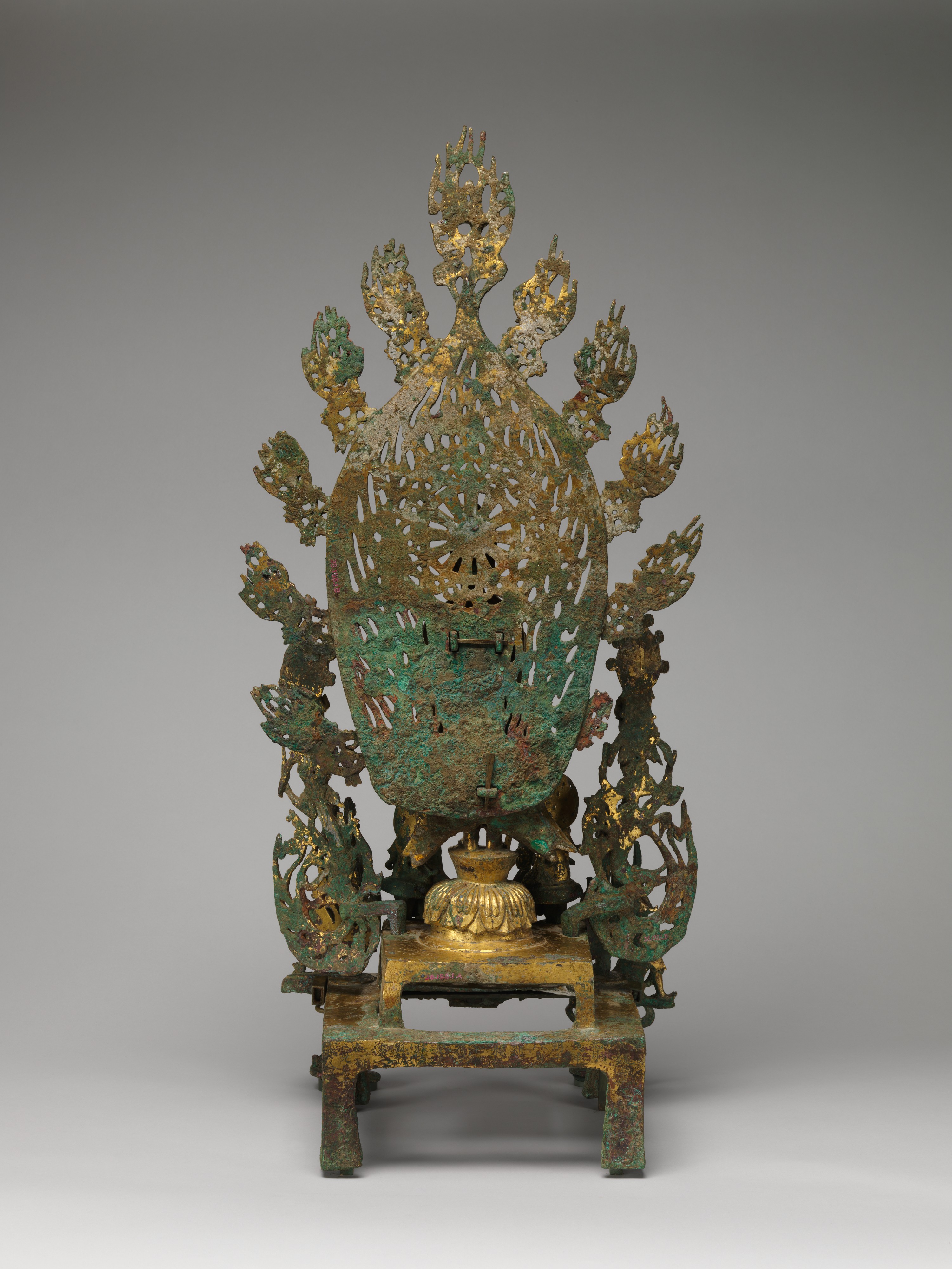
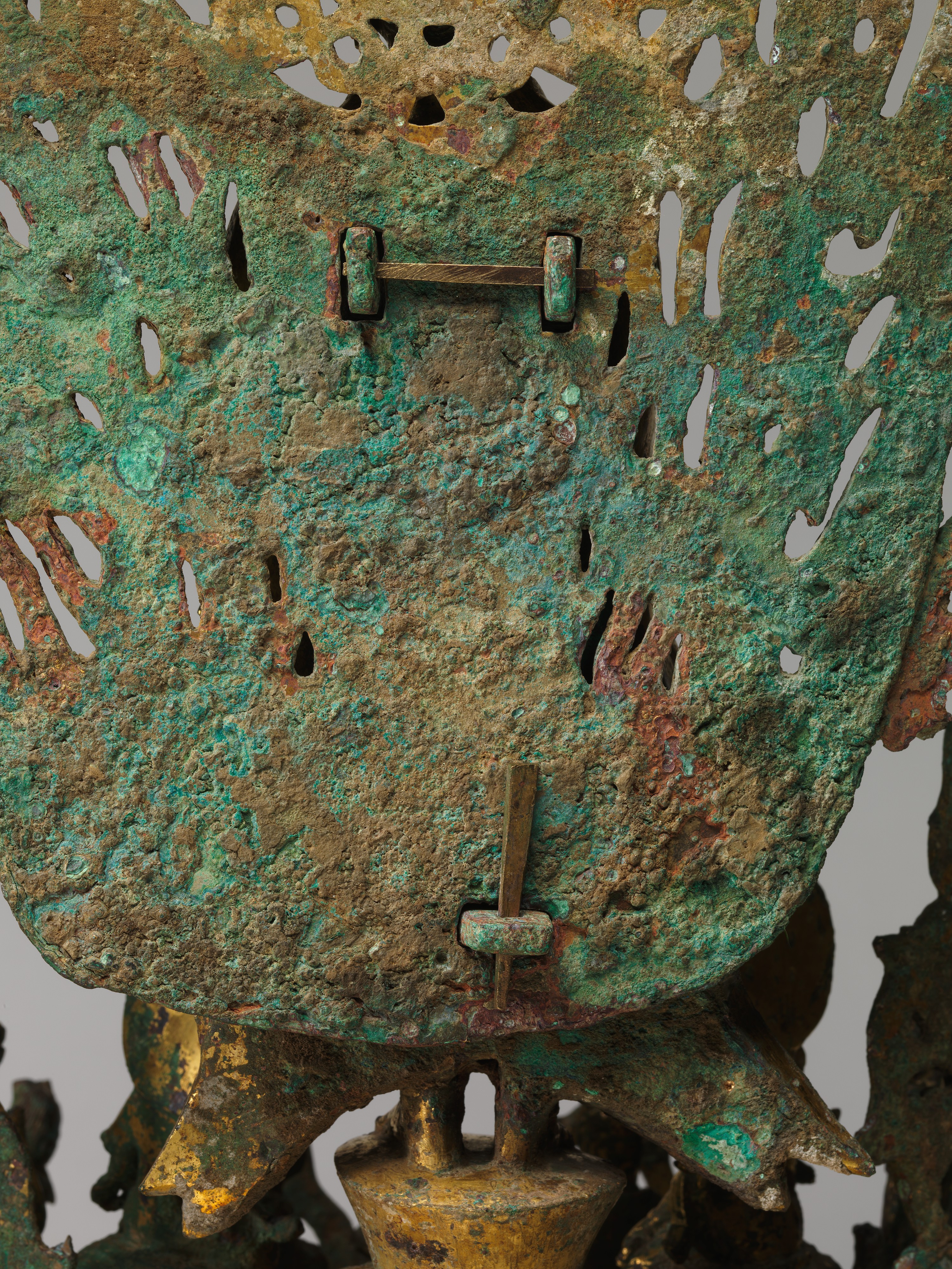
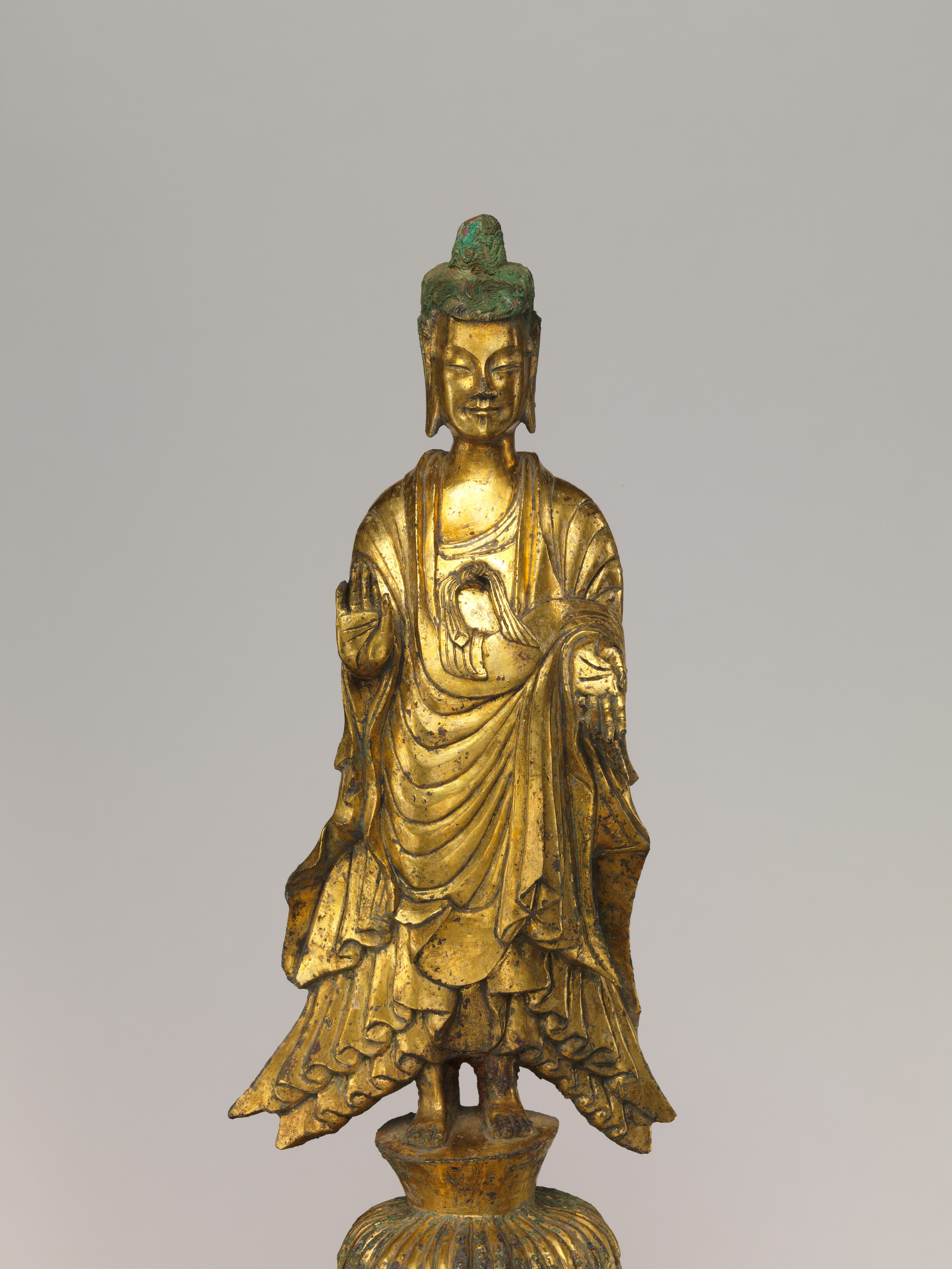
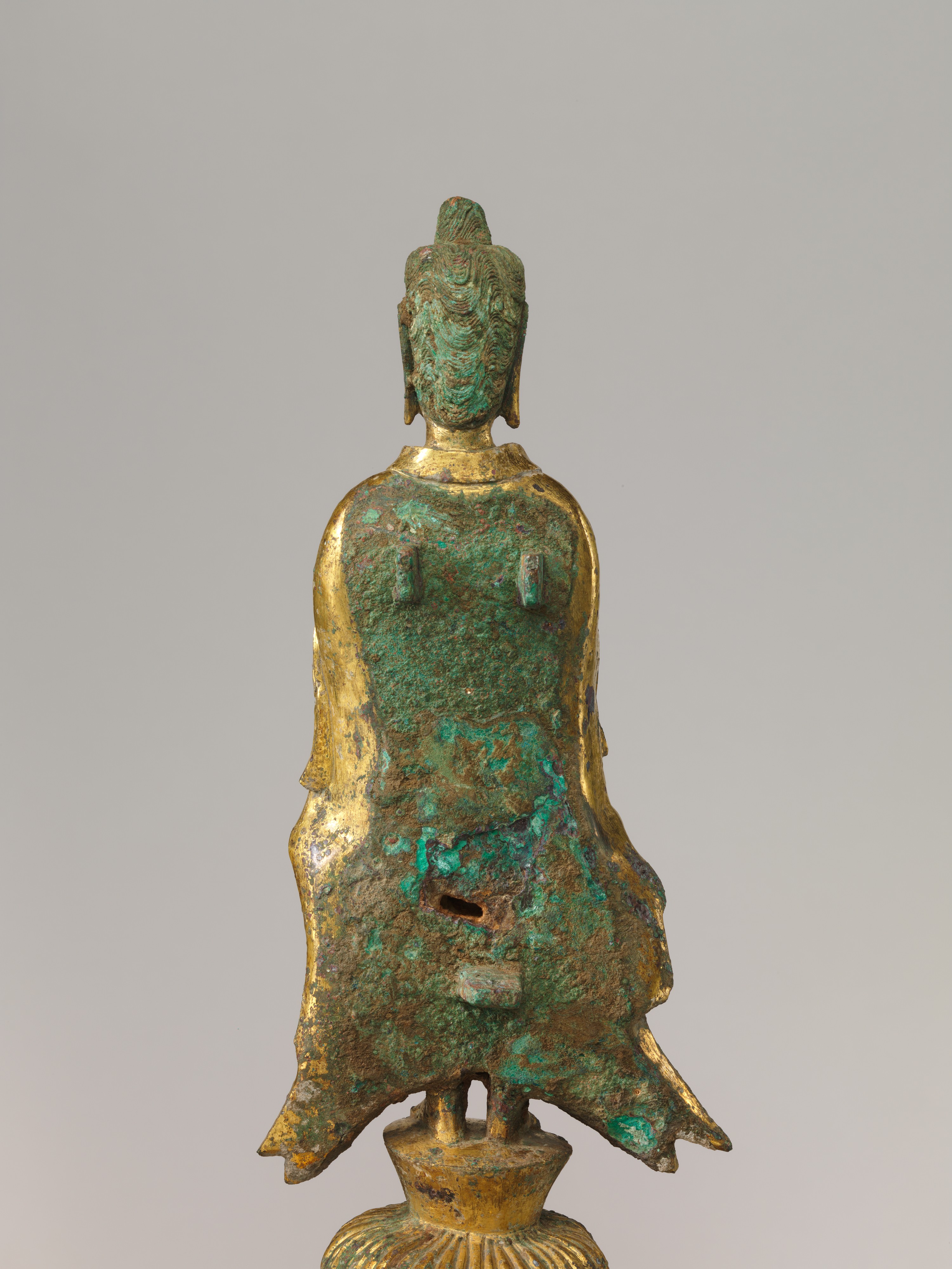
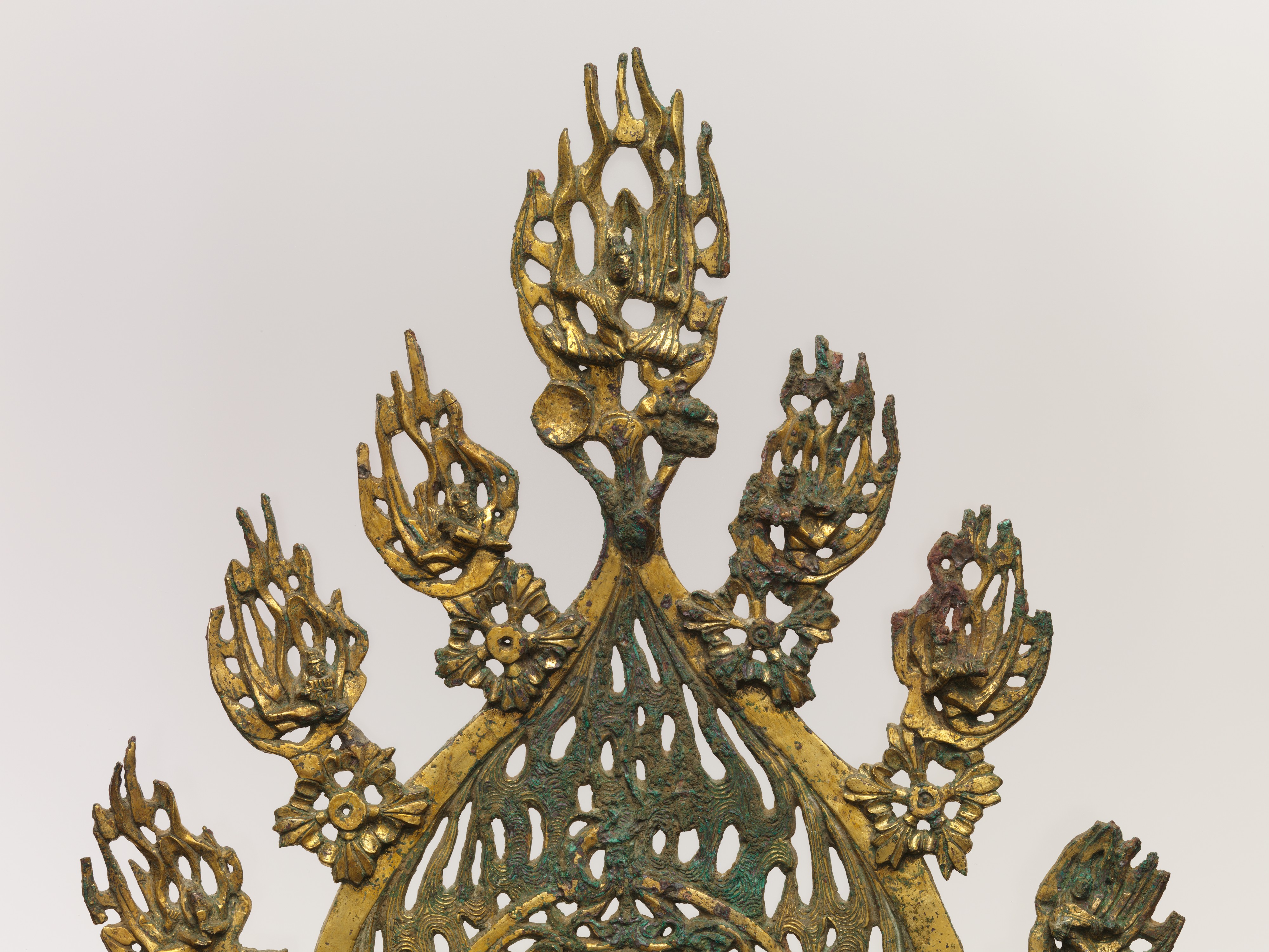
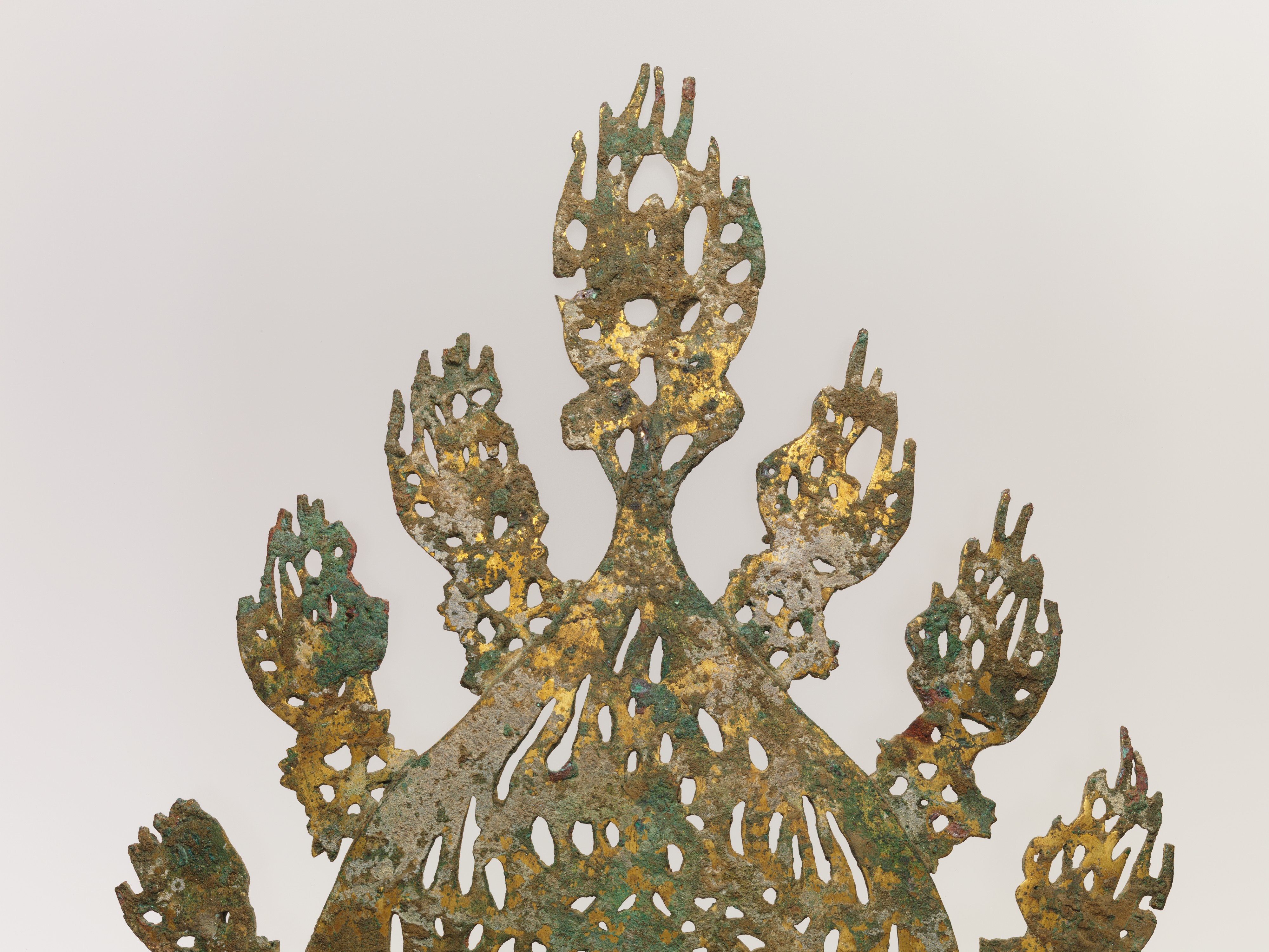
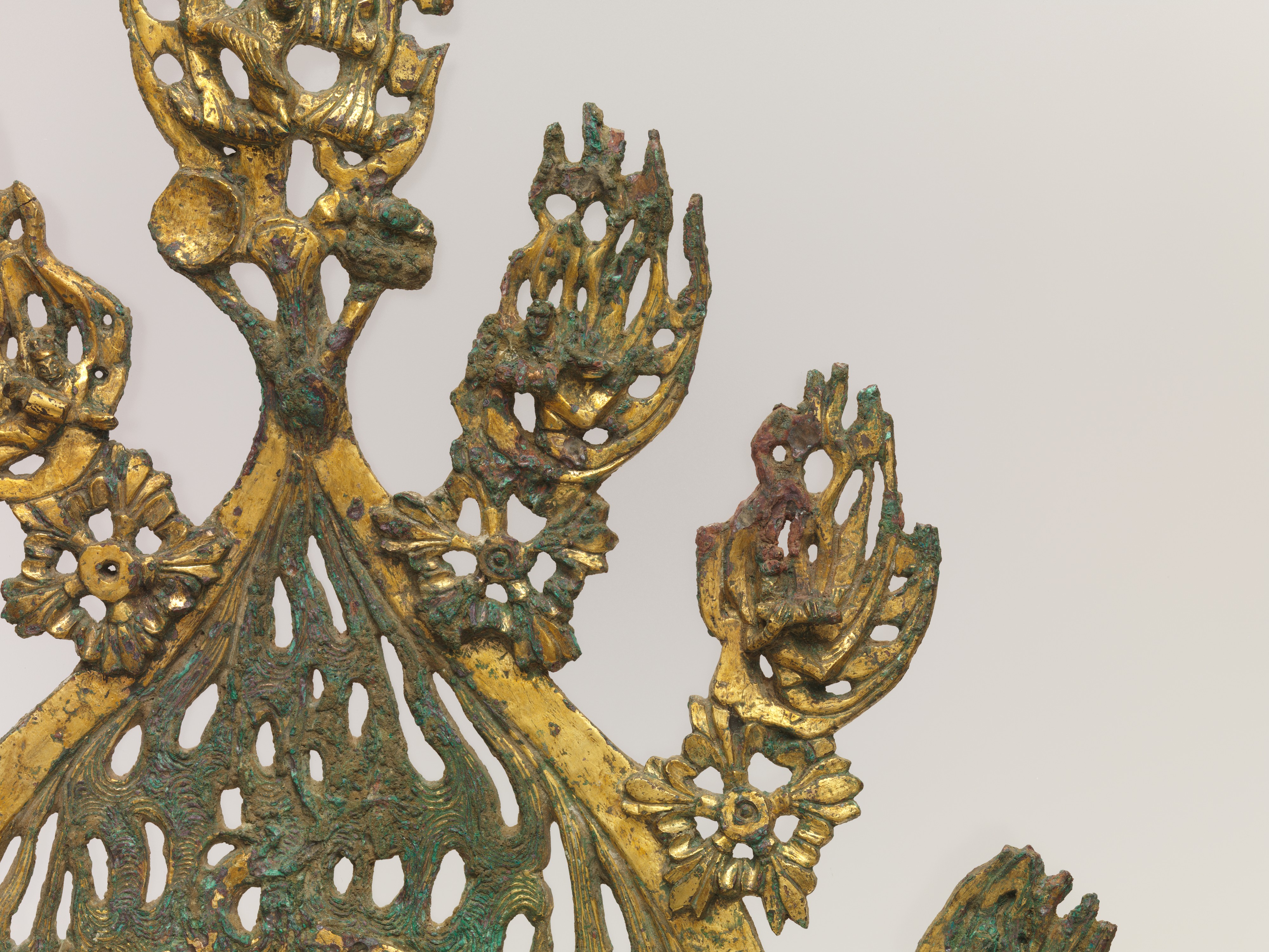
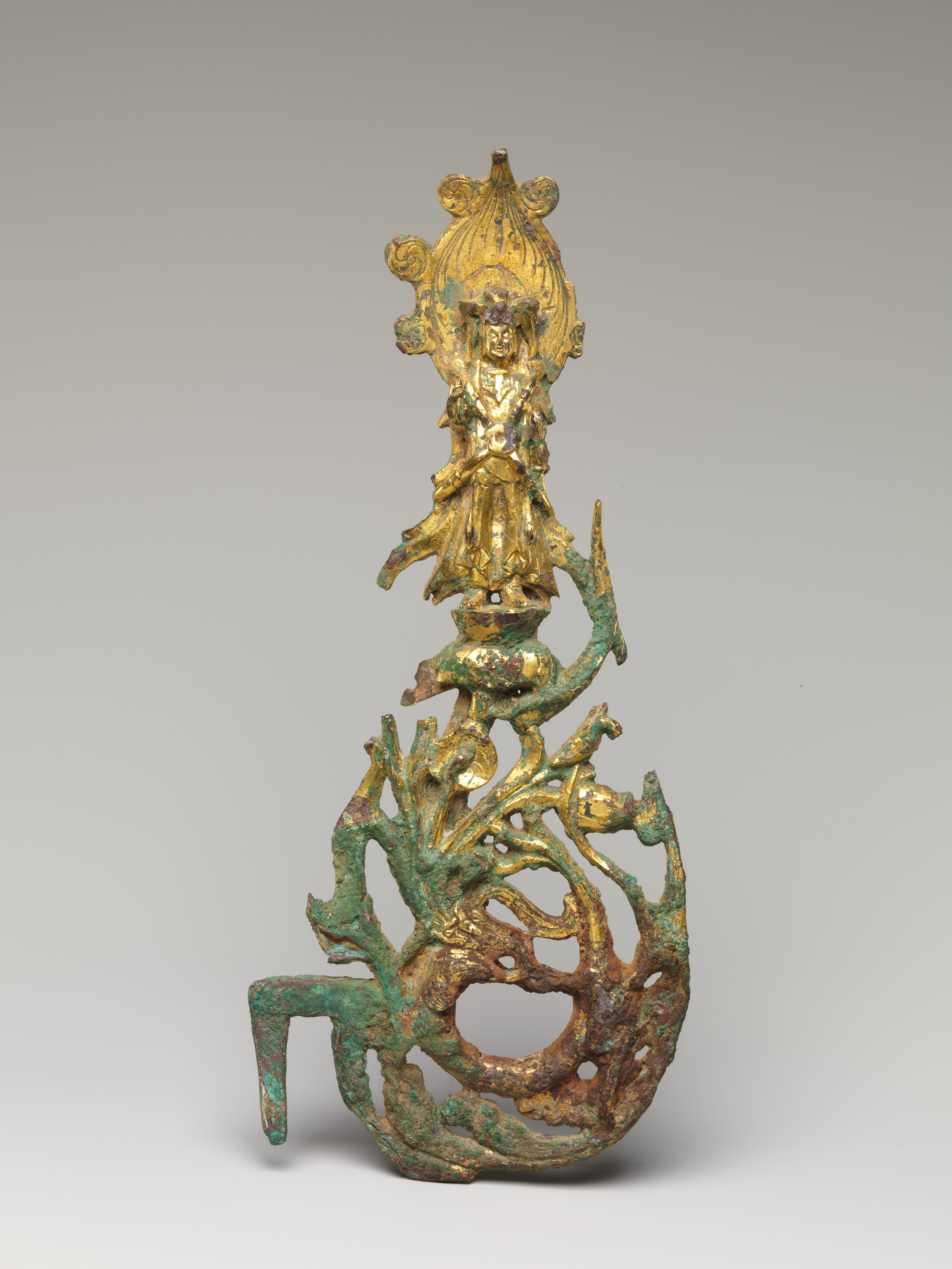
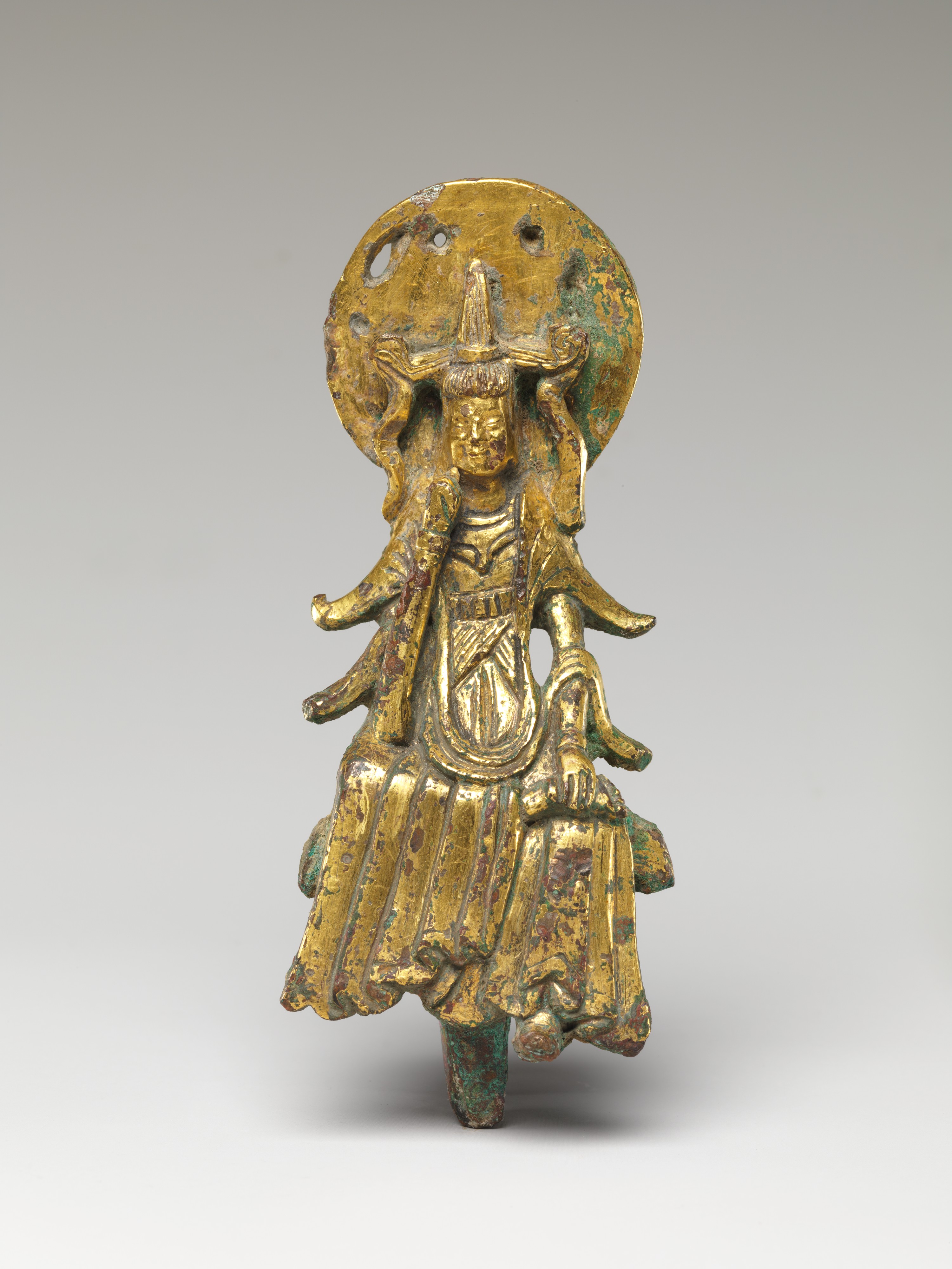
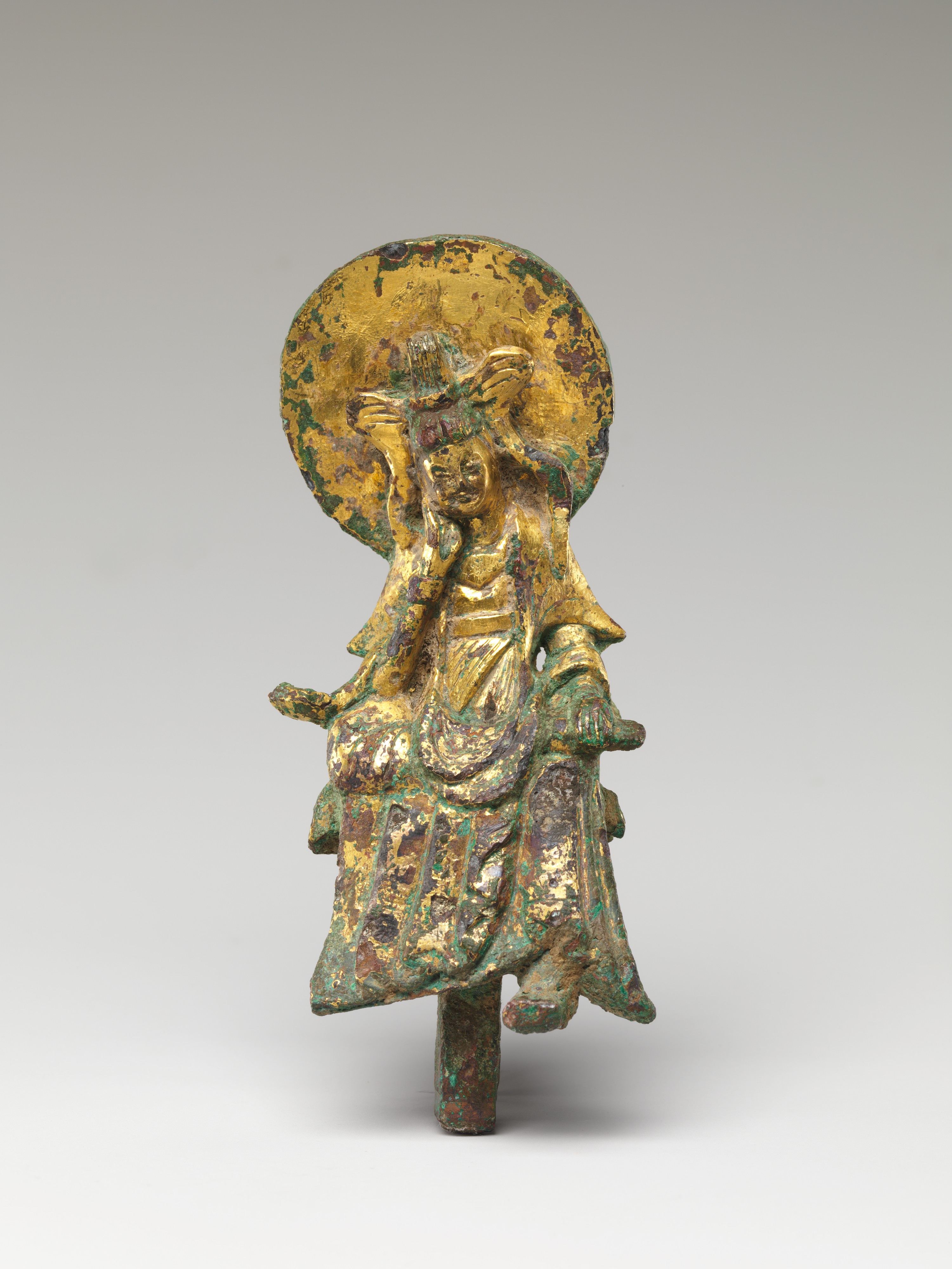
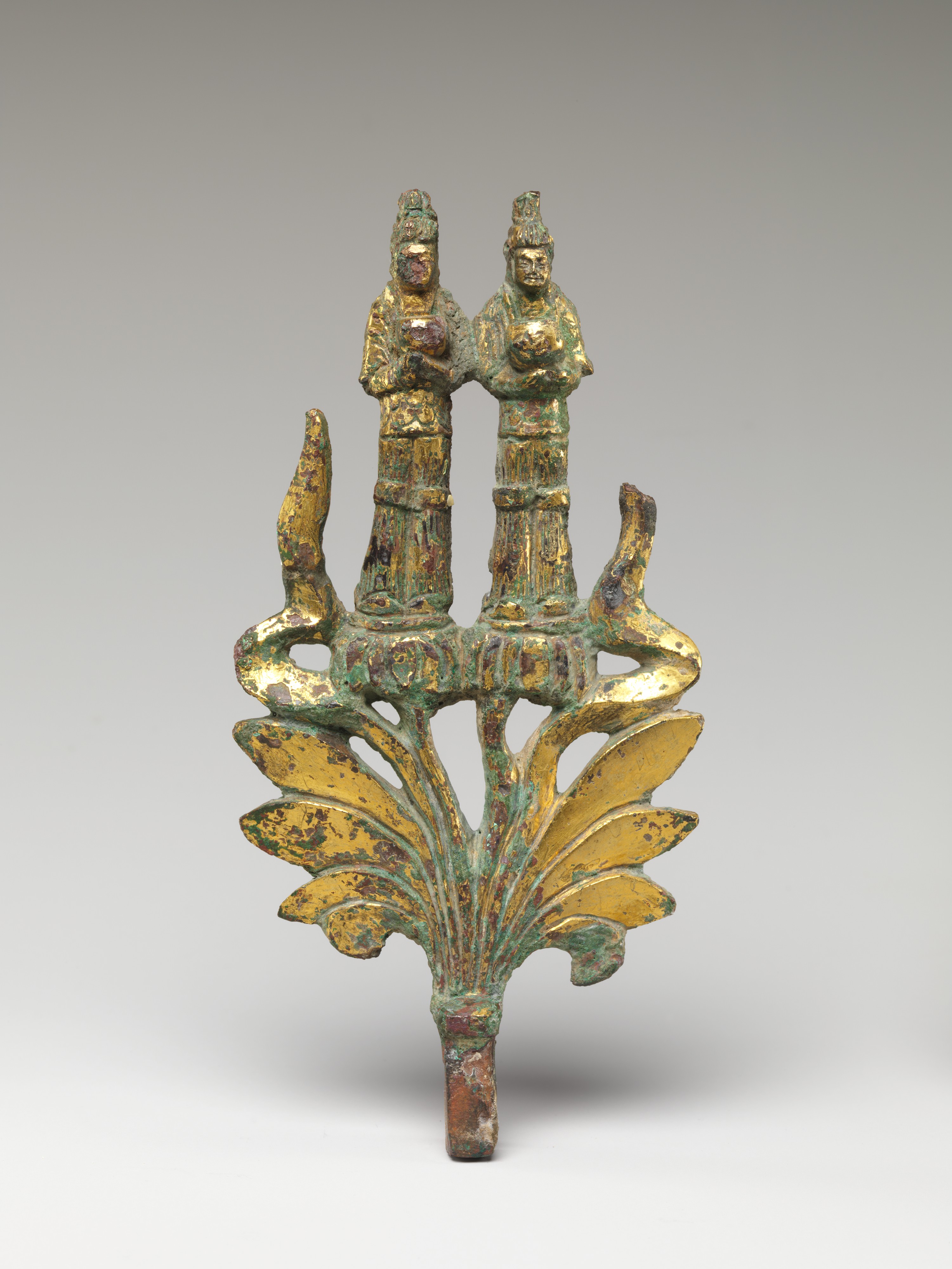
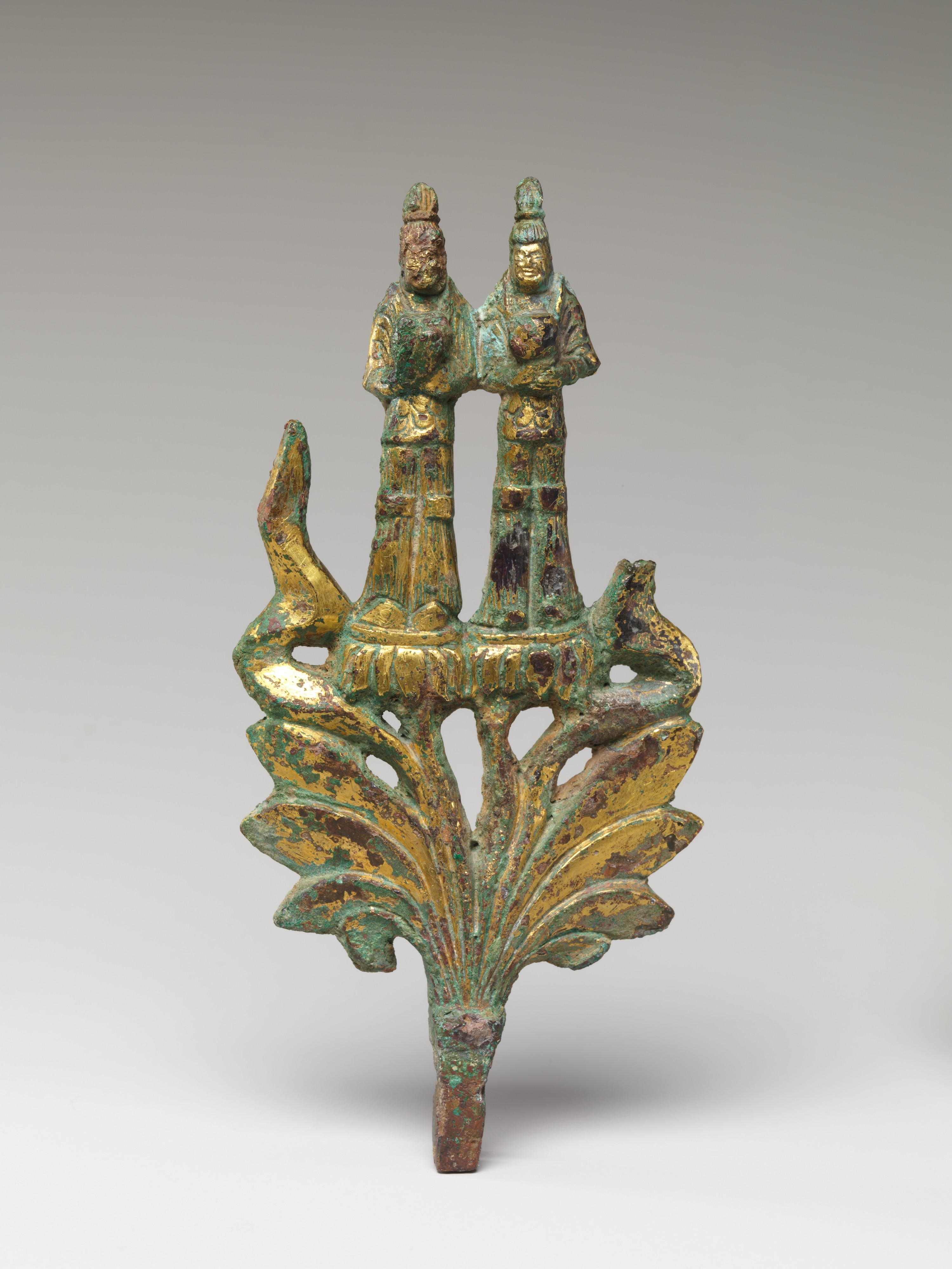
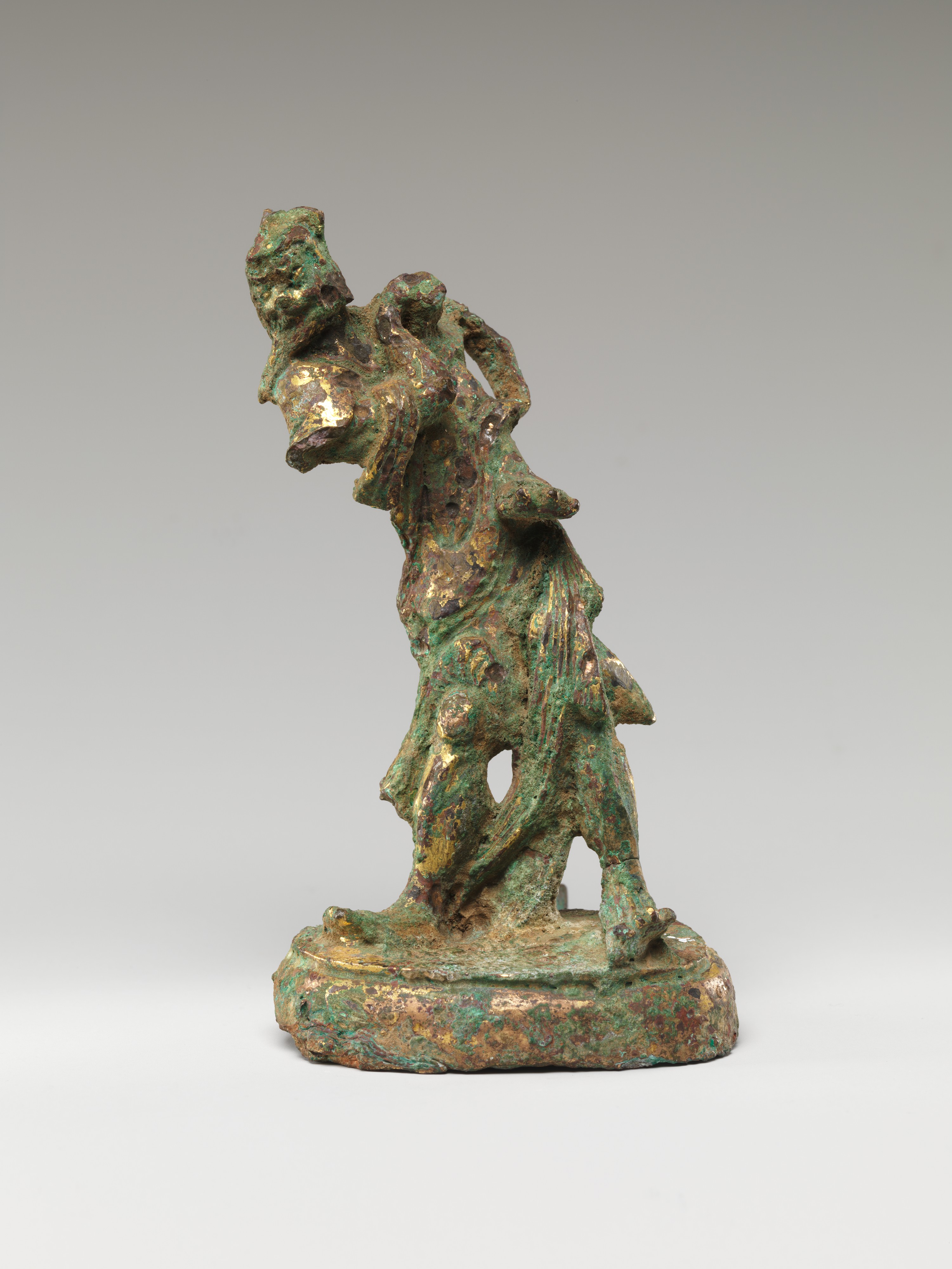
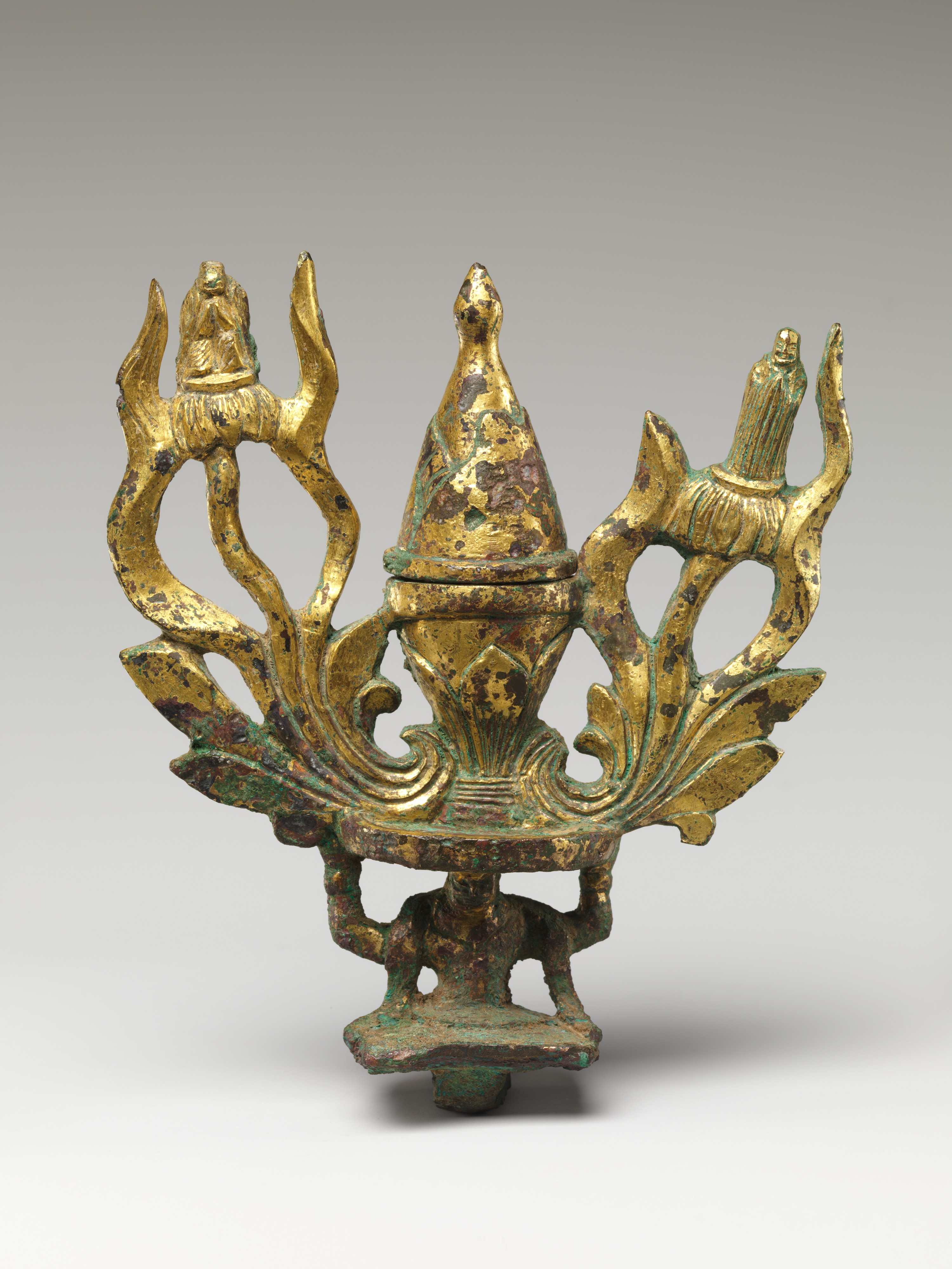
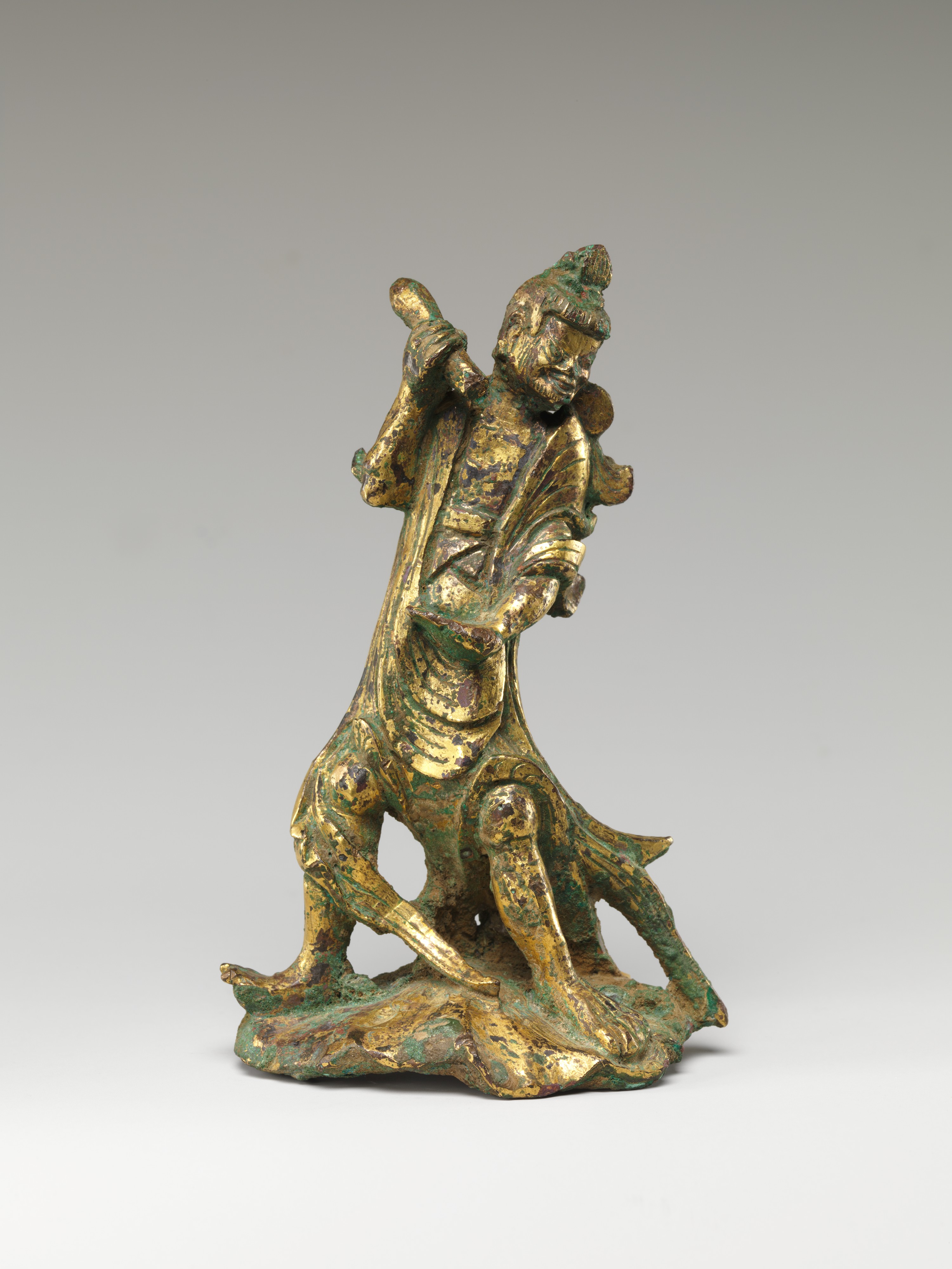
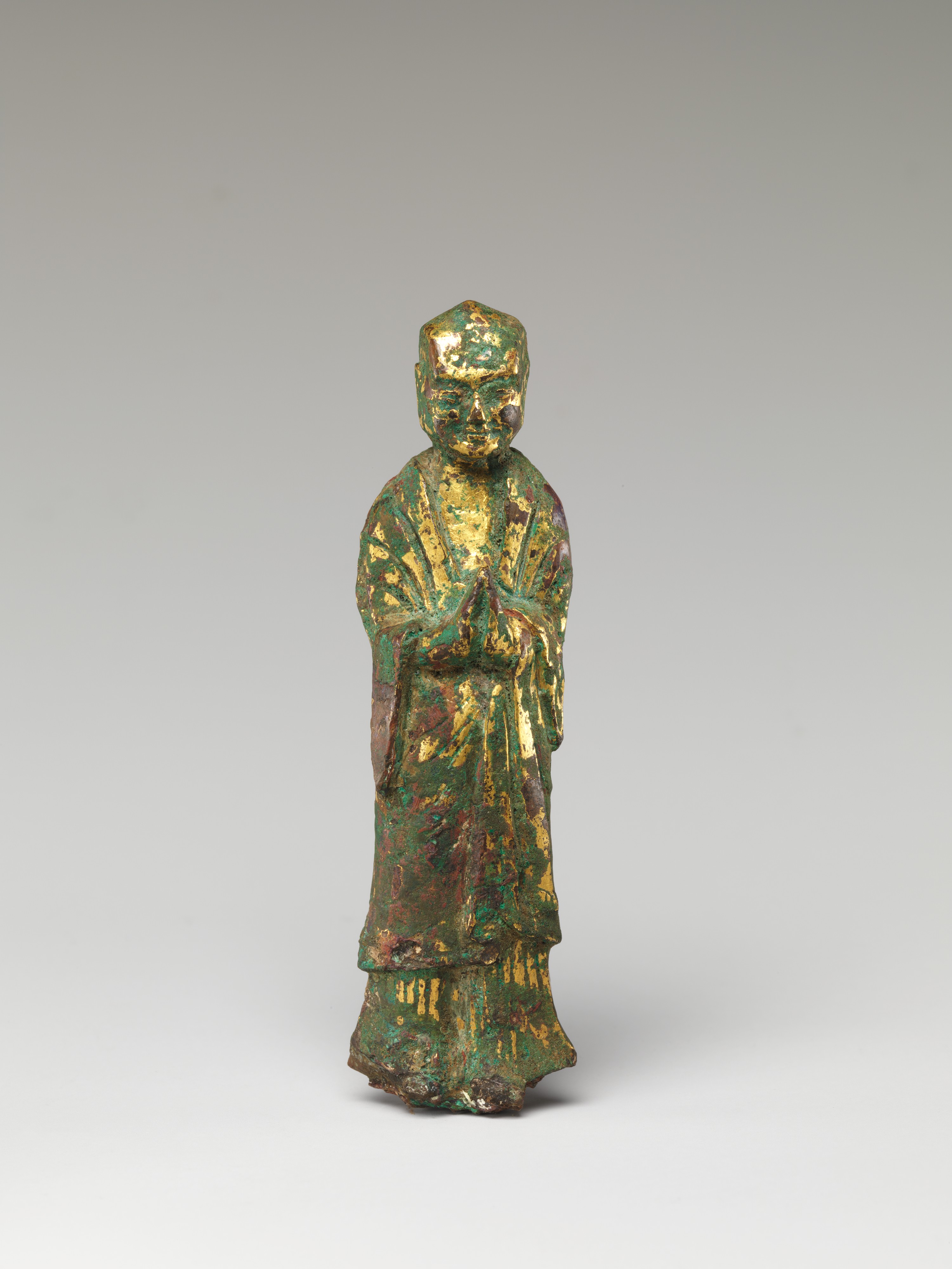
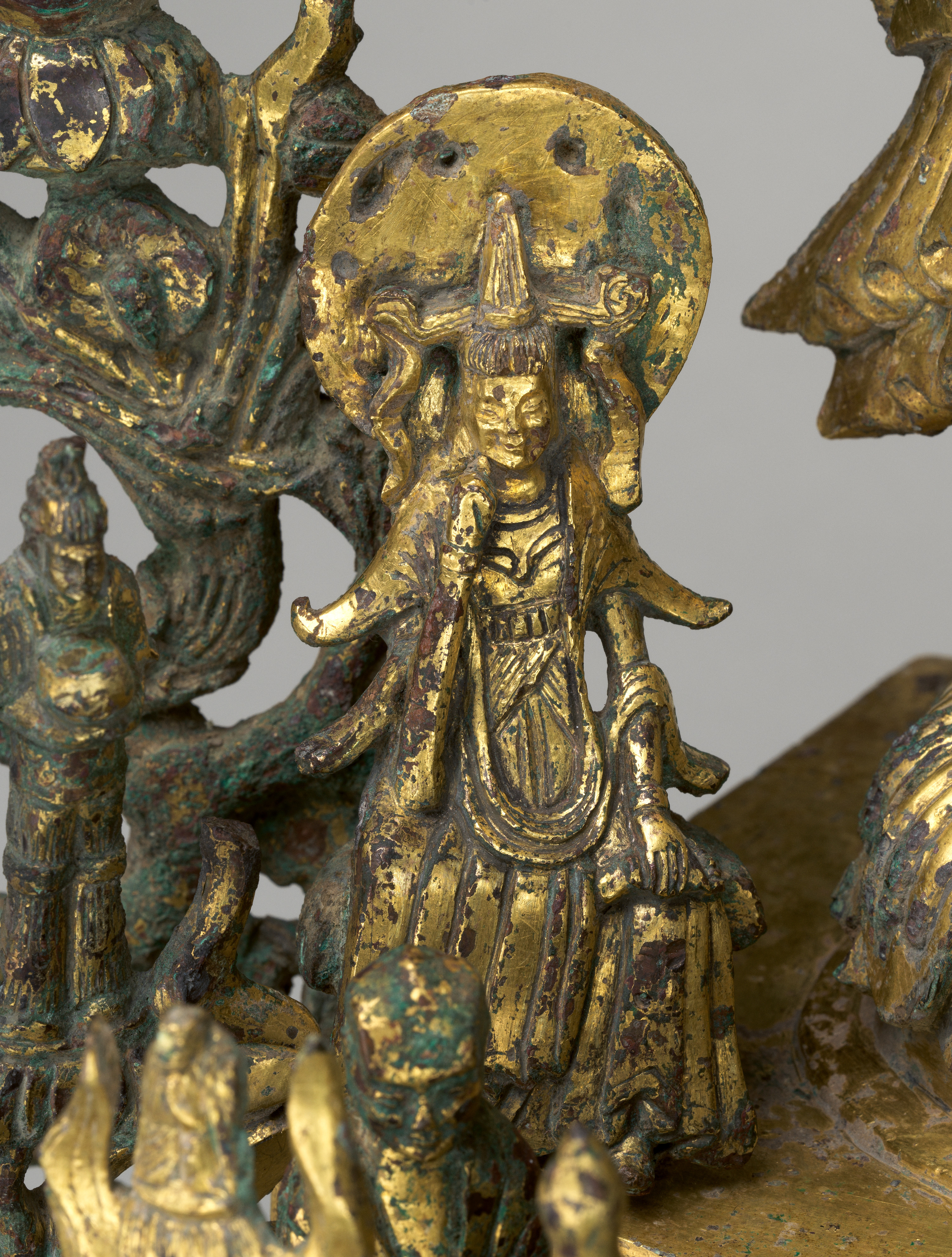
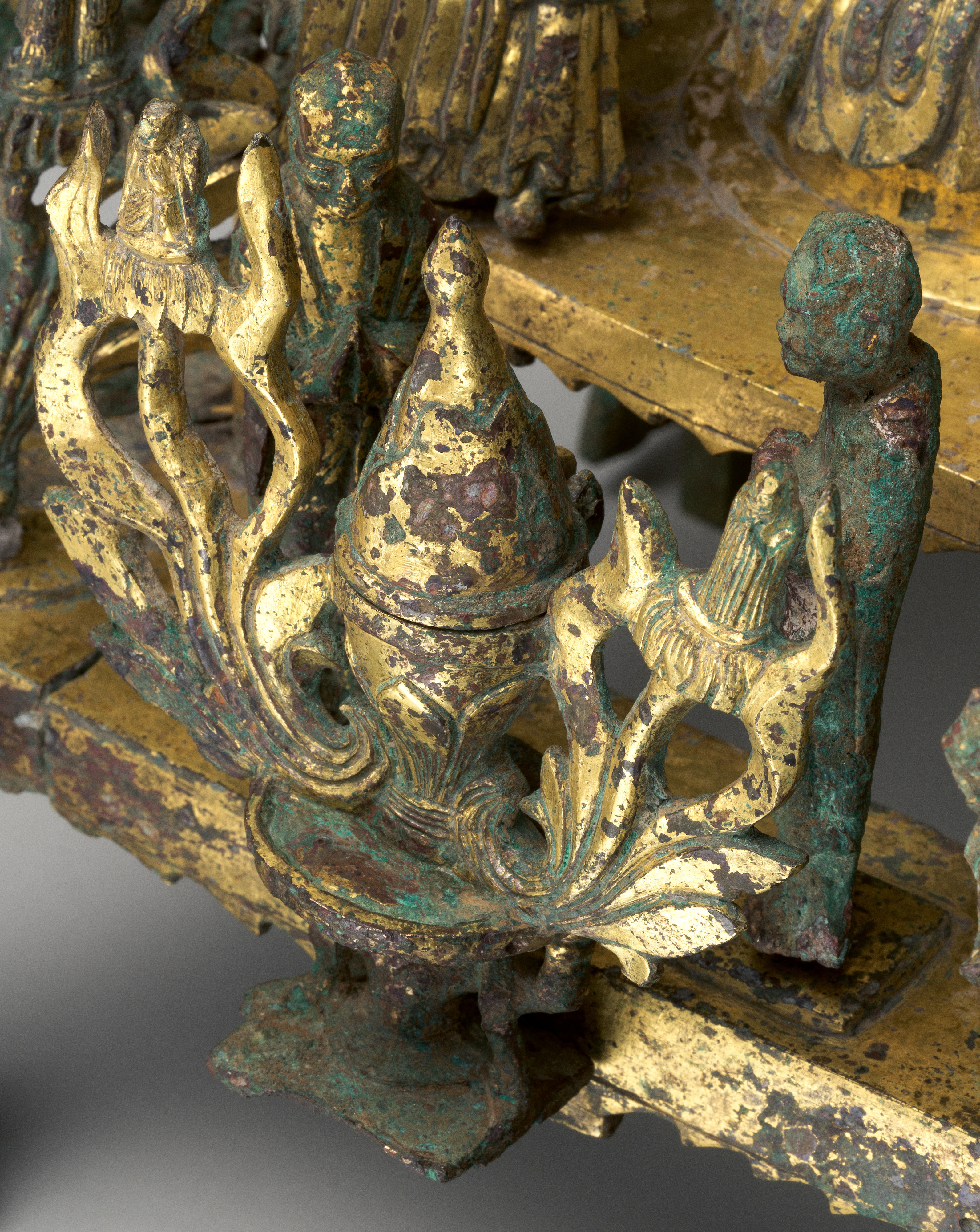
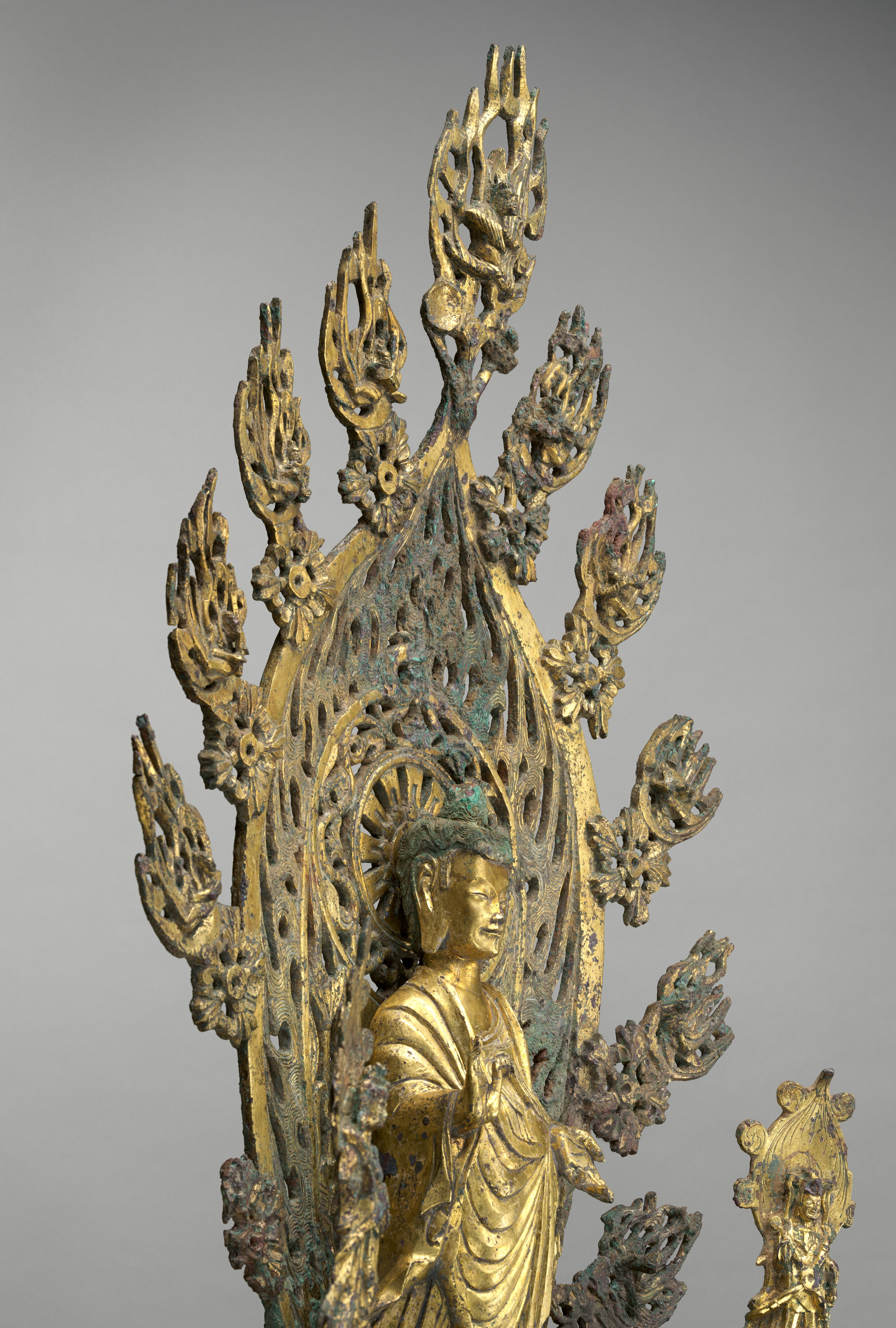 据传此像于一九二四年出土于正定府大佛寺附近一村落,后经北洋政府高官王士珍之手转往日本山中商会,山中商会将其运至设在美国纽约的分店出售。一九二五年美国的洛克菲勒二世夫人以二十二万五千美元的天价购藏该像(包括同时购入的另一铺北魏青铜鎏金弥勒佛祭坛(纽约大都会博物馆)),该像于一九三八年入藏美国纽约大都会艺术博物馆,被誉为大都会艺术博物馆的“神秘荣光”。
该像造型精美,是现知北朝金铜佛造像中的佳品,也是定州造像的杰出代表。主尊弥勒佛发髻高隆、清俊秀美,风神飘逸,神态宁静安详,法相慈悲庄严。身着僧衹支,右手当胸施无畏印,左手施与愿印,安立于莲座凸台之上。背有透雕火焰纹舟形光背,光背外缘有十一尊飘逸飞扬的伎乐飞天(一尊缺失)。褒衣博带式大衣下裾两端呈锐角伸展,颇具动感。胁侍菩萨宝缯飞扬,帔帛交叉。整铺造像以主尊弥勒佛像为中心,在其二侧及前方对称地配置有二菩萨、二半跏思惟菩萨、二弟子、四供养菩萨、二立姿护法等神态各异、形象逼真的众多造像。
据发愿铭可知造像主系“新市县”人,“新市县”治所位于今河北省新乐市西南。本铺金铜像由一立佛、二立姿菩萨、二半跏坐思惟菩萨、二弟子、二立姿护法及四立姿供养人,整整十三尊造像构成,加之如博山炉、护法狮等极易散失的小构件皆保存如此完好,着实令人叹为观止。本铺造像以其体量之巨大,造型之精美,组合之巧妙,鎏金之厚重,品相之完好,被公认为系北魏时代乃至整个中国佛教造像史上超一流的颠峰巨作、旷世奇珍。
发愿文:大魏正光五年九月戊申朔十八日,新市县□牛猷,为亡儿□秩造弥勒像一躯, 愿亡儿,居家眷属,常与佛会。
此铺造像,为构件组合而成,繁复华美,是典型的正光期精美之作。新市县,今河北中部。
六世纪早期在北魏宫廷中发展出一种造像风格,其特点是人物身形瘦削,衣袍厚重满遮,这件稀有的独立式佛造像即很好地表现了这一风格。弥勒佛在中国早期佛教中扮演了重要角色,人们认为这位菩萨(已觉悟的救世者)将在下个宇宙纪元成为佛教被毁灭又复兴后继续传法的未来佛。造像上刻有弥勒佛的名字,同时也指明委托造像的人是为夭折的儿子制作此像,希望儿子和其他亲人最终能在佛前重聚。
This complex assembly depicts the Buddha of the Future, Maitreya, who descends to earth to enlighten and save devout believers. He stands in front of an openwork back panel encircled by flames and flying celestial musicians, gesturing to reassure worshipers and promising to grant their wishes. Two attendant bodhisattvas (胁侍菩萨) stand at his side, with another pair at his feet. Next to them are four patrons—two on each side—dressed in secular clothes and holding bowls of offerings. Thunderbolt bearers are placed as guardians at opposite front corners of the altarpiece. Below the main platform are two seated lions—protectors of the dharma, or the universal truth of Buddhism. An incised text on the base records the name of the person and date upon which he commissioned this sculpture to invoke the Buddha’s blessing for his deceased son and relatives.
铭文:
“On the eighteenth day of the ninth month, which begins with a mou-shen day, in the fifth year of the Cheng-kuang (period) of the Great Wei (dynasty),…-wu-chen from the Hsin-shih district for his dead son Kai-chih (had) made one image of Maitreya, wishing that the dead son and his relatives who sitll are at home may forever be united with the Buddha”.
造像者的名字有点争议,到底是牛猷,还是午猷?按照大都会官网给的解释,叫wu chen。
来源:
Abby Aldrich Rockefeller , New York, (until 1938; sold to MMA)
藏品编号: 38.158.1a–n
展览:
New York. The Metropolitan Museum of Art. “Arts of Ancient China,” May 1988–Present.
New York. The Metropolitan Museum of Art. “Masterpieces of Fifty Centuries,” November 14, 1970–June 1, 1971.
Tokyo National Museum. “Special Exhibition: Gilt Bronze Buddhist Statues - China, Korea, Japan,” March 10, 1987–April 19, 1987.
New York. The Metropolitan Museum of Art. “China: Dawn of a Golden Age, 200–750 AD,” October 12, 2004–January 23, 2005.
著录:
“A Note on Two Chinese Buddhist Dedicatory Groups.” Bulletin of the Museum of Fine Arts 26, no. 156 (August 1928.) pp. 57–60, fig. 2.
Priest, Alan. “Two Important Bronzes in the London Exhibition.” Parnassus 8, no. 2 (February 1936). pp. 11–13.
Chinese Bronzes of the Shang (1766–1122 B.C.) through the Tang (A.D. 618–906) Dynasty. Exh. cat. New York: The Metropolitan Museum of Art, 1938, p. 23, cat. no. 269.
Priest, Alan. “An Exhibition of Chinese Bronzes from American Collections.” The Metropolitan Museum of Art Bulletin 33, no. 10 (October 1938). pp. 216–22.
Priest, Alan. “Two Buddhist Altarpieces of the Wei Dynasty.” The Metropolitan Museum of Art Bulletin 34, no. 2 (February 1939). pp. 32–38, figs. 1, 2.
Sirén, Osvald. Kinas Konst Under Tre Artusenden I. vol. I, Stockholm: Natur och Kultur, 1942, p. 359, fig. 245.
Priest, Alan. Chinese Sculpture in The Metropolitan Museum of Art. New York: The Metropolitan Museum of Art, 1944, p. 28, cat. no. 18, figs. XXIX–XXXII.
Small Sculptures in Bronze. Exh. cat. New York: The Metropolitan Museum of Art, 1950, p. 10.
Sirén, Osvald. “Two Chinese Buddhist Stele.” Archives of the Chinese Art Society in America 13 (1959). pp. 20, 21.
Lippe, Aschwin. “A Gilt-bronze Altarpiece of the Wei Dynasty.” Archives of the Chinese Art Society in America 15 (1961). pp. 29–31.
Chow, Fong. “Chinese Buddhist Sculpture: Part I.” The Metropolitan Museum of Art Bulletin, n.s., 23, no. 9 (May 1965). p. 311, fig. 14.
Lippe, Aschwin. “The Religions of Asia.” Apollo Magazine 82, no. 43 (September 1965) pp. 220–29, pl. 19.
Ichiro Shirakawa. “Apsara Playing Clustered Flutes.” (A Quarterly Review of the Fine Arts), Kobijutsu No. 10 (September 1965). p. 98, fig. 9.
Fontein, Jan, and Rose Hempel , et al. China, Korea, Japan. Bd. 17 of Propyläen Kunstgeschichte. Berlin: Propyläen Verlag, 1968, cat. no. 93.
Lerman, Leo. The Museum: One Hundred Years and The Metropolitan Museum of Art. New York: Viking Press, [1969], p. 260.
Masterpieces of Fifty Centuries. Exh. cat. New York: E. P. Dutton & Co., 1970, p. 146, cat. no. 109.
Fong, Wen C., and Hearn, Maxwell K. “The Arts of Ancient China.” The Metropolitan Museum of Art Bulletin, n.s, 32, no. 2 (1974) 1974, n. p., fig. 59.
Howard, Kathleen, ed. The Metropolitan Museum of Art Guide. New York: The Metropolitan Museum of Art, 1983, p. 256, fig. 38.
Barnhart, Richard M. (Introduction). The Metropolitan Museum of Art: Asia. New York: The Metropolitan Museum of Art, 1987, p. 56, pl. 30.
James C. Y. Watt. “The Arts of Ancient China.” The Metropolitan Museum of Art Bulletin, n.s., 48, no. 1, Summer 1990. pp. 50–51, cat. no. 60.
Howard, Kathleen, ed. The Metropolitan Museum of Art Guide. 2nd ed., New York: The Metropolitan Museum of Art, 1994, p. 108, fig. 38.
Lawton, Thomas. “Yamanaka Sadajiro: Advocate for Asian Art Dealers.” Orientations 16, no. 1 (January 1995). pp. 80–93, fig. 17.
Zhang Zong. “Exploring Some Artistic Features of the Longxingsi Sculpture.” Orientations 31, no. 10 (December 2000). p. 58, fig. 6.
Watt, James C. Y., An Jiayao, Angela F. Howard, Boris I. Marshak, Su Bai, and Zhao Feng. China: Dawn of a Golden Age, 200–750 AD. Exh. cat. New York: The Metropolitan Museum of Art, 2004, pp. 265–255, cat. no. 167.
Howard, Angela Falco, Wu Hung, Li Song, and Yang Hong. Chinese Sculpture. New Haven: Yale University Press, 2006, p. 253, fig. 3.57.
The Metropolitan Museum of Art, ed. The Metropolitan Museum of Art Guide. New York: The Metropolitan Museum of Art, 2012, p. 87.
Behrendt, Kurt. How to Read Buddhist Art. New York: The Metropolitan Museum of Art, 2019, pp. 94–95, fig. 67.
午猷造像是一尊高76.9厘米的鎦金立佛。在这成组的造像中,有一立佛,二立菩萨、二思维菩萨、四供养普萨,11飞天环绕,还有二力士,二博山炉,二狮子,无不铸造细腻,精美无比。立佛是弥勒造像,居于正中,立在莲花座上,头有高肉髻,身内穿僧祗支,外披袈裟,衣纹如水一般披垂而下,袈裟底部如羽翼张开,脸含和蔼的微笑,是秀骨清像的形貌。佛一手张开施与愿印,一手立起施无畏印,代表着欢迎信徒与救济大众的心愿。它身后有背光,火焰升腾,11位飞天飞翔在背光之上,宛如飞扬起来的火焰。弥勒的莲座下有正方基座,两芳生长着宝树,枝桠纵横,两位小型菩萨立在树上,分列于弥勒两边;思维菩萨披着帔带,身着长裙,娴雅地对坐在弥勒莲座下部;思维菩萨两边是虔诚的供养人;莲座下部的基座上是精美的博山炉;两只身子精壮的狮子分别蹲于基座一旁,鬃毛飞扬;基座外还有两名力士威猛而立。午猷造像又称正光造像,因为它带有铭文,是“大魏正光五年九月戊申朔十八日”,一位新市县人氏午猷为亡儿造弥勒像一躯,表达宗教的希望:“愿亡儿居家眷属长与佛会。”这说明,它是北魏正光五年(524)时的造像。距现在1000多年了。造像上的镏金仍大部完好,金光闪耀,以铆榫组合的各种小型佛像、博山炉等也都完好,实在难得。一尊金佛就是一个凝聚了无限极乐欢喜的大世界,金光闪烁的佛像、飞天、莲花、宝树,把虚幻化作实有、把极乐世界幻化成一个浓缩的实体,令人深切感受到佛教艺术的魅力。
北魏、西魏、东魏时期屡发大规模的征战,人世间有那么多罪恶和苦难,令人向往那虚幻的佛教净士。与其说这是佛国净土,不如说这是人类永恒的向往:没有无休止的争斗、呻吟、伤痕、压迫,没有杀戮、悲伤,只是快乐平等的世界。
午猷造像是1918年在河北正定县出士的。一位农民在农田中耕作,发现了它,出于虔诚的心理,把它在家中供奉起来。然而不久就走漏了消息,北京等地的古玩商纷至沓来,给出一万块大洋的高价,但是这位农民坚决不卖。古玩商便请出一名正定籍的高官,亲笔致信正定县衙门,要求他们出面和那农民联系。终究是胳膊拗不过大腿,那农民不得不以三万大洋的价格将金佛卖给古玩商。旋即它由日本山中商会买下,送出海外,不久就被美国纽约大都会艺术博物馆买下。与午猷造像同时、同类造型的还有一尊弥勒像,也出于正定,为一弥勒佛、二菩萨、二弟子、八飞天,也弥足珍贵,也被纽约大都会艺术博物馆收藏,成为该馆的镇馆之宝。