11世纪西藏西部合金铜莲花手观音立像(美国弗利尔美术馆)
尺寸:82.3 x 32.1 x 21.6 cm
年代:11世纪
质地:合金铜
风格:西藏西部
来源:美国弗利尔美术馆
参阅:外部链接
鉴赏:
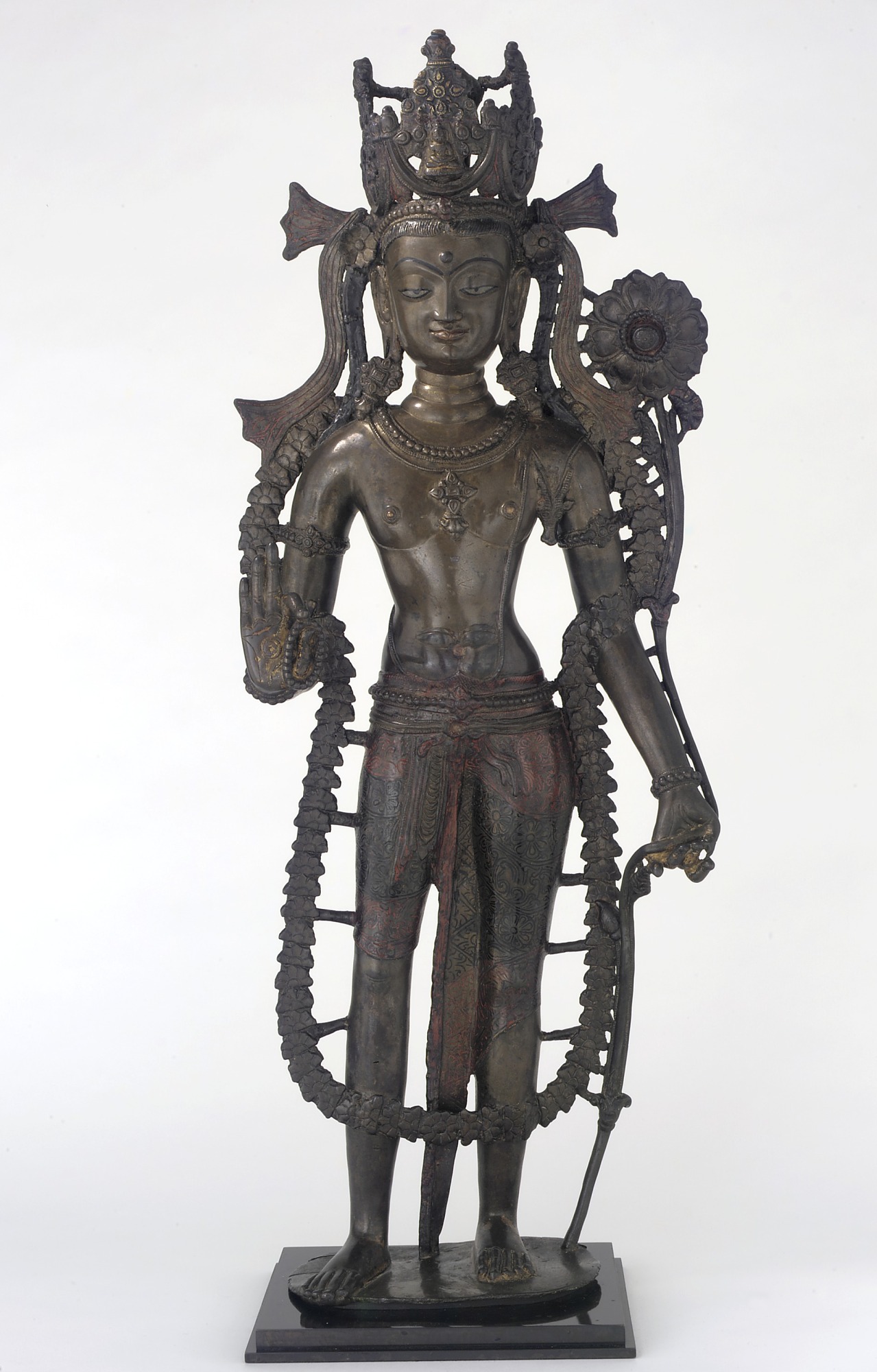
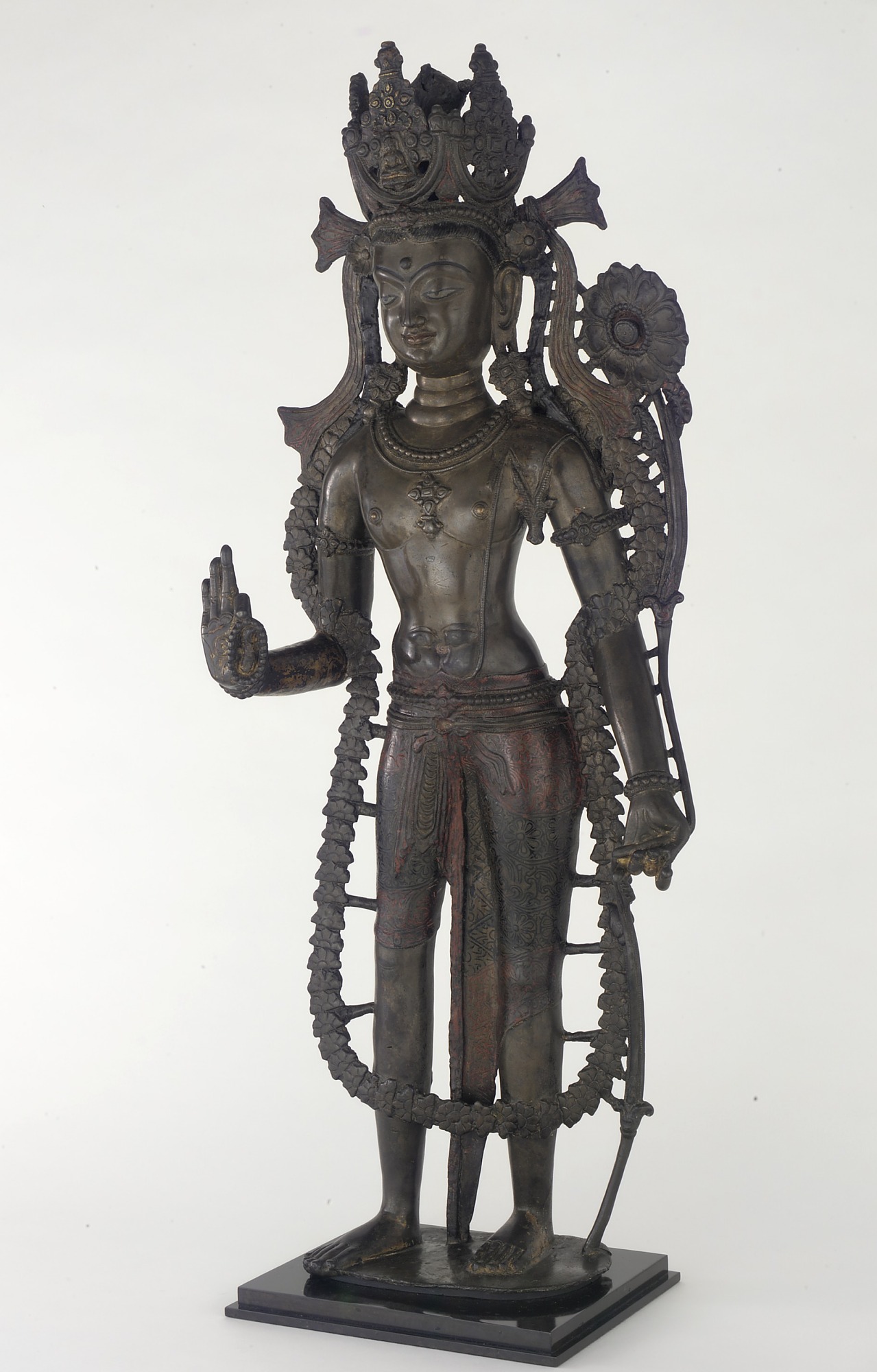 The Bodhisattva Avalokiteshvara
Brass alloy with copper and tin inlay, colored wax, traces of gilding and pigment
此尊雕塑表现一位站立的人物,以“三屈式”(tribhanga)姿态立于一个扁平的椭圆形小台座之上。人物的右前臂抬起,手掌向前。左臂垂于身侧,手持一根花茎,花茎向上延伸至左肩上方的花朵。人物装饰有华丽的头冠与飘拂的披帛,一条花带沿身体一侧垂下,又从另一侧向上攀缘。
雕塑仅正面有装饰,背面素面无工。曾采用錾刻、镶嵌和鎏金工艺进行装饰,但如今仅存鎏金痕迹。双眼镶嵌有灰色金属和黑色材料。后脑部位涂有蓝色颜料。人物的裙衣上饰有錾刻纹样,裙身凹陷处的纹饰中填充了黑色和红色材料。大部分表面为裸露的金属,呈浅金褐色。
The sculpture depicts a standing figure [standing in thrice-bent “tribhanga” posture, atop a small, flat, oval base. The right forearm of the figure is raised with the palm of the hand facing forward. The left arm is down at the figure's side and holds a stem that rises up to a large flower that sits above the left shoulder. An ornate headdress with flowing scarves, and a band of flowers that run down one side of the body and up the other side, adorn the figure.
Only the front of the sculpture is decorated; the back is plain. Chasing, inlay, and gilding were used to decorate the figure, but just traces of the gilding remain. The eyes are inlaid with gray metal and a black material. The back of the head is covered with blue paint. The skirt of the figure is decorated with chasing and the recessed design on the skirt is filled with black and red colored materials. Most of the surface is bare metal and is a light golden brown color.
早期佛教教义强调自我解脱,以佛为典范。相比之下,后期佛教则强调通过被称为“菩萨”的觉悟者以慈悲愿力救度一切众生。藏族将大悲观世音菩萨(Avalokiteshvara,字面意为“俯视世间的尊者”)尊为其至高无上的护佑者,并通过禅修、祈请和供养寻求其加被。这尊优雅而庄严的观世音菩萨手持念珠和莲花。其银色的双眼、纯铜色的嘴唇与乳头,以及红黑相间的图案衣袍,与深沉的合金铜胎体交相辉映,更显生动。此像为西藏一座寺庙所作,出自克什米尔(Kashmir,位于今印度西北部) 艺术家马蒂(Mati) 之手——彼时克什米尔是著名的佛教教学与视觉文化中心
Early Buddhist doctrine emphasizes self-liberation with the Buddha as the exemplar. In contrast, later Buddhism emphasizes the salvation of all sentient creatures through the benevolent assistance of enlightened beings known as bodhisattvas. Tibetans regard the bodhisattva of compassion, Avalokiteshvara (literally, the Lord Who Looks Down from on High), as their supreme protector and seek his intercession through meditation, prayer and offerings. This graceful and majestic Avalokiteshvara holds prayer beads and a lotus blossom. His silvery eyes, pure copper lip and nipples, and red-and-black-patterned garb vividly enhance the dark gleam of the brass alloy. The sculpture was created for a Tibetan monastery and is attributed to Mati, an artist from Kashmir (located in present-day northwest India), then a renowned center of Buddhist teaching and visual culture.
Artist
Attributed to Mati
Previous custodian or owner
Nitta Muneichi
Rossi & Rossi, Ltd.
Provenance
From 1960s
Nitta Muneichi, Taiwan and Japan, from the 1960s [1]
To 2001
Rossi & Rossi, Ltd., London, to 2001
From 2001
Freer Gallery of Art, purchased from Rossi & Rossi, Ltd. in 2001
Notes:
[1] While the publication of the Nitta catalog was not until 1987, Stan Czuma (in an unpublished paper) dates this object's entry into the collection to the 1960s (according to Curatorial Note 3, Debra Diamond, January 10, 2001, in the object record). See The Crucible of Compassion and Wisdom: Special Exhibition Catalog of the Buddhist Bronzes from the Nitta Group Collection at the National Palace Museum (Taipei: 1987).
展览:
Body Image (October 14, 2017 - ongoing)
Arts of the Indian Subcontinent and the Himalayas (October 16, 2004 to January 3, 2016)
Himalayas: An Aesthetic Adventure (October 18, 2003 to January 11, 2004)
South Asian Sculpture (February 22, 2000 to June 18, 2003)