6世纪东魏(544年)铜鎏金持莲蕾观音菩萨立像(纽约苏富比)
尺寸:高16.8 cm
年代:东魏(544年)
质地:铜鎏金
风格:中原
来源:拍卖会
成交:381,000美元(2025.03)
参阅:外部链接
鉴赏:
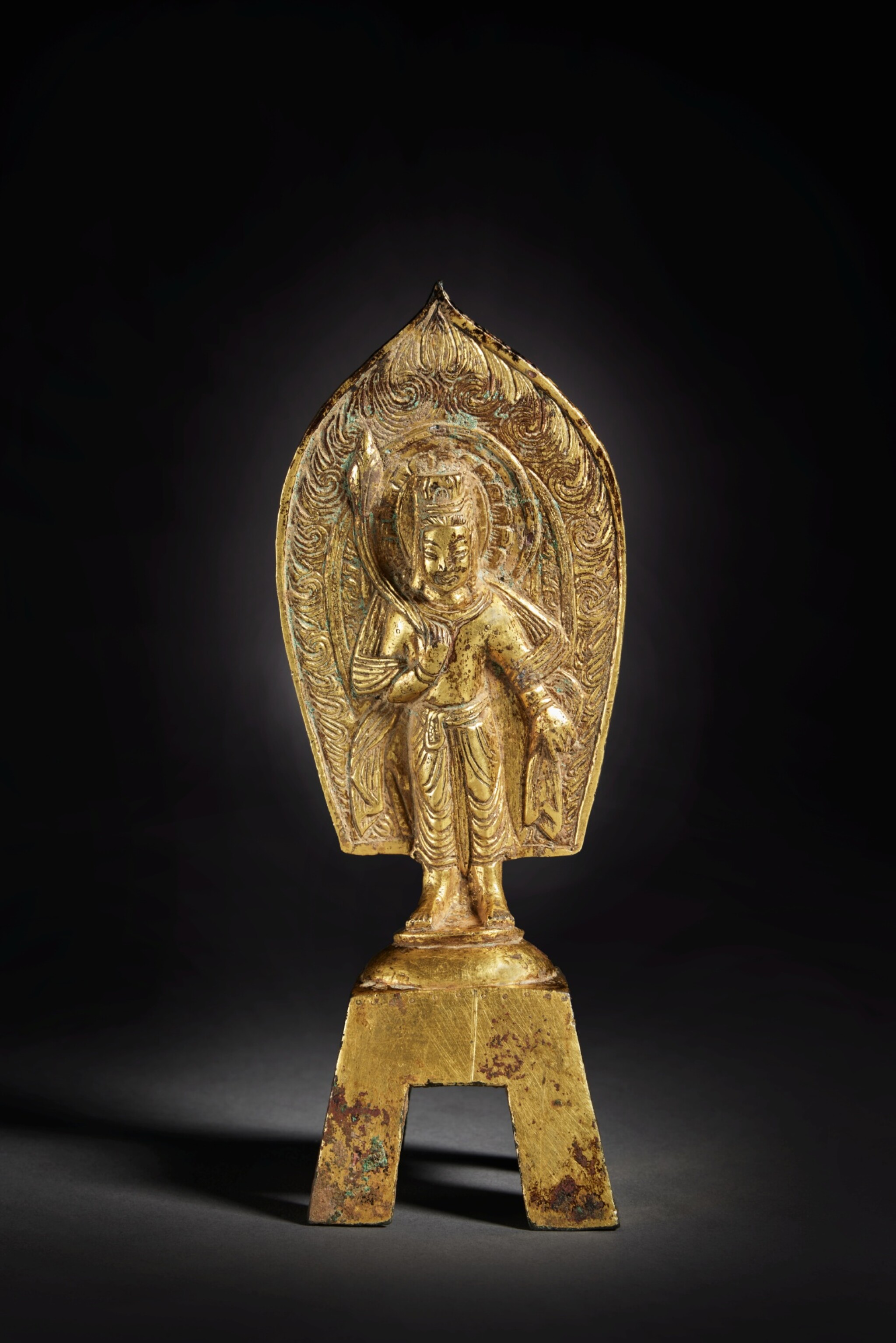
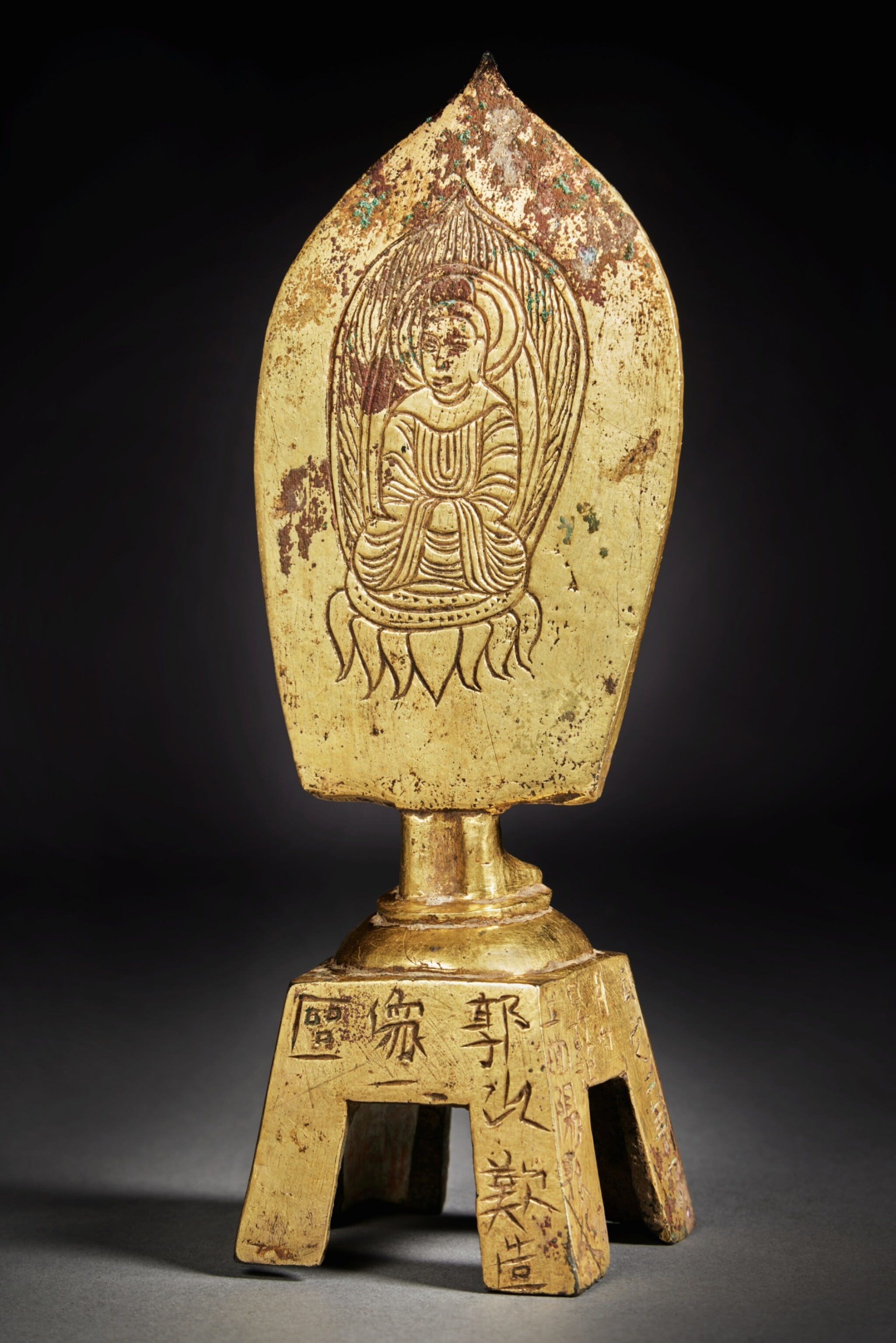
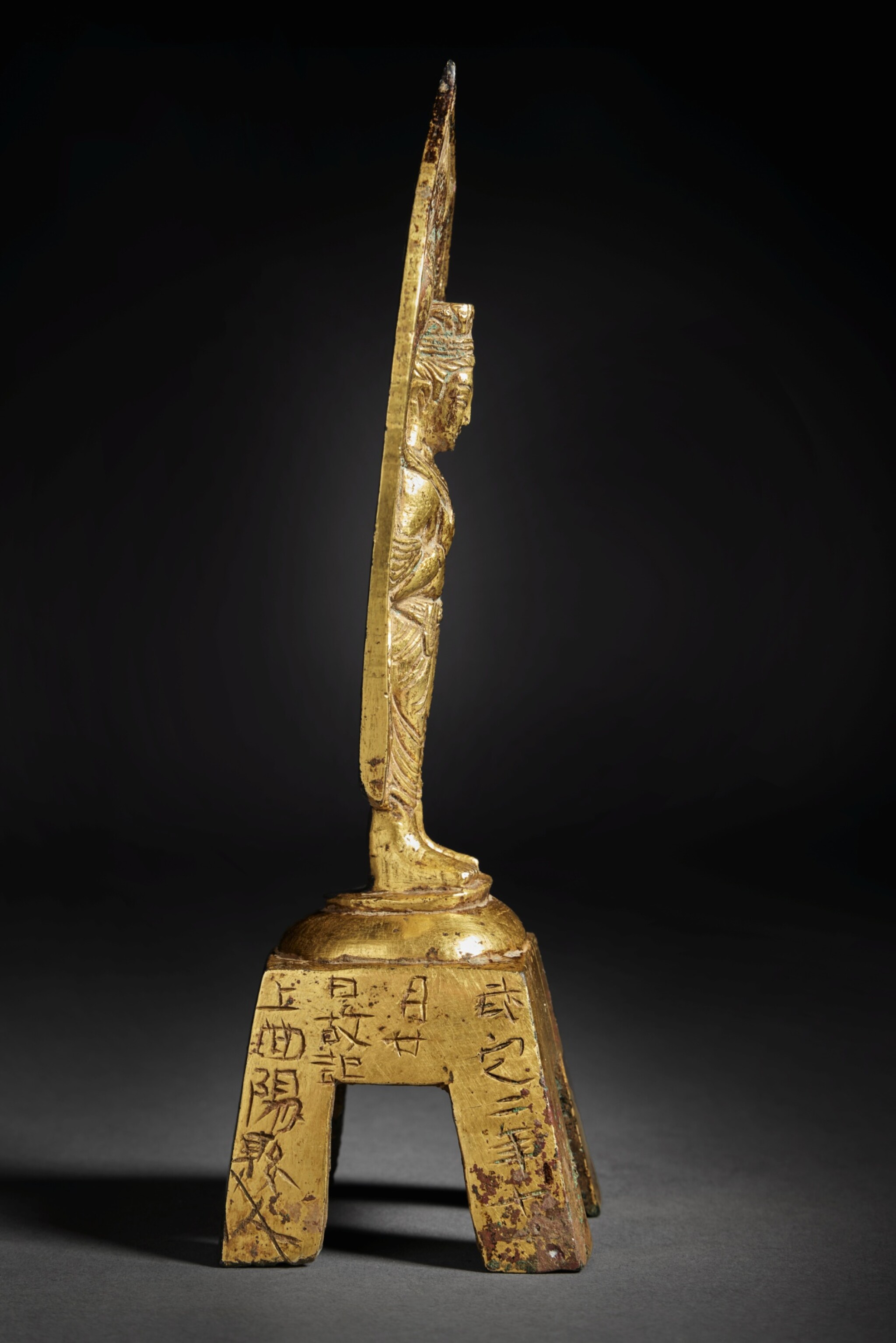
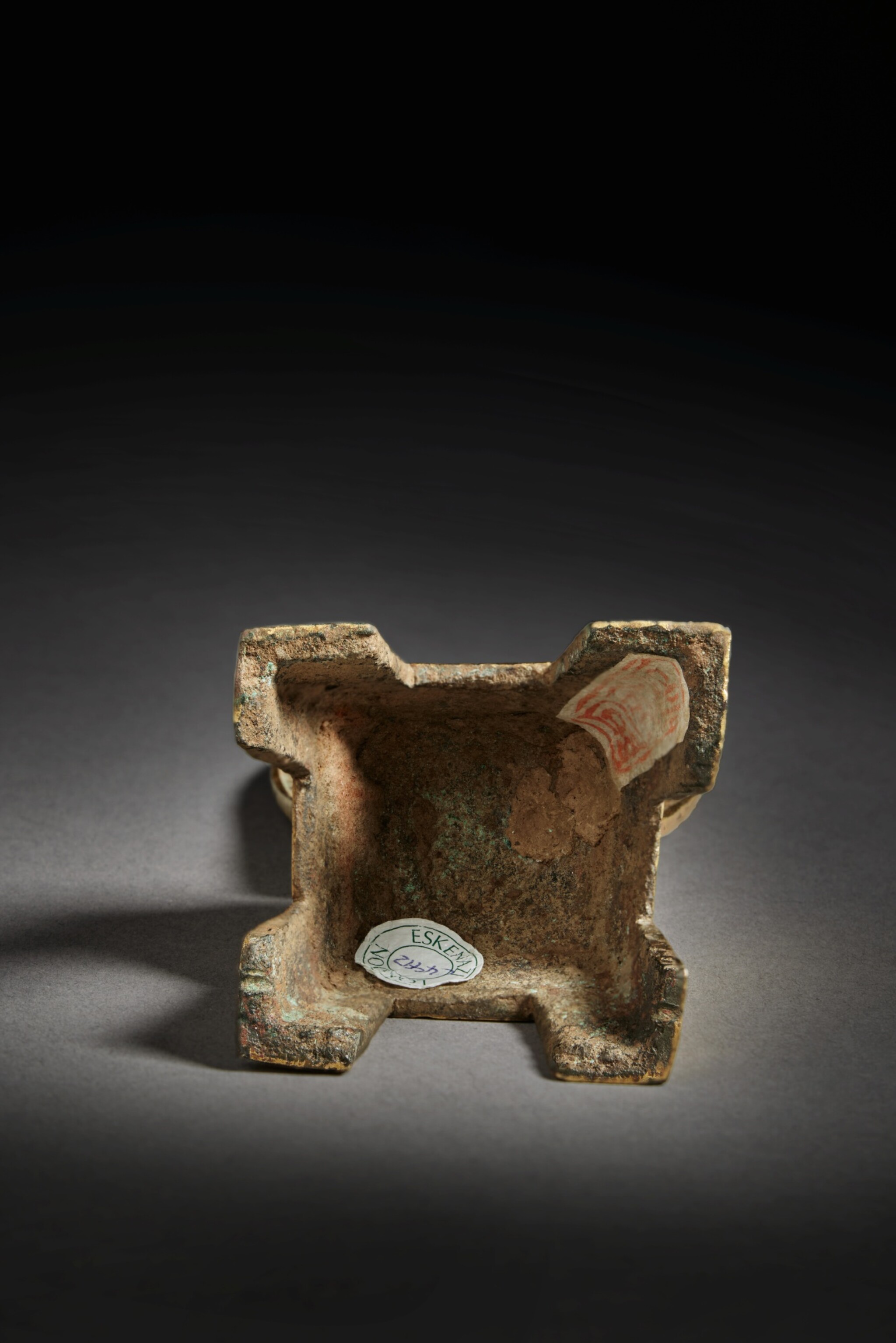 一尊铭文精美的莲花手菩萨(Padmapani)祭供铜鎏金像,东魏,武定二年,对应于公元544年。
台座右侧及背面分叉处刻有铭文,纪年为武定二年十一月二十日(对应于公元544年)。附带漆座、日本木盒。
来源:
Collection of Sato Gengen (1888-1963).
Collection of Sakamoto Gorō (1923-2016).
Sotheby's Hong Kong, 5th October 2016, lot 3212.
展览:
Reflection and Enlightenment: Chinese Buddhist Gilt Bronzes from the Jane and Leopold Swergold Collection, Museum of Fine Arts, Houston, 2017-2018.
著录:
Beatrice Chan, 'Reflection and Enlightenment: Chinese Buddhist Gilt Bronzes from the Jane and Leopold Swergold Collection at the Museum of Fine Arts, Houston', Arts of Asia, January/February 2018, pp 58-65.
Standing firmly yet elegantly before a flaming mandalora, this remarkable figure depicts Padmapani, the lotus-bearing manifestation of the bodhisattva Avalokitshvara (known in Chinese as Guanyin), as the embodiment of regal splendor and tranquility. Adorning the base of the stele, below an intricate carving of the Buddha, lies an inscription dating the piece to the Eastern Wei dynasty. Following the disintegration of the Northern Wei around 534 CE, the Eastern Wei took up the mantle of governing northern China. Although sculpture from this period retained some of the Indian influences of its predecessor, Eastern Wei figures like the present Padmapani have a number of more sinicized features. While the Gandharan-inspired works of the Northern Wei generally feature more rigid draping robes, curvilinear contours, slim bodies, and gently tilted heads, the current figure stands tall and straight.
Similar depictions of Padmapani from this period are rare. Compare another gilt-bronze figure of Padmapani, dated to 543, in the Tokyo National Museum, illustrated in Mayuyama, Seventy Years, Tokyo, 1976, pl. 117; and a related Eastern Wei gilt-bronze figure of Maitreya, dated to 536, formerly in the collection of Duanfang (1861-1911) and now in the collection of the University of Pennsylvania Museum of Archaeology and Anthropology, Philadelphia (accession no. C355.1), illustrated by Osvald Sirén, Chinese Sculpture from the Fifth to the Fourteenth Century, New York, 1925, pl. 158. Other similar gilt-bronze figures of Padmapani dated to the Northern Wei can also be found in the Kuboso Memorial Museum of Arts, Izumi, Japan, illustrated in Rikuchou Jidai No Kondoubutsu [Gilt-bronze Buddhist figures from the Six Dynasties], Izumi, 1991, cat. no. 48; preserved in the Harvard Art Museums, Cambridge, from the collection of Grenville L. Winthrop (accession no. 1943.53.81); and in various important collections of early Buddhist bronzes in Saburō Matsubara, Chūgoku Bukkyō chōkoku shiron [History of Chinese Buddhist sculpture], vol. I, Tokyo, 1995, pls 73, 74, and 86-88.
这尊非凡造像刻画的是莲花手菩萨(Padmapani)——观音菩萨(Avalokiteshvara,中文称观音)持莲花的化身——以其王者般的辉煌与宁静之气,坚定而优雅地立于火焰纹背光之前。在碑形背光底座的正面,佛陀精细雕刻的下方,镌刻有铭文,将此像断代于东魏。公元534年左右北魏瓦解后,东魏接续了统治中国北方的使命。尽管此时期的雕塑仍保留了部分来自前朝的印度影响,但像眼前这尊莲花手菩萨这样的东魏造像,已呈现出更多中国化的特征。北魏受犍陀罗启发的作品通常衣纹较为板直、轮廓呈曲线形、身形清瘦、头部微倾,而此尊造像则挺拔直立。
此时期类似造型的莲花手菩萨像十分罕见。可比较东京国立博物馆藏另一尊铭文为公元543年的铜鎏金莲花手菩萨像(见《Mayuyama, Seventy Years》,东京,1976年,图版117);以及一尊相关的东魏铜鎏金弥勒菩萨像,铭文为公元536年,原为端方(1861-1911)旧藏,现藏于费城宾夕法尼亚大学考古学与人类学博物馆(馆藏号C355.1),图见喜仁龙(Osvald Sirén)《Chinese Sculpture from the Fifth to the Fourteenth Century》,纽约,1925年,图版158。其他类似的有铭北魏铜鎏金莲花手菩萨像,还可见于日本和泉久保惣纪念美术馆(见《六朝時代の金銅仏》,和泉,1991年,图录第48号);亦见于剑桥哈佛艺术博物馆,来自格伦维尔·L·温思罗普(Grenville L. Winthrop)收藏(馆藏号1943.53.81);以及松原三郎《中国仏教彫刻史論》卷一中著录的多件重要早期金铜佛收藏(东京,1995年,图版73、74、86-88)。