11世纪印度帕拉合金铜释迦牟尼佛宝冠像(美国鲁宾艺术博物馆)
尺寸:6 1/2 × 4 1/2 × 1 1/2 in.
年代:11世纪
质地:Copper alloy with silver and copper inlays and traces of gilding
风格:印度帕拉
来源:美国鲁宾艺术博物馆
参阅:外部链接
鉴赏:
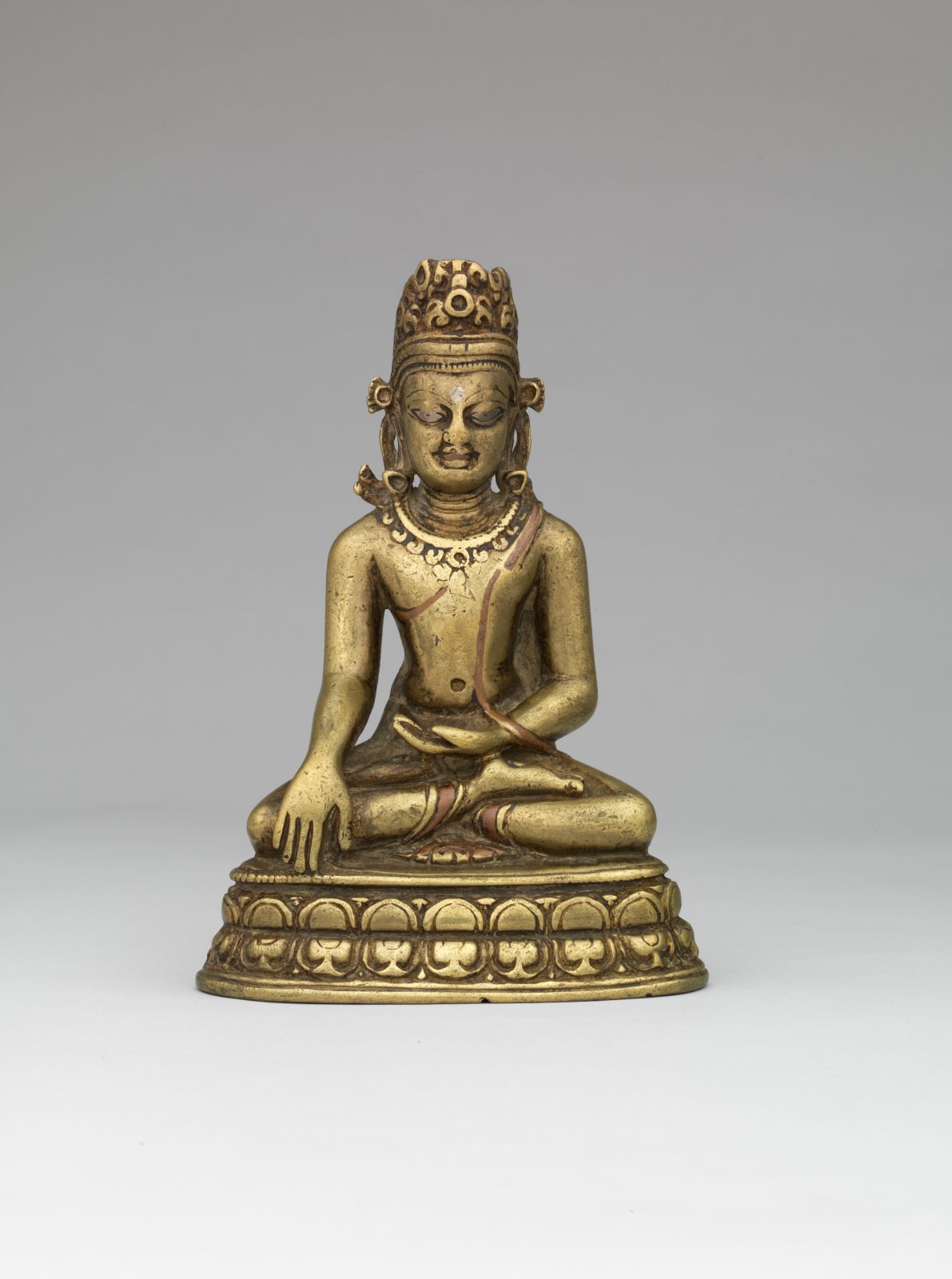
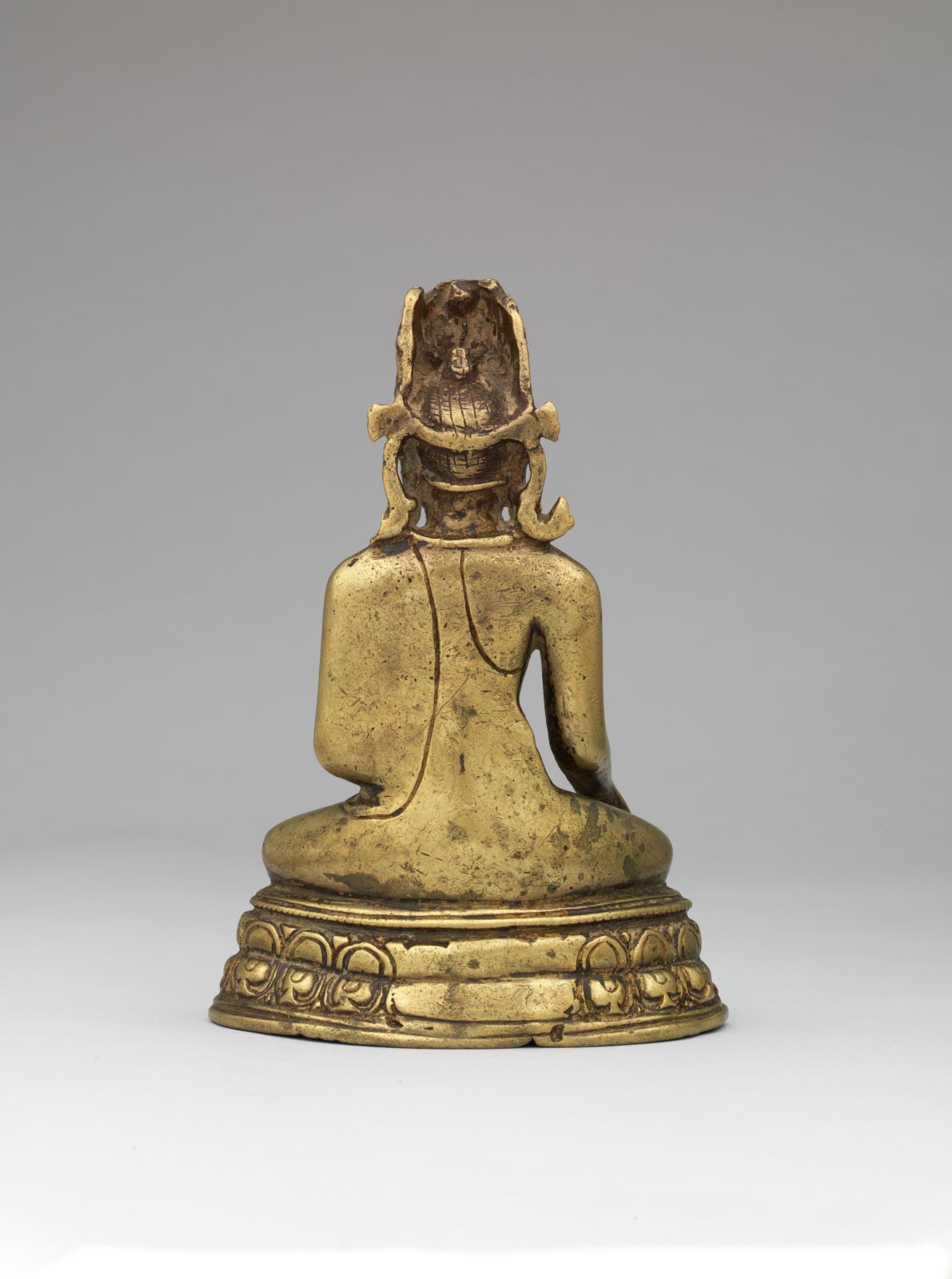 Crowned Buddha Shakyamuni
Northeastern India
11th century
This sculpture bears the standard features of late northeastern Indian Buddha depictions. The figure’s head is large, and his clothing clings to his body, its hem indicated by copper inlay. The three points of his crown touch each other at the base and are obscured by the jewels set between them. Behind the ear, ribbons are held by a knot decorated with a blossom, their ends turning upward above the shoulders. The necklace is wide and has large curved pendants, and the earrings are shaped like leaves. Considerable wear has distorted the face and the necklace. This sculpture celebrates the Buddha’s awakening in the northeastern Indian village of Bodhgaya. The Buddha is seated cross legged on a double lotus and touches the earth, a reference to the moment when he called upon the earth goddess to witness his awakening. He wears monastic robes and is crowned and bejeweled. Crowned buddhas have been increasingly popular in Buddhist art from the seventh century onward. In esoteric Buddhist imagery, the crown and its ribbons falling behind the ears signify the Buddha’s awakening.