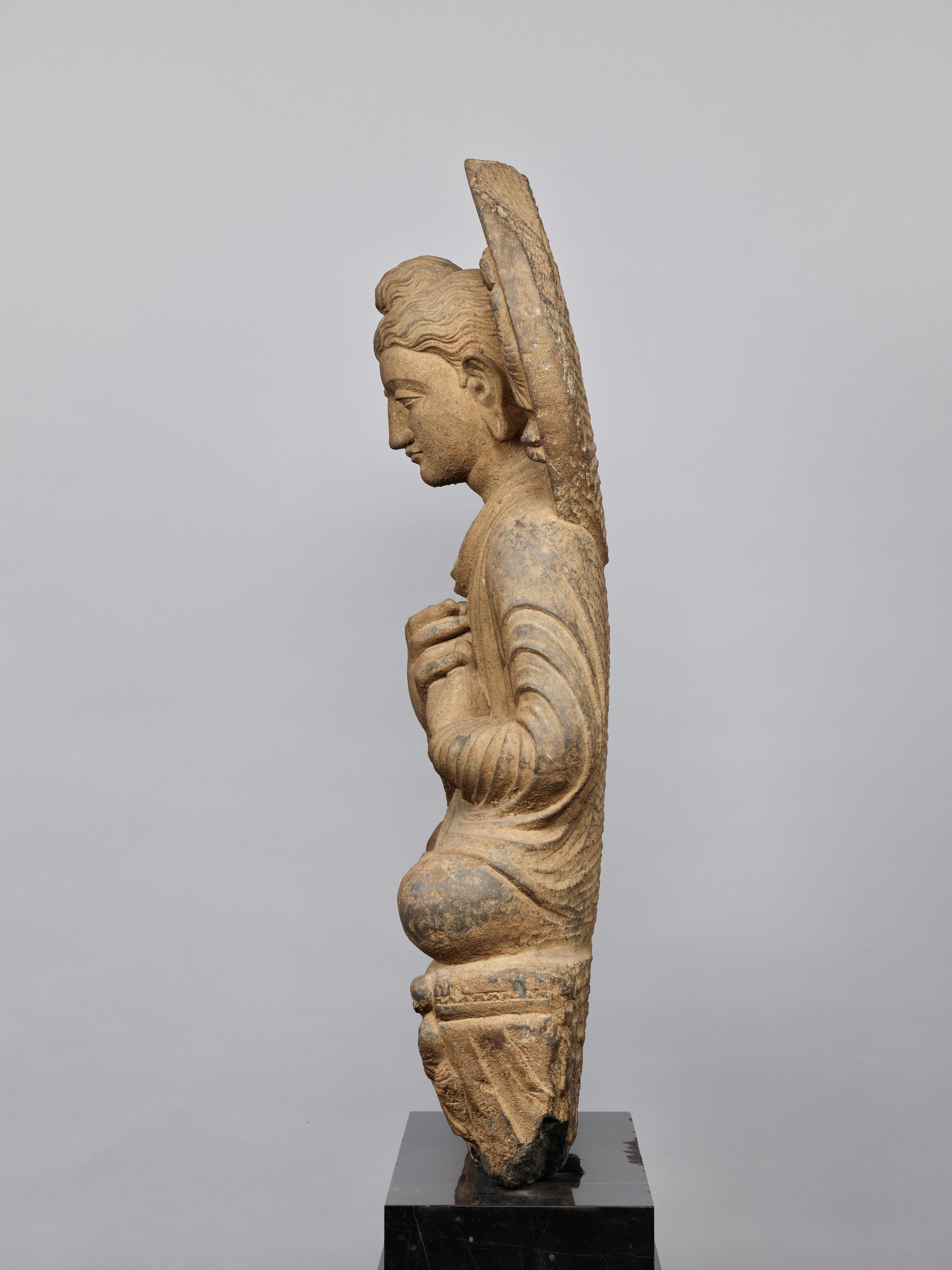
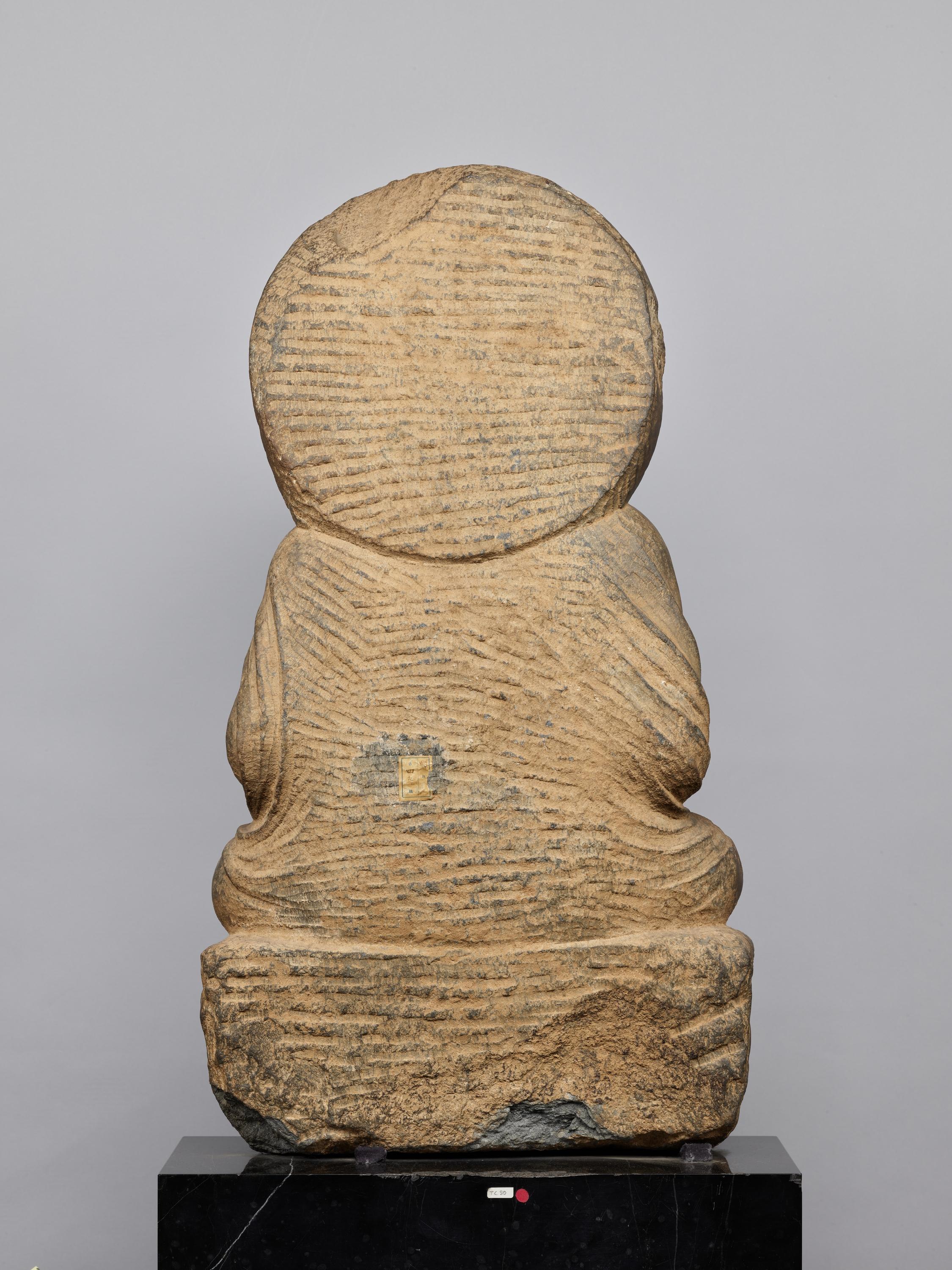
2-3世纪贵霜时期犍陀罗石雕释迦牟尼佛说法坐像(东京国立博物馆)
尺寸:不详
年代:2-3世纪 贵霜时期
质地:片岩
风格:犍陀罗
来源:东京国立博物馆
参阅:外部链接
鉴赏:
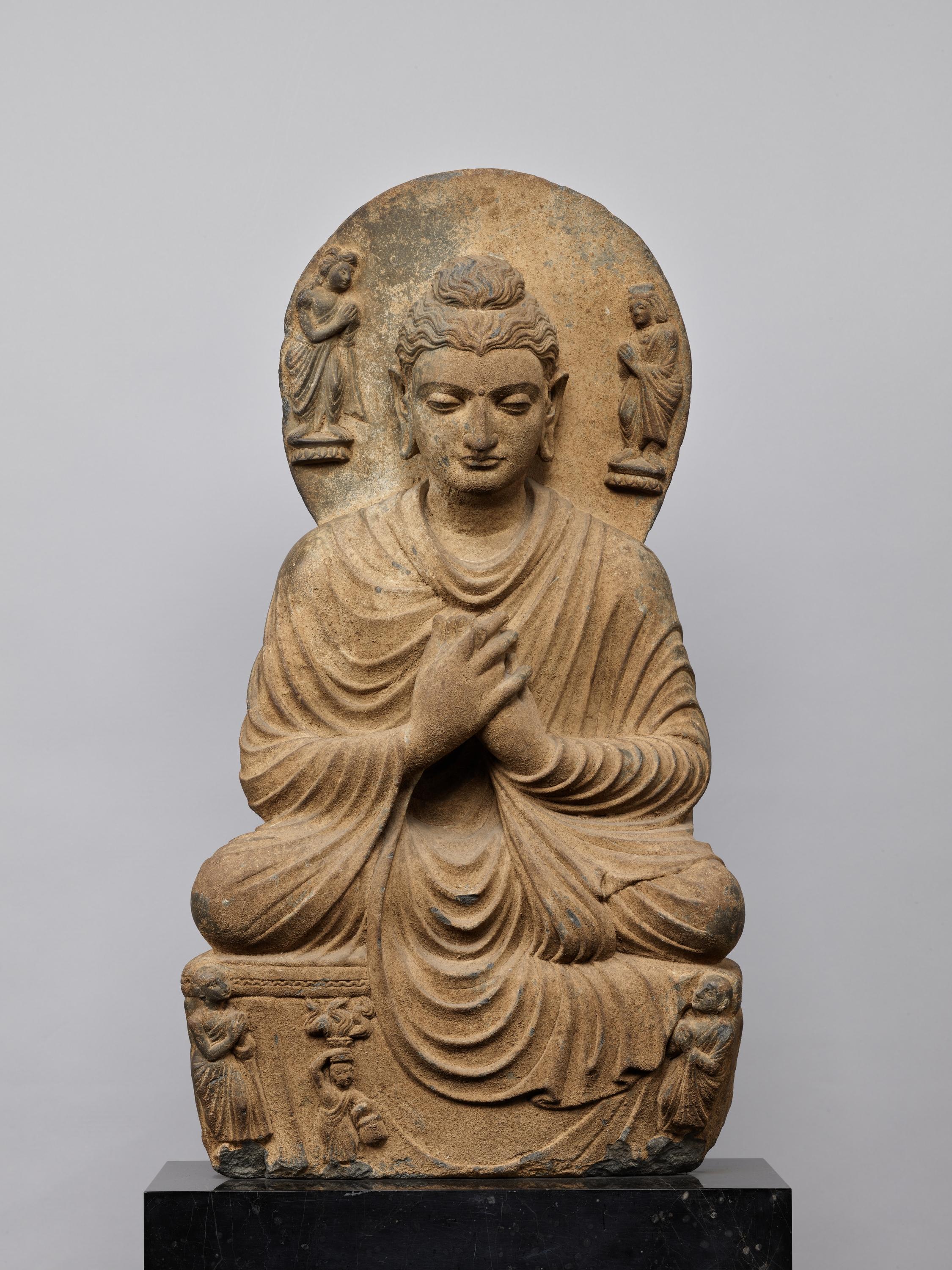
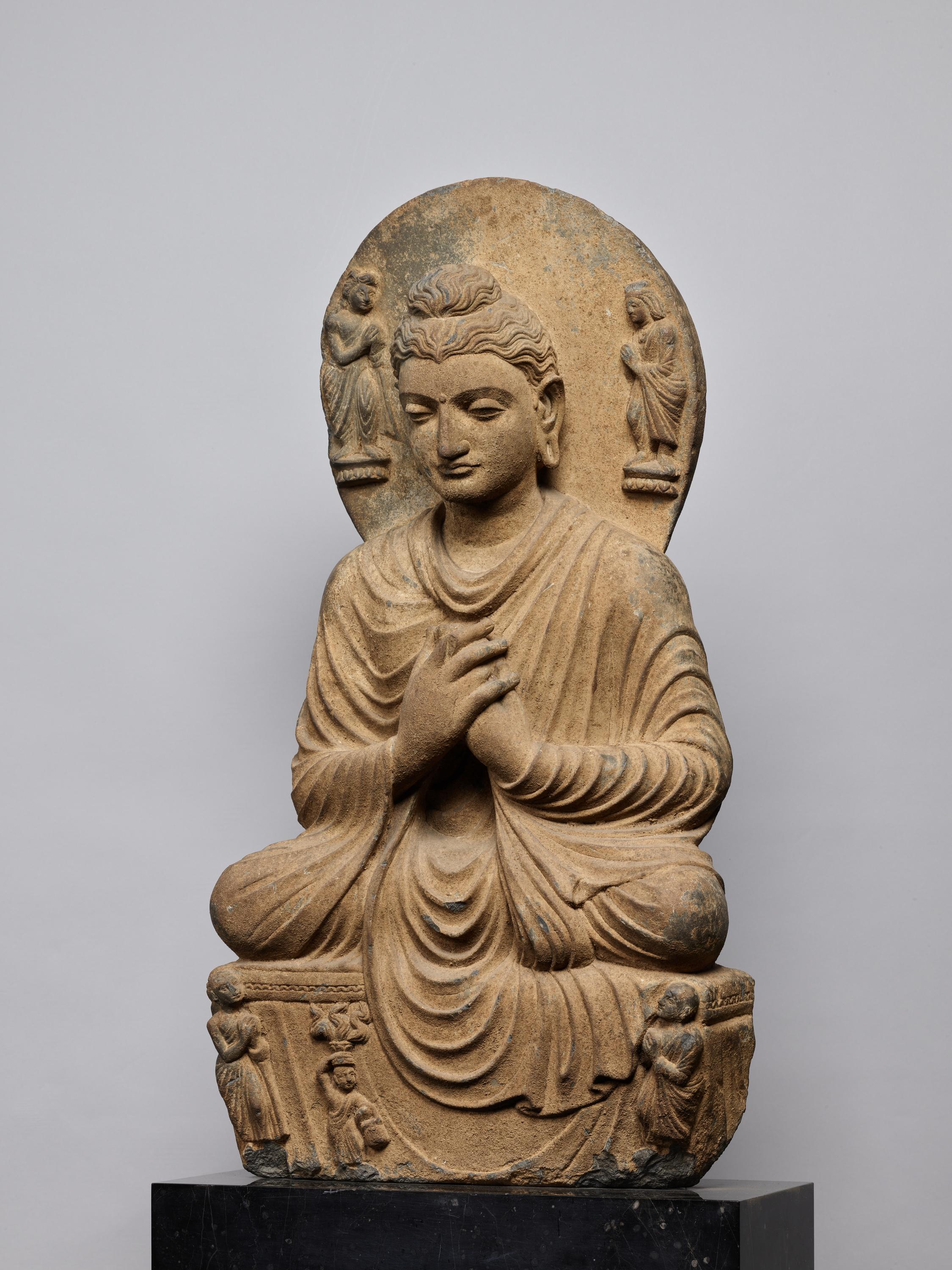
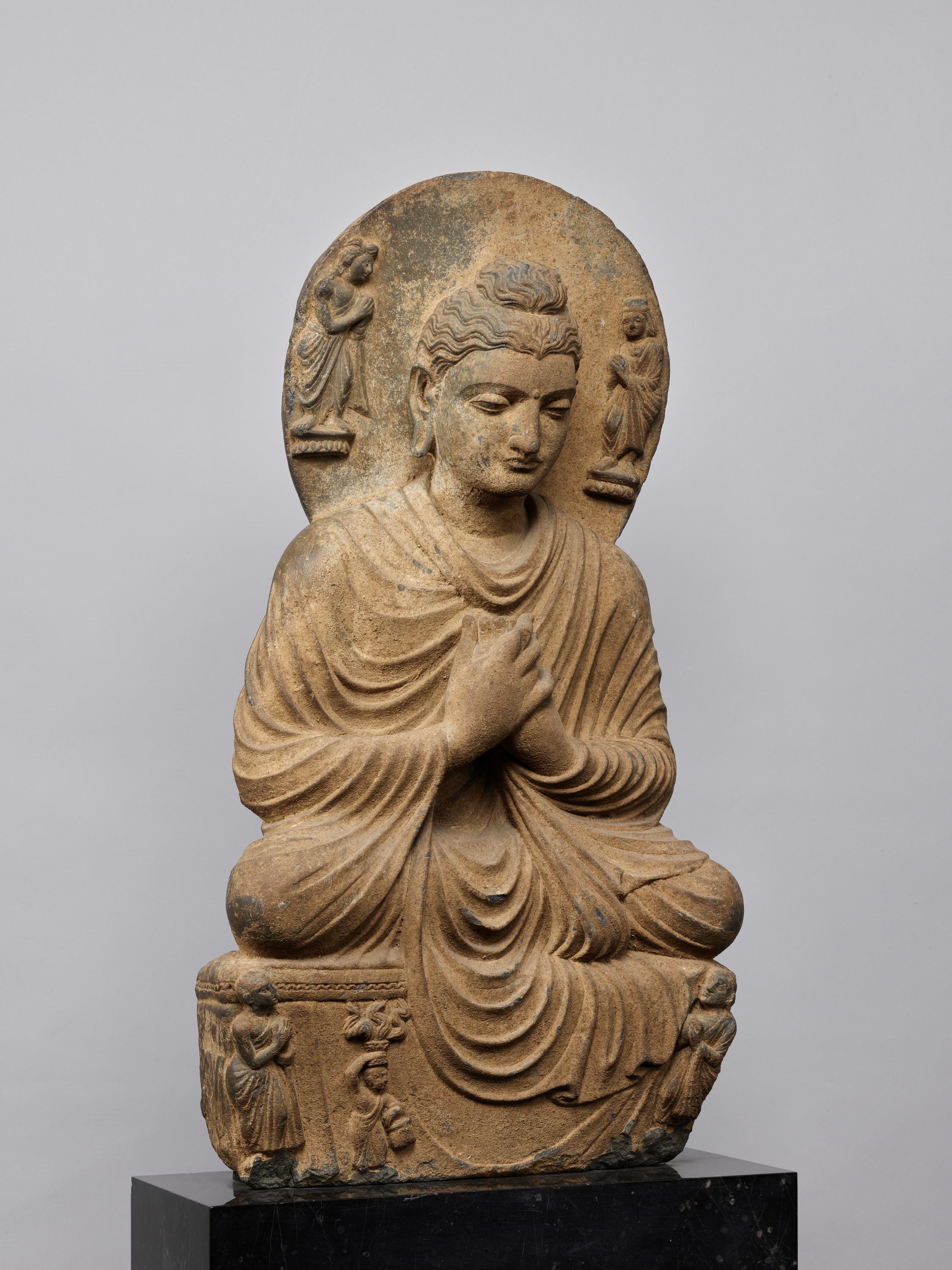
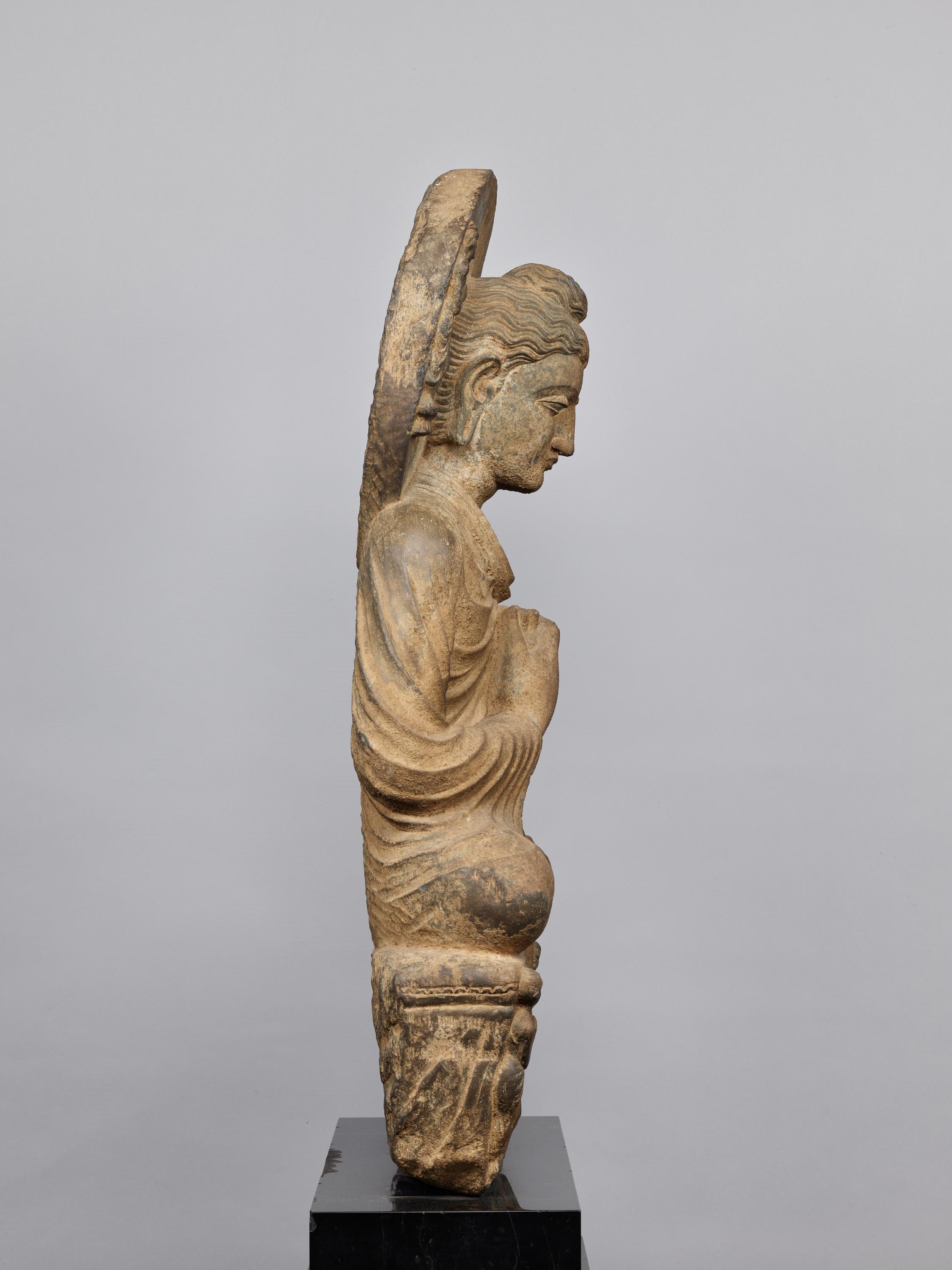
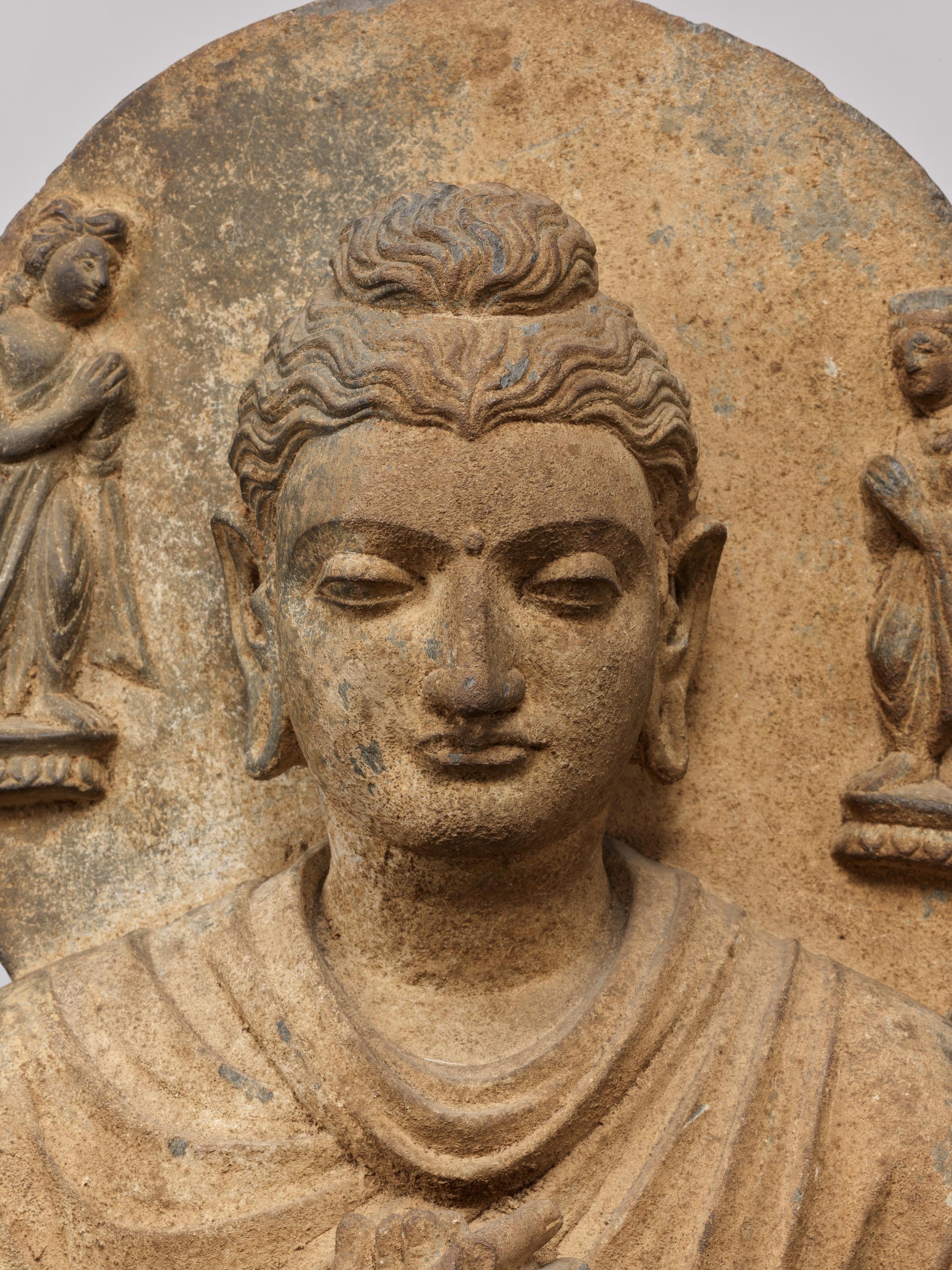
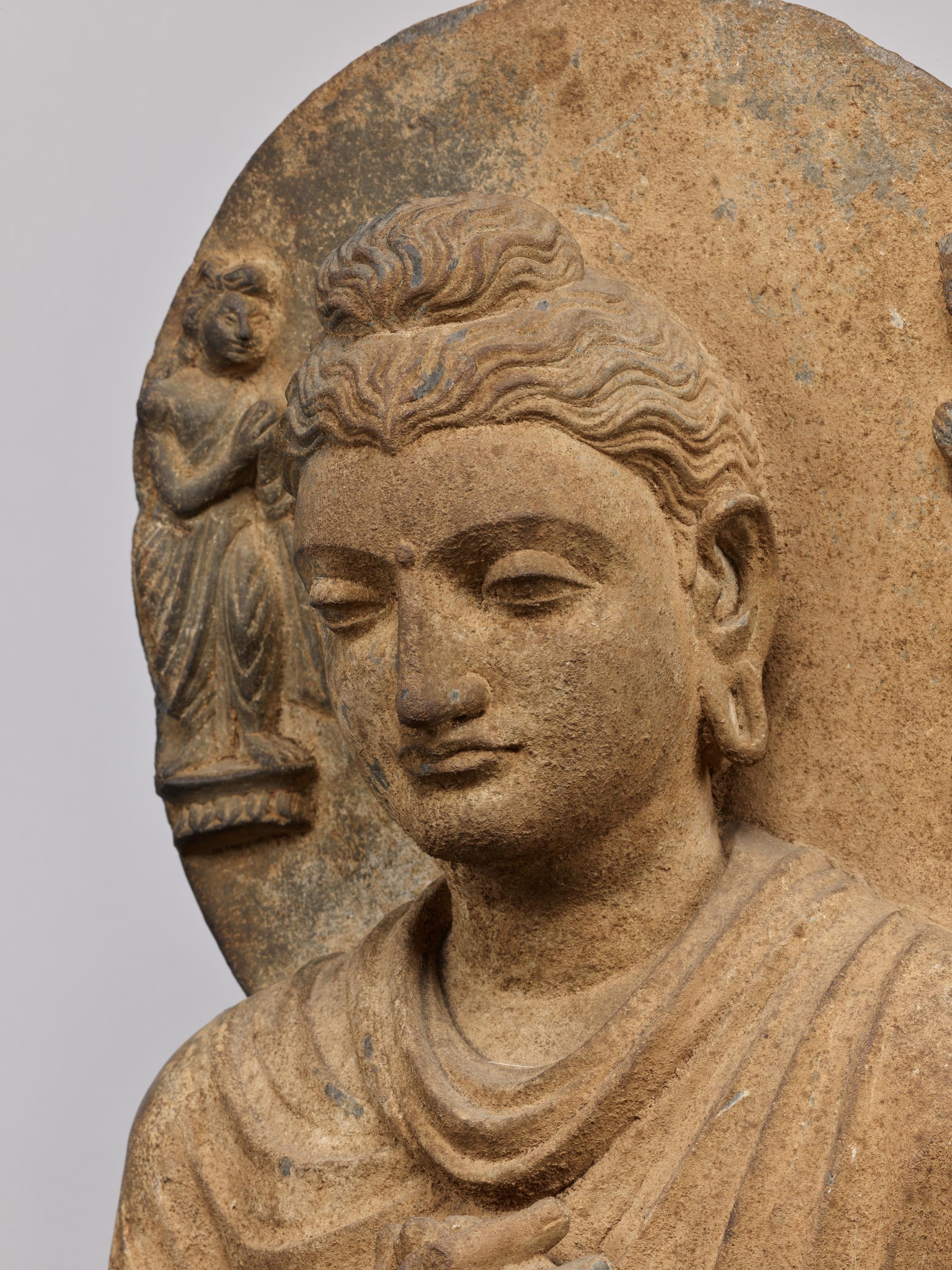
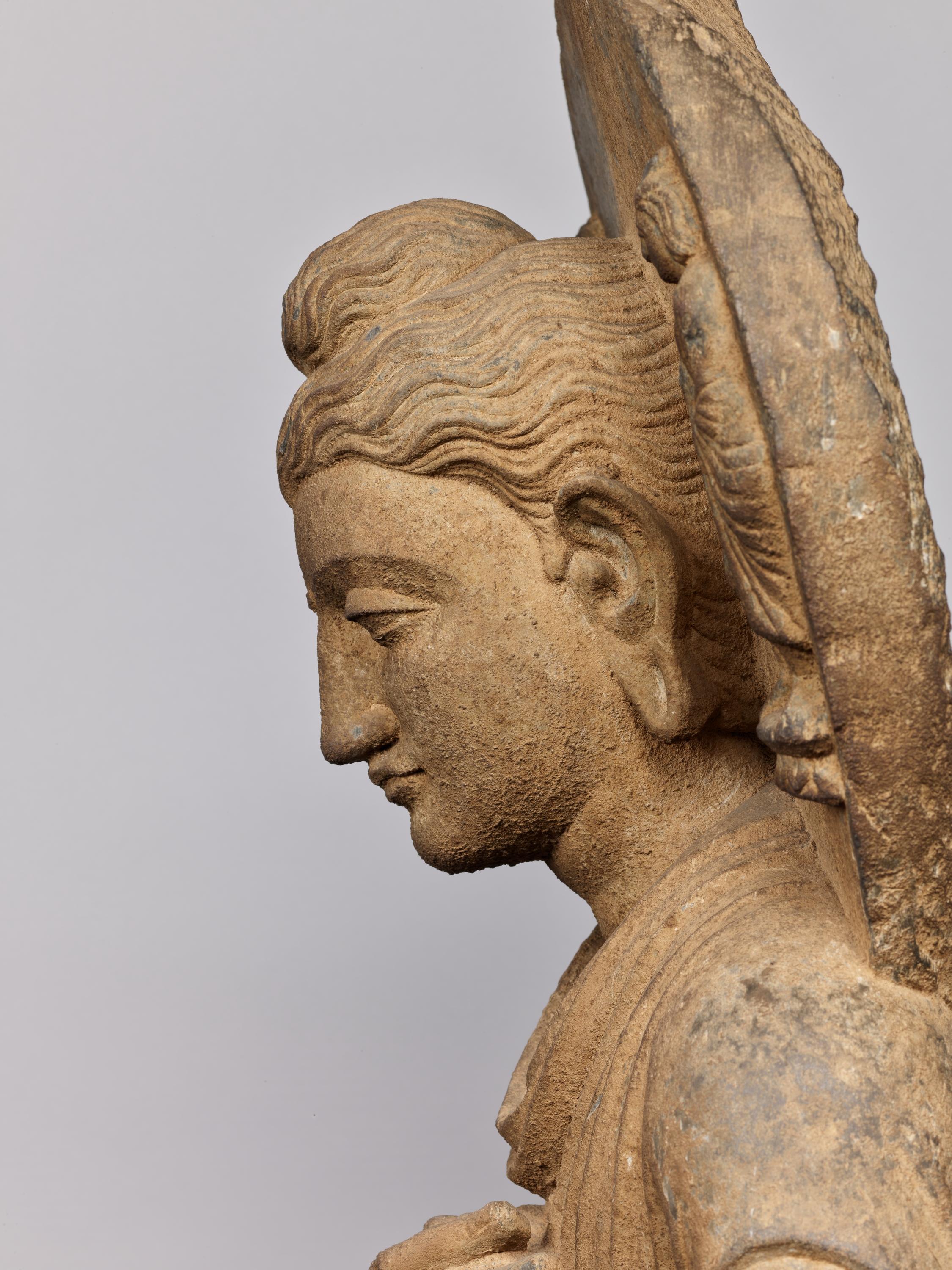
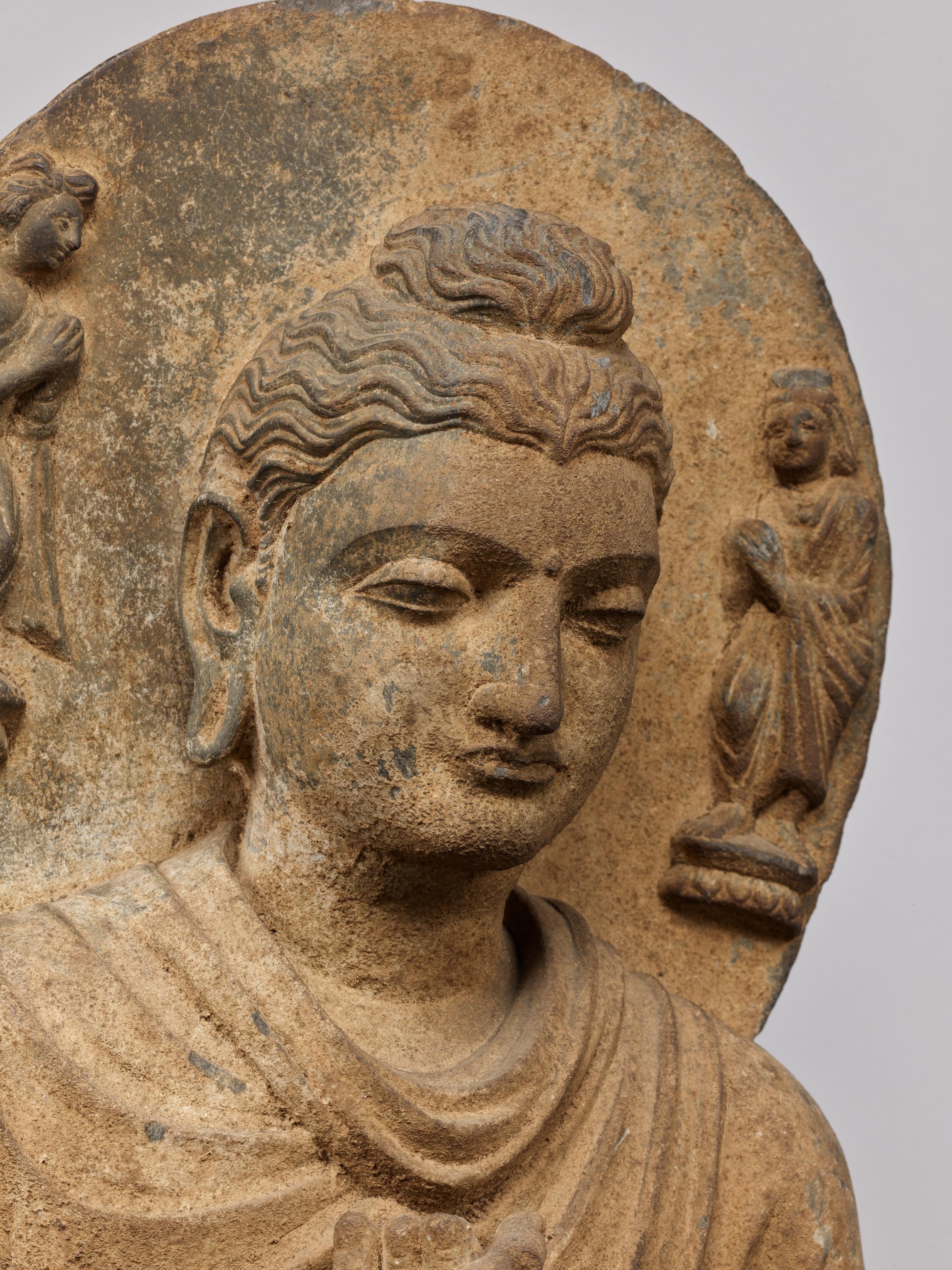
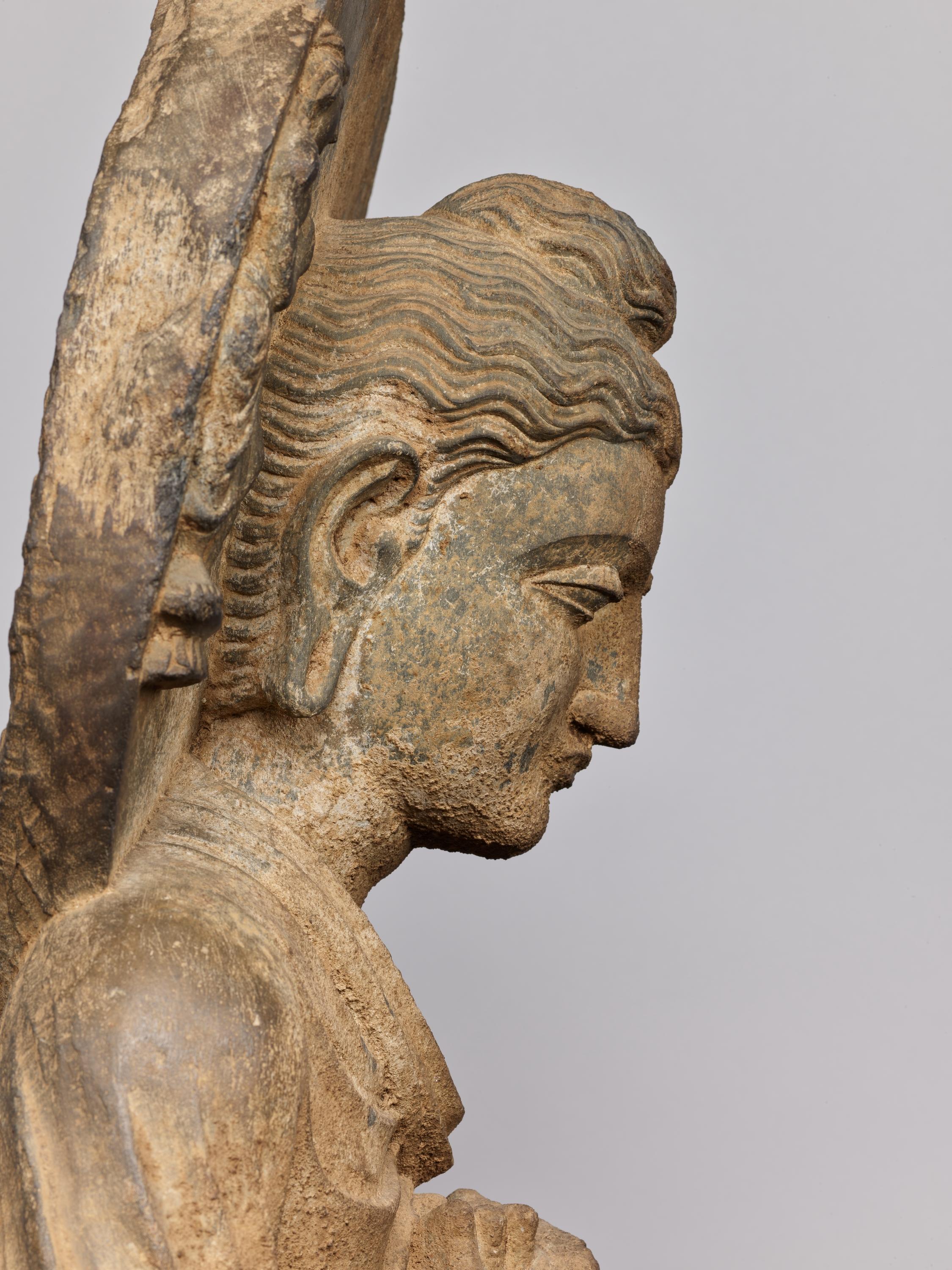 The two figures inside the Buddha's halo are the Indian deities Indra and Brahmā, who were incorporated into the Buddhist pantheon. They are shown worshipping the Buddha, an act reflecting his exalted status.
The founder of Buddhism is known by many names – Shakyamuni, Gautama, and simply the Buddha – and images of that figure began to be made in around the first century of the common era, in the Indian city of Mathura and the great realm of Gandhara in modern-day Pakistan. This sculpture was made sometime in the second or third century in Gandhara. It shows many of the features characteristic of classical Gandhara sculpture, from the wavy hair and the deeply carved face, to the multiple folds of the clothing, carved into the garment in almost parallel lines. In fact, these elements are due to the influence of Greek sculpture. The hands are joined gently together in front of the chest, a gesture that represents the Buddha as he would have looked when preaching to people. The disk-like feature behind the head symbolizes the halo of light that indicates the presence of a god or other holy being. This halo – known in Japanese sculpture as a kōhai – has small images of gods from the ancient Indian Brahmanist religion. Brahma can be seen on the left and Sakra on the right, both of whom have their hands together in prayer. We can also find images of small praying figures carved into the pedestal, alongside a figure holding a flame reverently above its head. The sculpture portrays a scene of Indian gods and people worshiping a comparatively colossal Buddha, perhaps as a way of showing the Buddha’s ultimate greatness.