3-4世纪犍陀罗石雕释迦牟尼佛立像(纽约佳士得)
尺寸:高125.4 cm
年代:3-4世纪
质地:片岩石雕
风格:犍陀罗
来源:拍卖会
成交:693,000美元(2023.03)
参阅:外部链接
鉴赏:
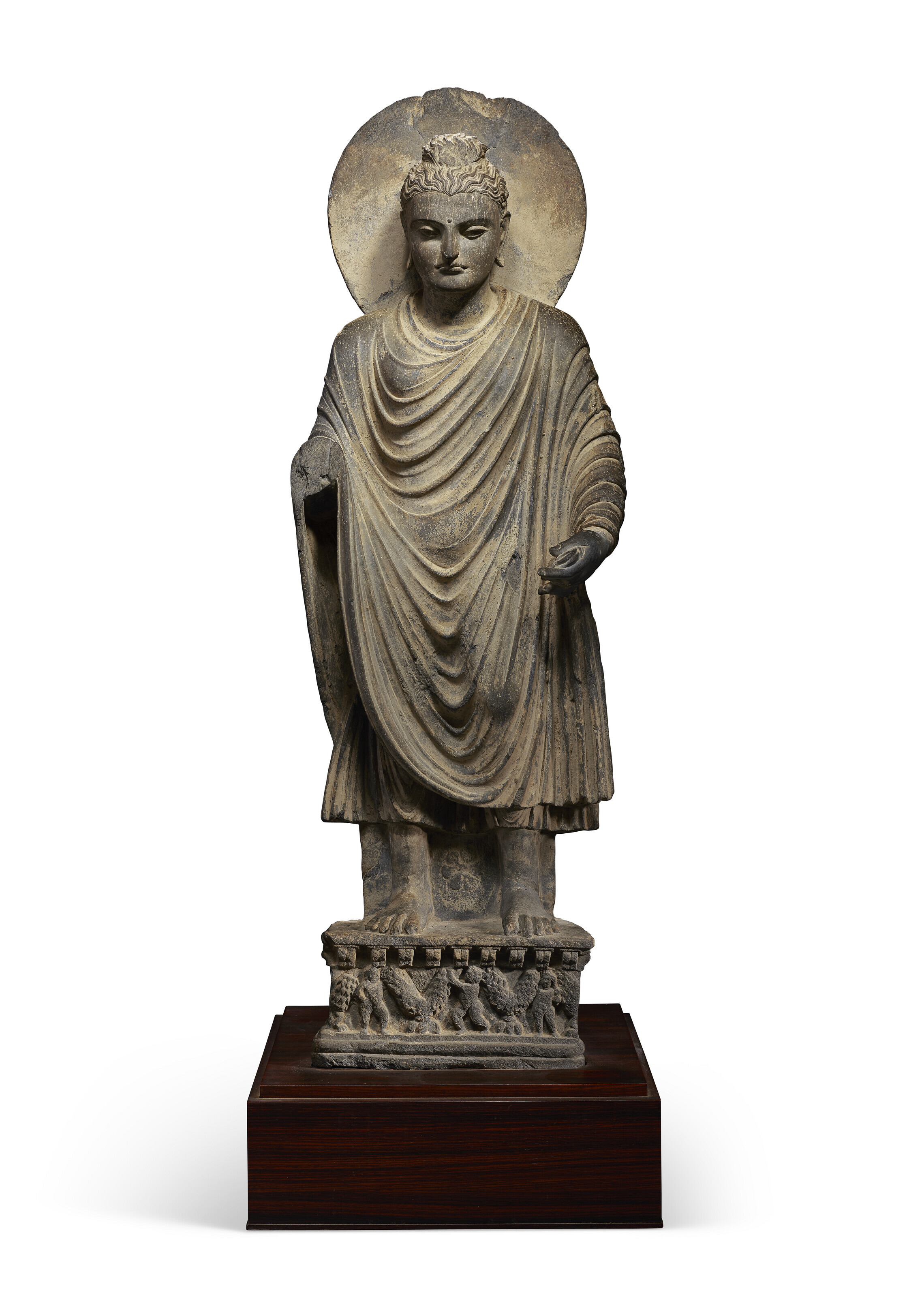
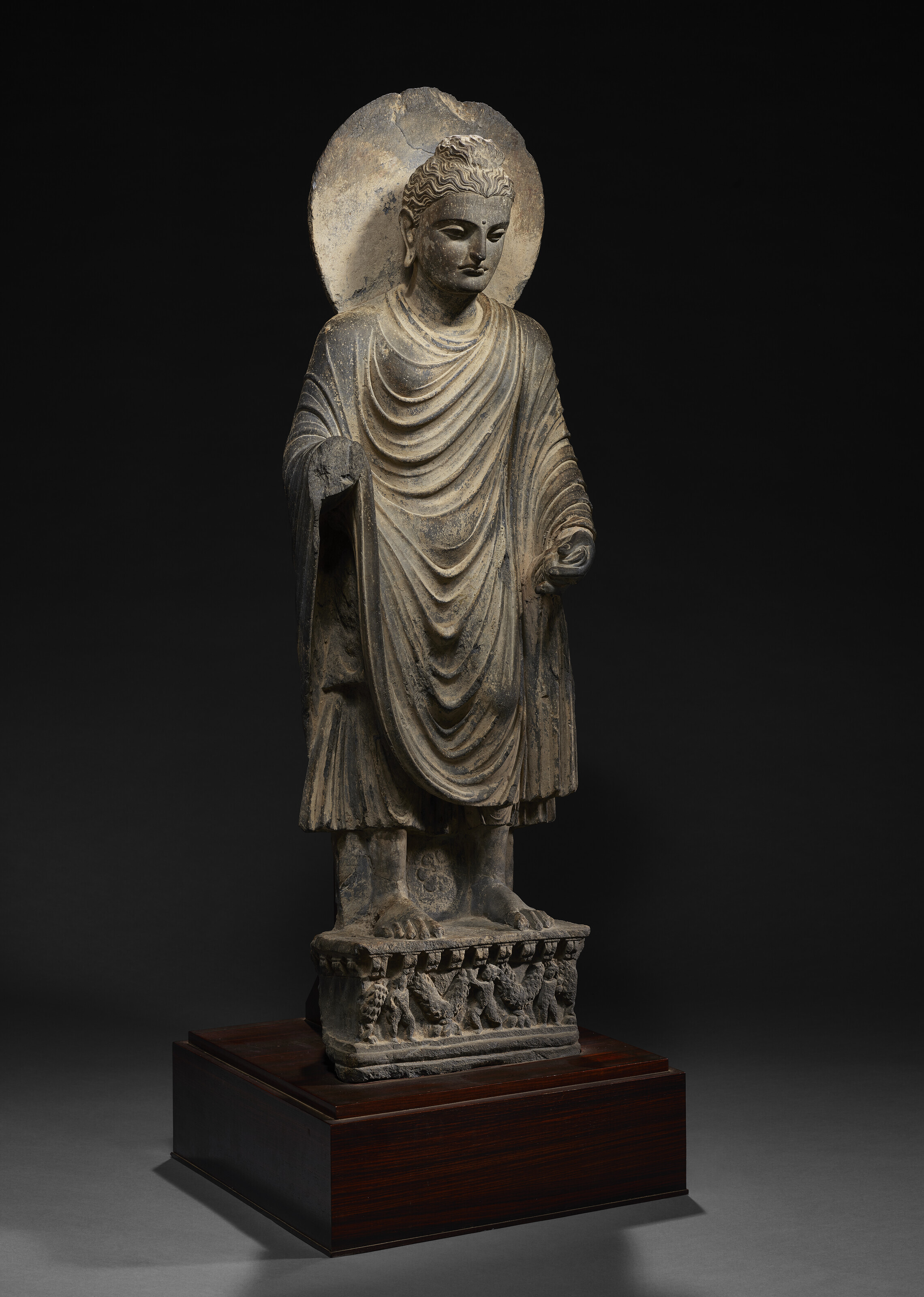
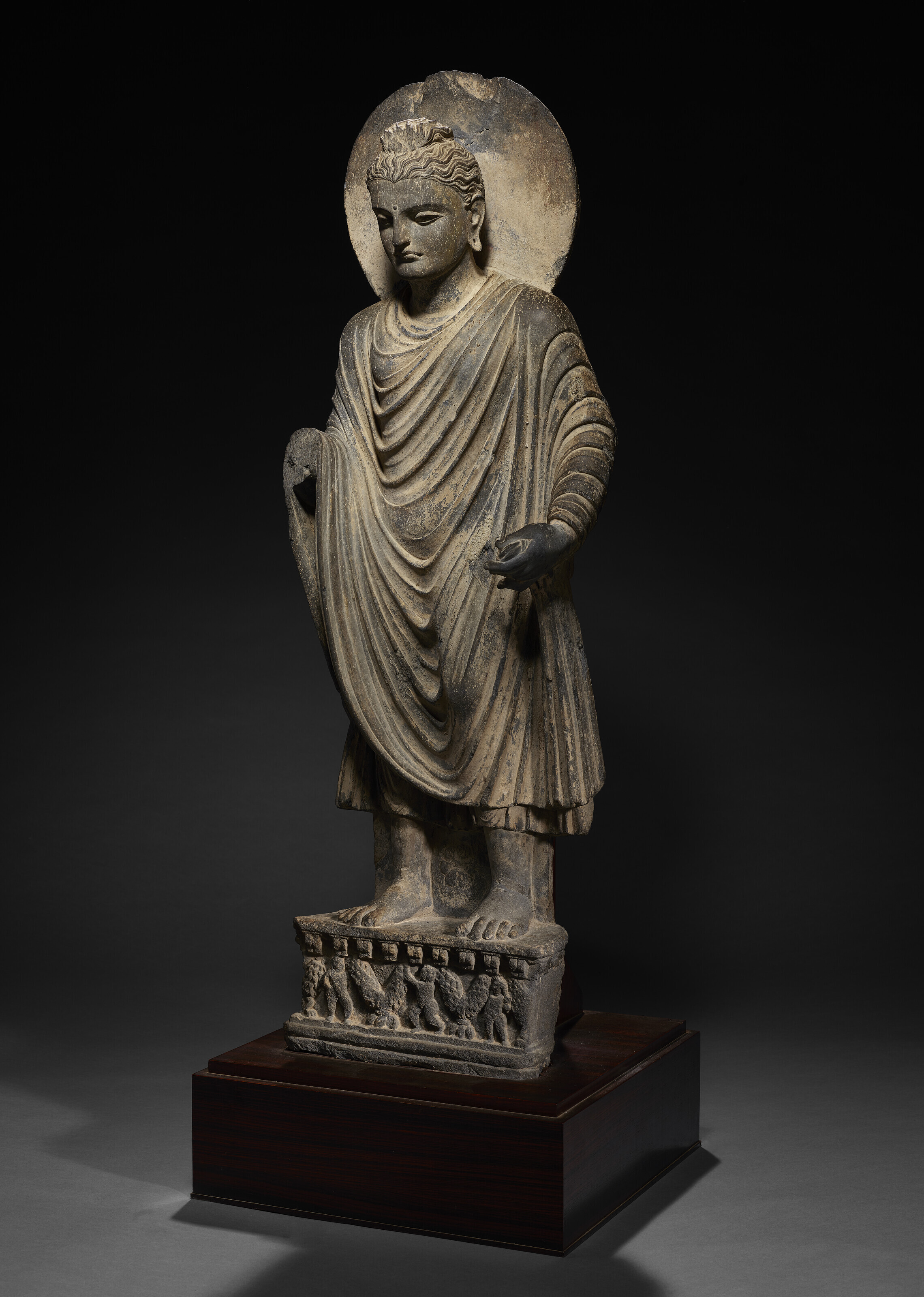
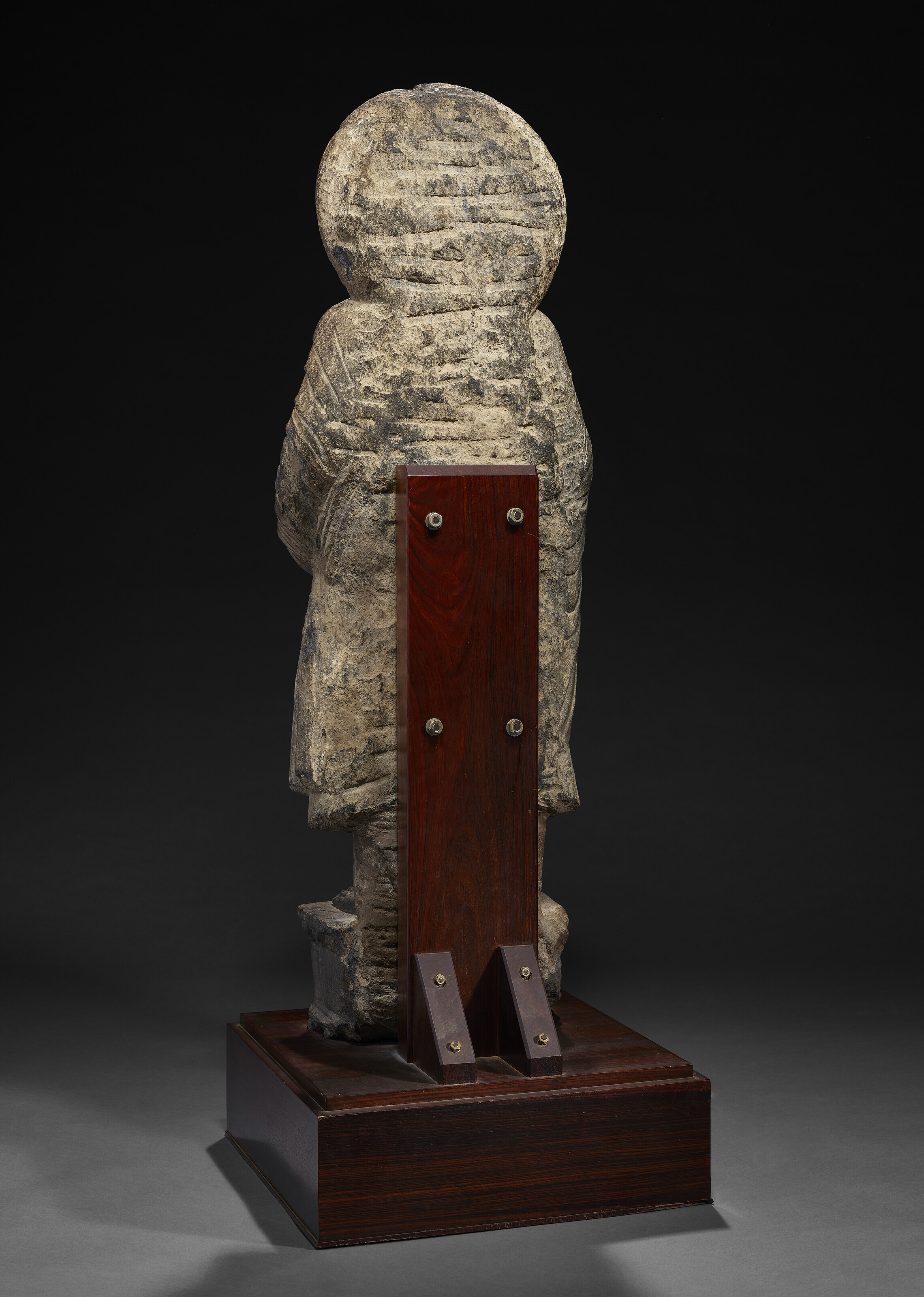
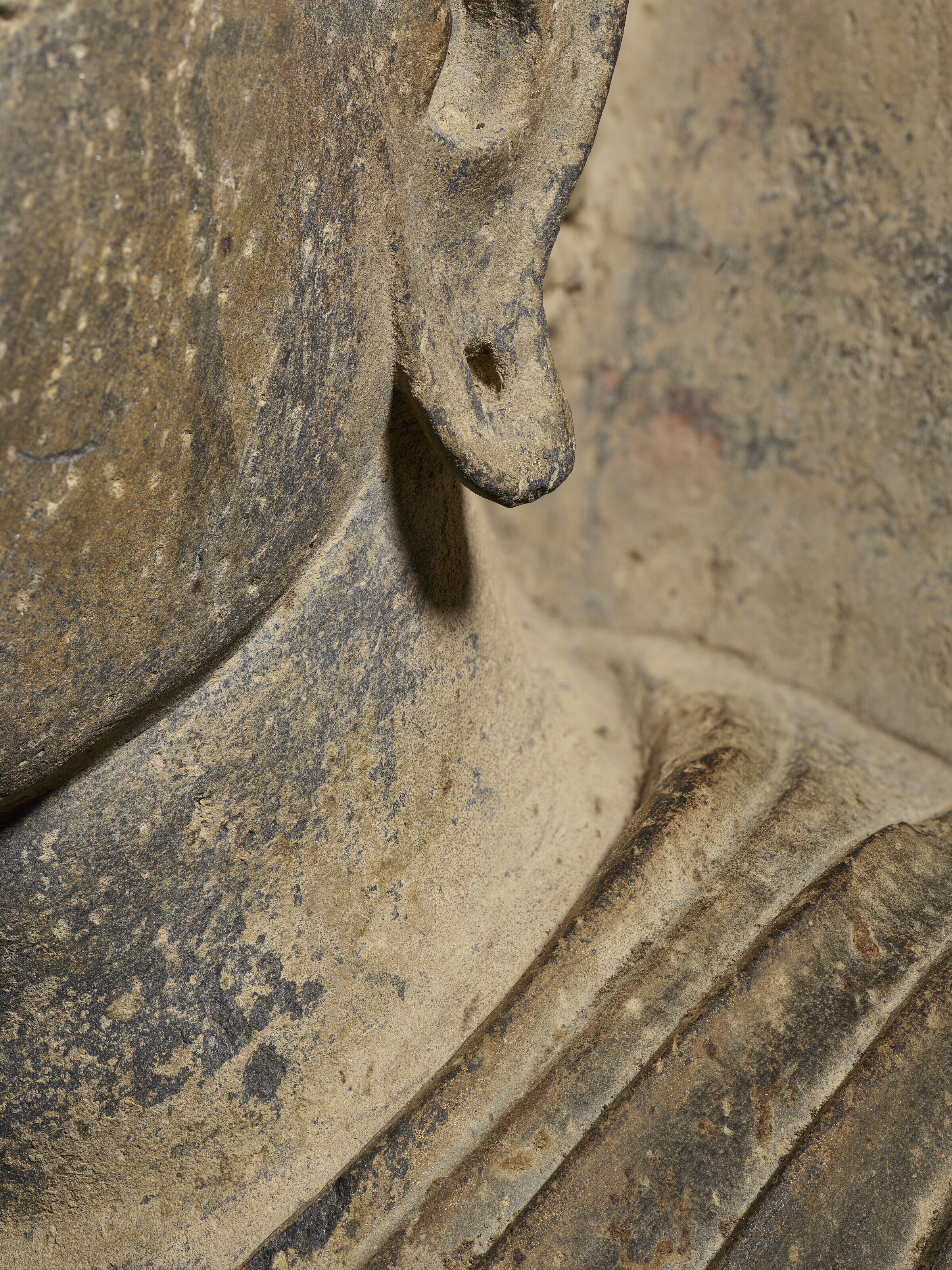
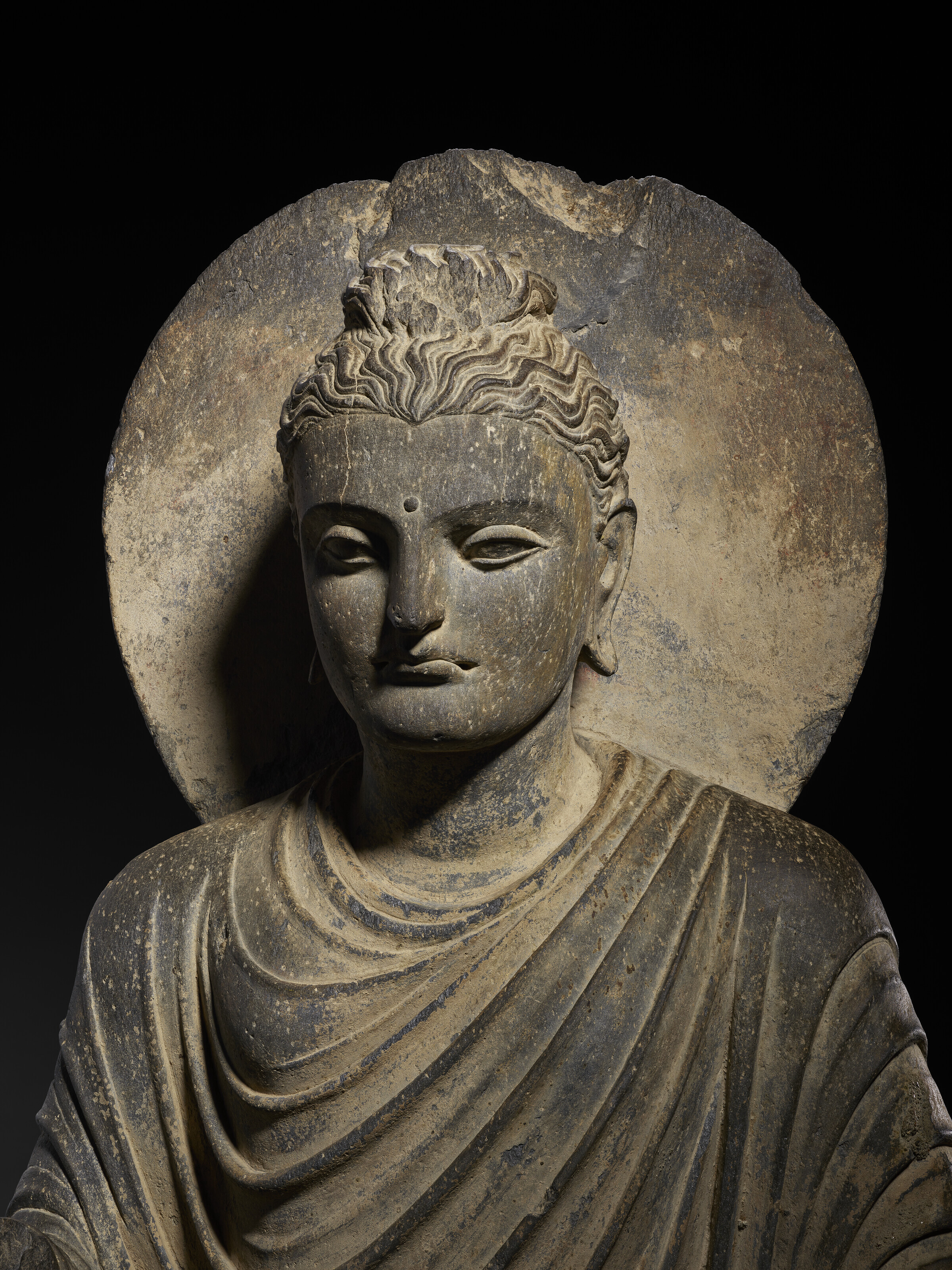
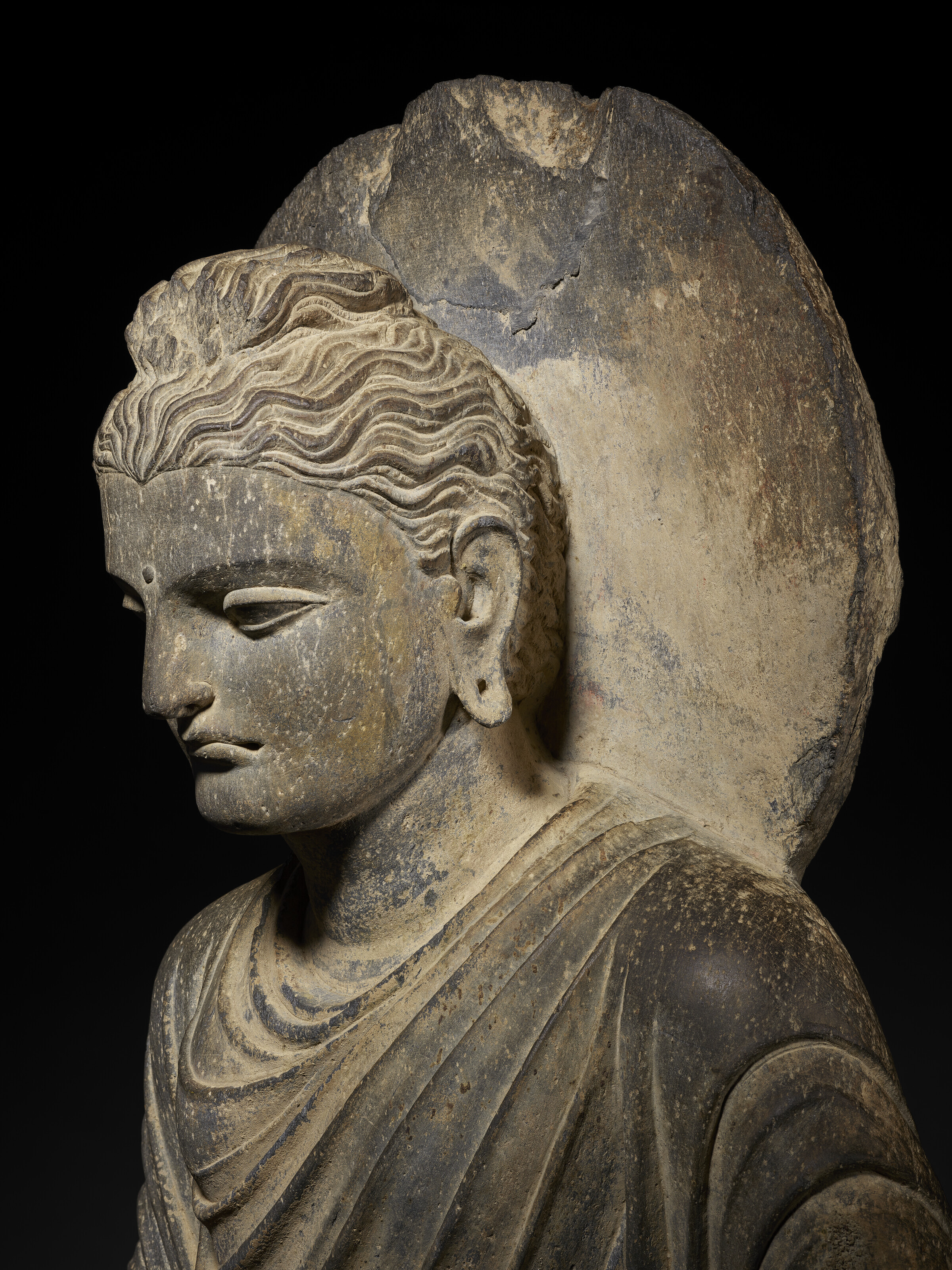
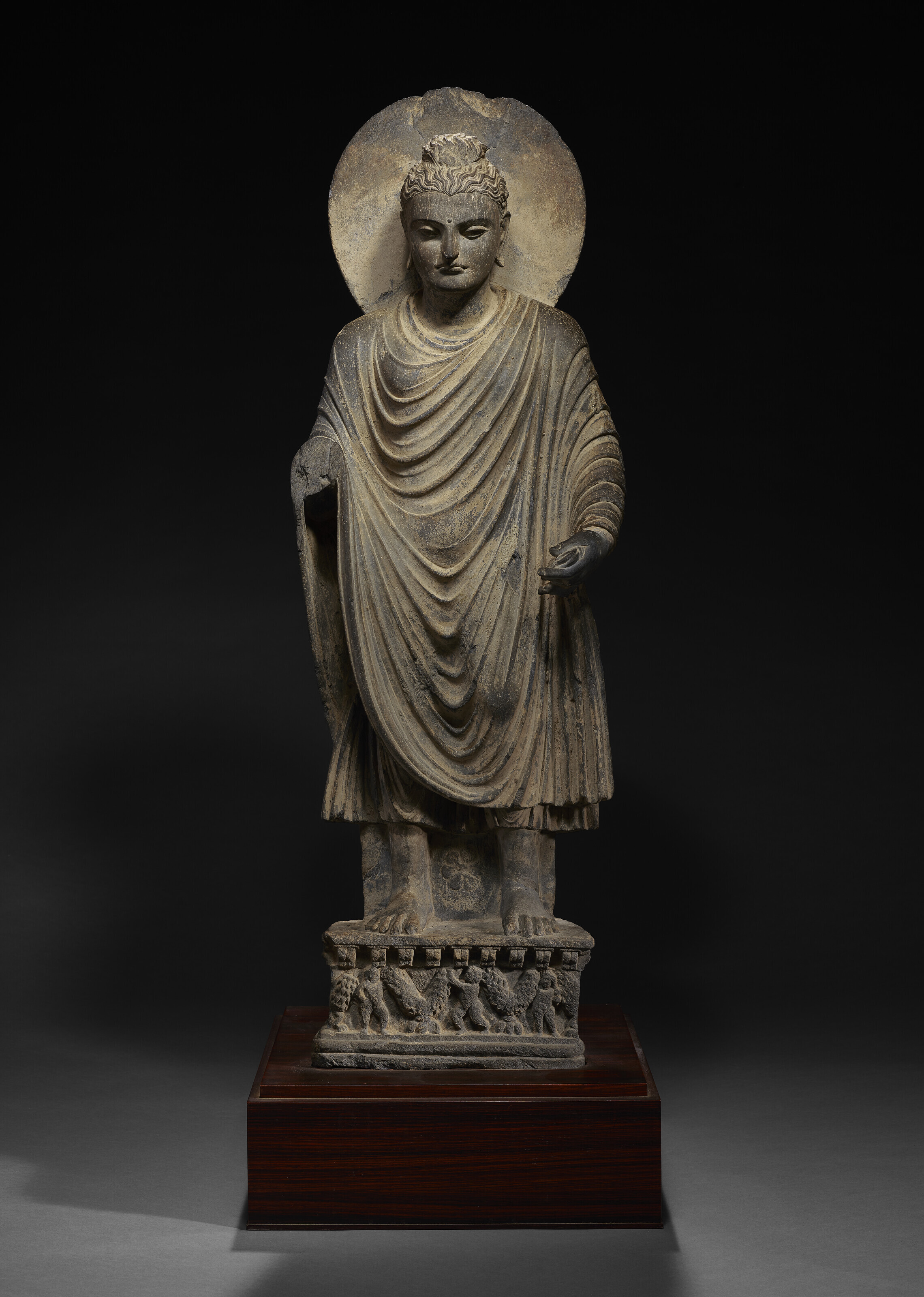 A LARGE AND IMPORTANT GREY SCHIST FIGURE OF BUDDHA SHAKYAMUNI
ANCIENT REGION OF GANDHARA, 3RD - 4TH CENTURY CE
49 3/8 in. (125.4 cm.) high
Provenance
Private collection, Japan, by 1987.
Literature
Me no Me, (Ribun shuppan, May 1987), p. 10.
Eurasian Art, Gandhara + Chinese Art, July 2020, no. 11.
Exhibited
Kyoto, Ryukoku Museum, “Tales of Buddhist Saints”, 18 April-14 June 2020, no.1-1.
Lot Essay
The ancient region of Gandhara, straddling the Khyber Pass in what now spans eastern Afghanistan and western Pakistan, was for many centuries an important center of trade and commerce. Its position at the crossroads of Central Asia meant that it was exposed to goods and ideas from India, China and the Mediterranean world.
In the centuries before the Common Era (CE), the region came under Hellenistic control after Alexander the Great annexed Gandhara to his expansive empire; following his death, the region was controlled by a succession of kings of mixed Greek and Central Asian descent. Buddhism was already well established during this time, with the Indo-Greek King Menander and the Mauryan Emperor Ashoka both noted proponents of the faith.
It was not until the reign of the Kushan dynasty in the first centuries CE that profound changes in the religious art of the region were realized. The Kushan were nomadic horsemen from the steppes of Central Asia, pushed out of their homeland in Western China circa 160 BCE. After more than a century of migration, the Kushan seized power in the regions of Gandhara and Northern India. Astute rulers, the Kushan allowed religious freedom for their subjects and adopted local Hellenistic and Indian traditions, including the Buddhist faith. Prior to their rule, the presence of Buddha was depicted in art through aniconic symbols such as the dharmachakra (wheel of law) or buddhapada (footprints of the Buddha); upon their ascension to power, however, the first images of Buddha in anthropomorphic form began to appear.
In the ancient region of Gandhara, the sculptural tradition was strongly influenced by the Hellenistic style left in the wake of Alexander. Local artisans favored the principles of figural naturalism, in particular the athletic and heroic idealized body. The depiction of the Indian dhoti and sanghati, like that of the Greek chiton and himaton, presented an opportunity to reproduce voluminous folds of drapery with wondrous aplomb, as is evident in the present work.
This magnificent standing Buddha figure exemplifies the mastery of the artist and the medium at a time when Buddhist stone sculpture in the region was at its most refined. The monastic raiment is draped across both shoulders with considerable backthrow, hanging naturalistically in u-shaped folds that reveal the contours of the powerful body. The faithful rendering of the deeply carved folds of the garment, the face, and the ripples of the hair are particularly exquisite and are a testament to the skill of the sculptor. This masterfully-carved figure embodies an idealized and transcendent male form. The heavy sanghati delicately models the muscular shoulders, torso, soft belly and rounded thigh; the left knee bends in preparation to step forward. This subtle gesture, along with the undulating folds of the robe, allows one to imagine the fabric fluttering as the Buddha moves. Heavy eyelids frame the almond-shaped eyes, the forehead remains perfectly unlined, and there is no tension in the rosebud mouth. While activated with energy, movement and life, the Buddha is simultaneously in a state of otherworldly tranquility.
Compare this masterwork with two contemporaneous standing figures of Buddha sold at Christie’s New York. Similarly sized and proportioned, these three works exemplify the highest standards of Gandharan sculpture. The ‘Manheim Buddha,’ sold 12 September 2012, lot 512, for $842,500, illustrates a classic example of the Buddha figure in ancient Gandhara. In comparison to the present figure, however, its posture is relatively stiff. While the face of the Manheim Buddha has been carved in a rather formulaic manner, the present work has been carved by a master of naturalism. The quiet contours and gentle shadows model the flawless structure of the face, encapsulating the eternal youthfulness of the Buddha. The ‘Kaplan Buddha,’ sold 13 September 2017, lot 603, for $792,000, offers a closer stylistic comparison, though surviving in a less preserved state. The present lot can be noted for its beautifully preserved condition. This includes trace amounts of gilding present on Buddha’s face, a remarkable insight into original presentation of the figure.
犍陀罗(Gandhara) 古地区横跨开伯尔山口(Khyber Pass),涵盖今阿富汗东部与巴基斯坦西部,数个世纪以来一直是重要的商贸中心。它地处中亚十字路口,因而得以接触来自印度、中国及地中海世界的货物与思想。
在公元前的数个世纪里,该地区在亚历山大大帝(Alexander the Great)将犍陀罗并入其庞大帝国后,处于希腊化统治之下;亚历山大去世后,该地区先后由多位具有希腊与中亚混合血统的国王控制。佛教在此期间早已根深蒂固, Indo-Greek 国王米南德(King Menander) 与孔雀王朝(Mauryan)皇帝阿育王(Emperor Ashoka) 均为佛教的著名拥护者。
直至公元最初几个世纪的贵霜王朝(Kushan dynasty) 统治时期,该地区的宗教艺术才发生了深刻变革。贵霜人是来自中亚草原的游牧骑手,约公元前160年被逐出中国西部的故土。经过一个多世纪的迁徙,贵霜人夺取了犍陀罗与北印度的统治权。作为精明的统治者,贵霜人允许臣民宗教自由,并采纳了当地的希腊化与印度传统,包括佛教信仰。在他们统治之前,佛陀的形象在艺术中是通过象征符号(aniconic symbols) 表现的,如法轮(dharmachakra,即佛法之轮) 或佛足印(buddhapada,佛陀足迹);而随着贵霜人掌权,第一批人形(anthropomorphic form) 的佛陀形象开始出现。
在犍陀罗古地区,雕塑传统深受亚历山大之后留下的希腊化风格影响。当地工匠偏爱人物自然主义的法则,尤其是充满运动感与英雄气概的理想化身体。对印度式腰衣(dhoti) 与僧袍(sanghati) 的刻画——正如对希腊式基同(chiton) 与希玛申(himation) 一样——提供了以惊人自信再现大量垂褶衣纹的机会,这一点在本作品中表现得很明显。
这尊宏伟的佛陀立像,在该地区佛教石雕艺术达到最精致成熟的时期,展现了艺术家对材质的高超掌控能力。僧袍披覆双肩,大幅向后甩动,呈U形褶裥自然垂落,显露出健硕身躯的轮廓。对衣褶、面部及发髻波纹的深刻雕琢尤为精美,足证雕刻师技艺之精湛。
这尊技艺超群的雕像体现了一种理想化且超验的男性形象。厚重的僧袍细腻地塑造出肌肉发达的肩部、躯干、柔软的腹部与圆润的大腿;左膝微曲,作迈步之势。这一含蓄的动态,连同起伏的衣褶,让人想象佛陀行走时衣料随之飘动。厚重的眼睑框住杏仁形的双眼,额头完美无纹,花蕾般的嘴唇毫无紧张之感。佛陀既被赋予了活力、动感与生命,同时又处于一种超然世外的宁静之中。
将这尊杰作与两尊同期佛陀立像(均售于佳士得纽约)进行比较。三者尺寸与比例相近,代表了犍陀罗雕塑的最高水准。“曼海姆佛陀(Manheim Buddha)” 售于2012年9月12日,拍品512号,成交价842,500美元,是犍陀罗古地区佛陀雕像的经典范例。然而,与本尊相比,其姿态相对僵硬。曼海姆佛陀的面部雕刻较为程式化,而本作品则出自一位自然主义大师之手。宁静的轮廓与柔和的光影塑造出完美无瑕的面部结构,凝聚了佛陀永恒的青春气息。“卡普兰佛陀(Kaplan Buddha)” 售于2017年9月13日,拍品603号,成交价792,000美元,在风格上与本尊更为接近,但其保存状况较差。本件拍品则以其精美的保存状态而引人注目,尤其是佛陀面部尚存微量鎏金,为了解此像最初的呈现方式提供了非凡的线索。