11世纪西藏帕拉合金铜伏魔金刚手菩萨(美国鲁宾艺术博物馆)
尺寸:不详
年代:11世纪
质地:合金铜(Copper alloy)
风格:西藏
来源:美国鲁宾艺术博物馆
参阅:外部链接
鉴赏:
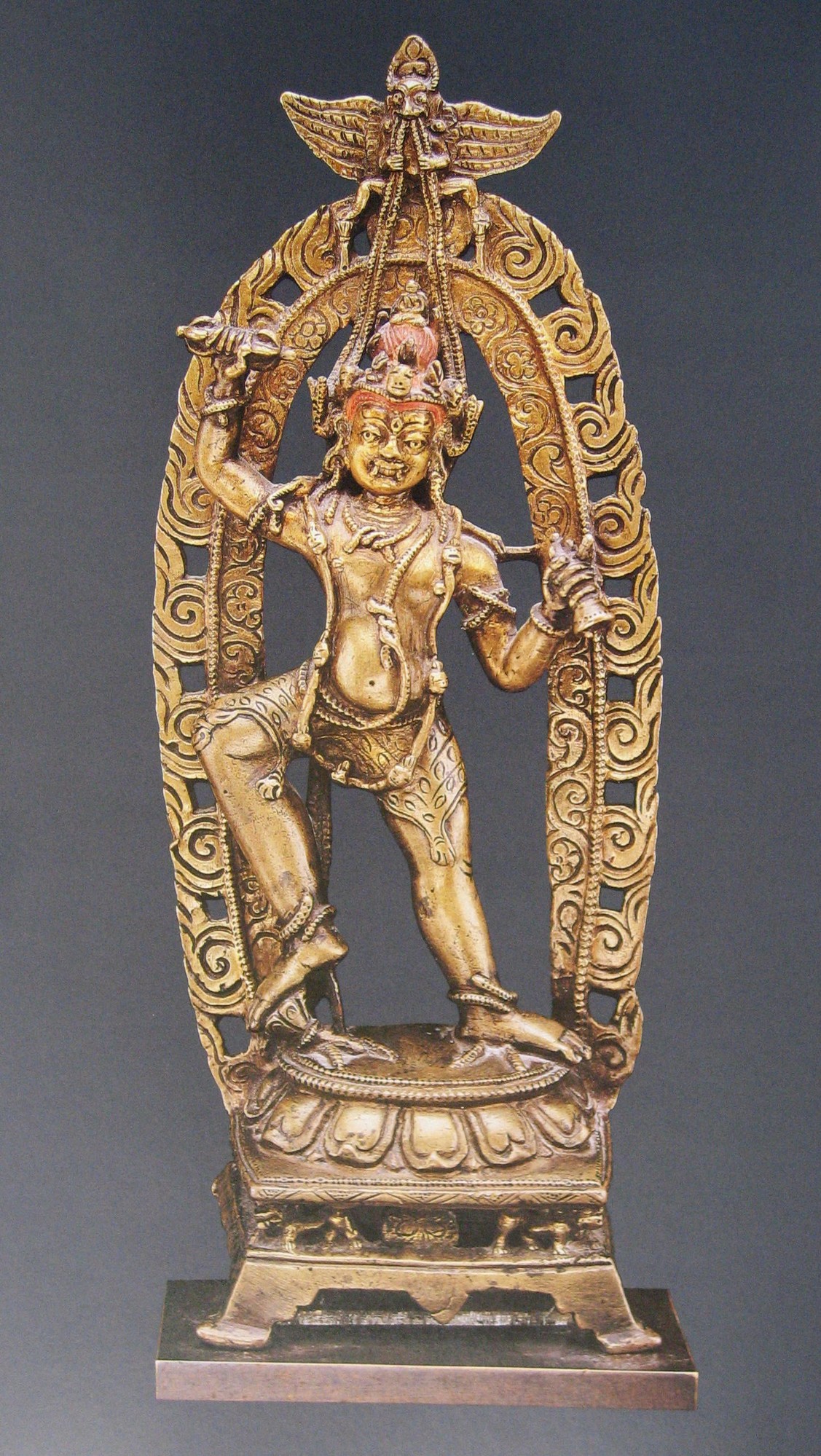 Vajrapani is the tantric deity who holds the vajra, the indestructible thunderbolt and short scepter, the implement of actively compassionate methods. The vajra is balanced by the bell, symbolizing the power of wisdom that is inseparable from it. Vajrapani’s attributes illustrate the connections between tantric ritual empowerments and political power, which appealed to rulers who adopted his worship. Vajrapani was one of the most popular deities in early Tantric Buddhism as it originated in India and spread elsewhere, and this bronze dates to the time of tantra’s early propagation in Tibet. According to Buddhist traditions, Vajrapani acts as a wrathful protector, but one who represents the potential of tantric practice for full awakening rather than just worldly benefits. He is often described as a general who commands the other protector deities and as the guardian of ritual secrets of tantra. The spells he guards are secret, and the esoteric system as a whole is known as mantra. State secrets are also known as mantra, and the king’s counsellors are known as mantrins. The vajra resembles the royal scepter, or danda, a symbolic weapon held by a ruler, general, or anyone who holds martial power.
One of the strongest connections between the tantric ritual of Vajrapani and kingship is the initiation or empowerment ceremony, abhisheka. This is a prerequisite for other tantric practices and is much like the coronation ceremony of a king, including symbolic actions like bathing with water and crowning. According to the story of Vajrapani’s original tantric initiation, the primordial Buddha Vairocana consecrated the 36 deities of his divine realm, or mandala, much as an emperor crowns his vassals. With the vajra placed in his hand Vajrapani was consecrated as the protector of the dharma and empowered to be a cakravartin, a victorious ruler who fights on behalf of all the buddhas. Following his empowerment, Vajrapani used his power to accomplish religious conversion by force. He overcome the Hindu god Maheshvara, or Shiva, and forced his retinue to surrender and support Buddhist teachings.
金刚手菩萨是手持金刚杵的密续本尊,这柄金刚杵象征不可摧毁的雷电与短杖,代表着积极慈悲的法门。金刚杵与铃铛相呼应,后者象征与之不可分割的智慧之力。金刚手菩萨的持物揭示了密续灌顶仪式与王权政治的关联,这对尊奉他的统治者极具吸引力。作为源自印度并传播至各地的早期密教中最受崇敬的本尊之一,这尊青铜像的年代正值密法初传西藏之际。据佛教传统,金刚手菩萨虽现忿怒护法相,却代表着密续修行成就究竟觉悟的潜能,而不仅限于世间利益。他常被描述为统领其他护法神灵的将军,以及守护密续仪轨秘密的本尊。他所守护的咒语属于秘密教法,整个密法体系被称为“曼陀罗”(真言)。国家机密同样被称为“曼陀罗”,国王的顾问则被称为“曼陀林”(真言行者)。金刚杵犹如王室权杖或象征君主、将领及掌权者权威的兵器“丹达”。
金刚手菩萨密续仪轨与王权最深刻的联结之一在于灌顶仪式——即授权仪式。这是修持其他密法的先决条件,与国王加冕典礼极为相似,包含以圣水沐浴、加冕等象征性行为。据金刚手菩萨最初获得密续灌顶的记载,本初佛毗卢遮那为其天界曼荼罗中的三十六位圣众开光,犹如皇帝为诸侯加冕。当金刚杵置于金刚手菩萨掌中时,他被授记为正法守护者,并获得转轮圣王——为诸佛而战的胜者——的权柄。灌顶之后,金刚手菩萨以威猛之力实现宗教转化,降伏印度教大神摩醯首罗(湿婆),迫使其眷属归顺并护持佛教教法。