
侧边栏

17世纪明代铜鎏金大日如来坐像(纽约苏富比)
尺寸:高97cm
年代:明代 17世纪
质地:铜鎏金
风格:中原
来源:拍卖会
成交:241,300美元(2024.03)
参阅:纽约苏富比
鉴赏:
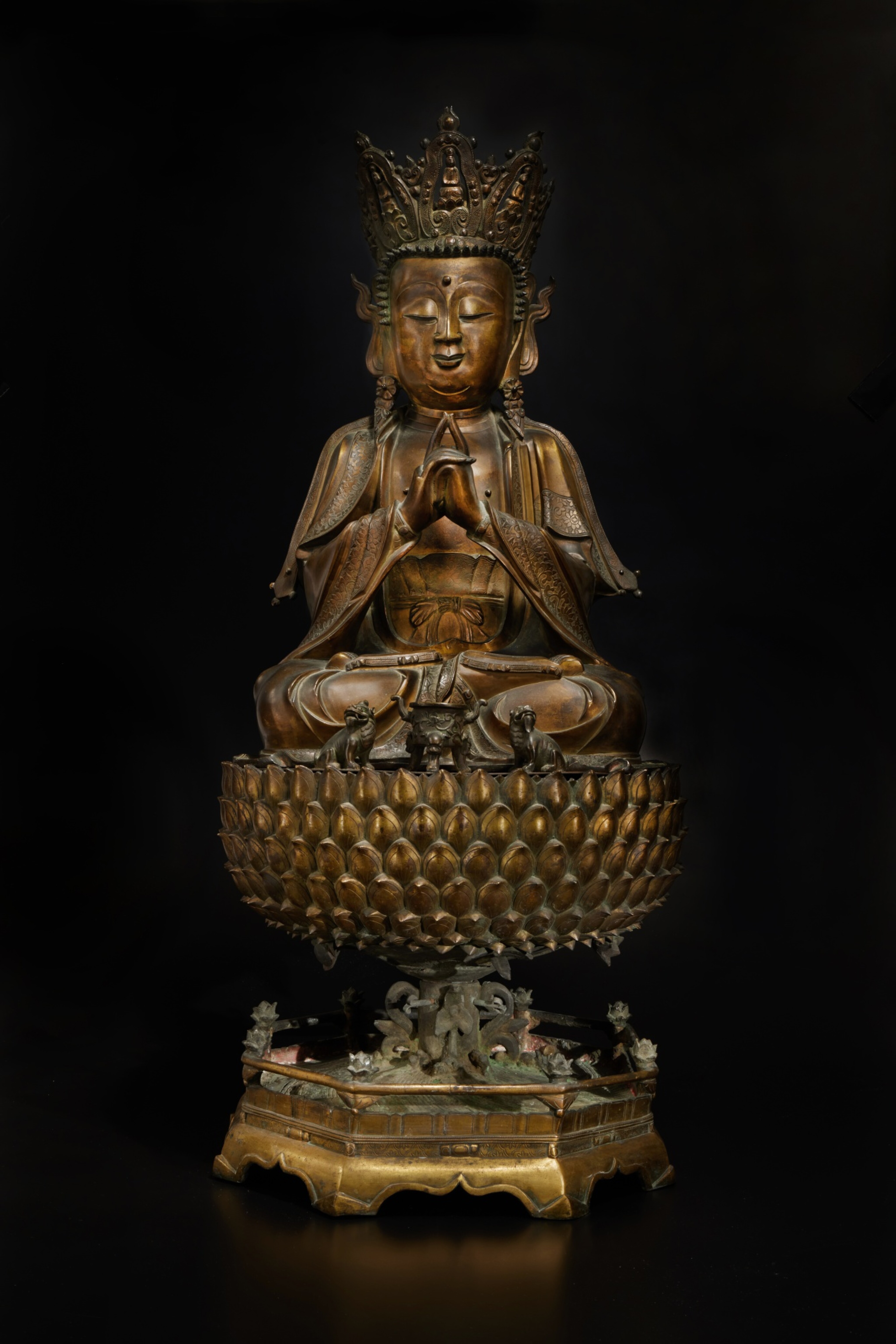
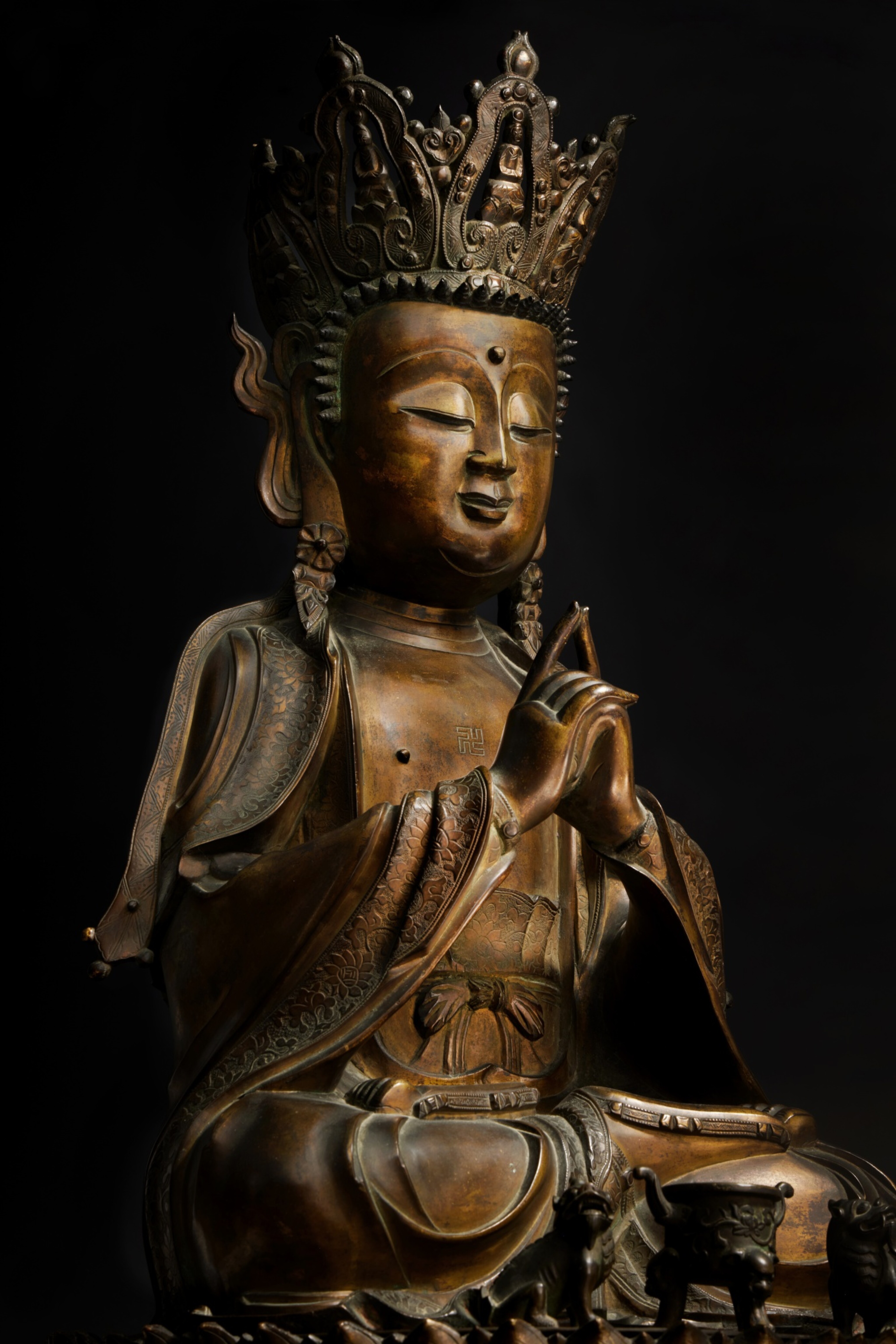
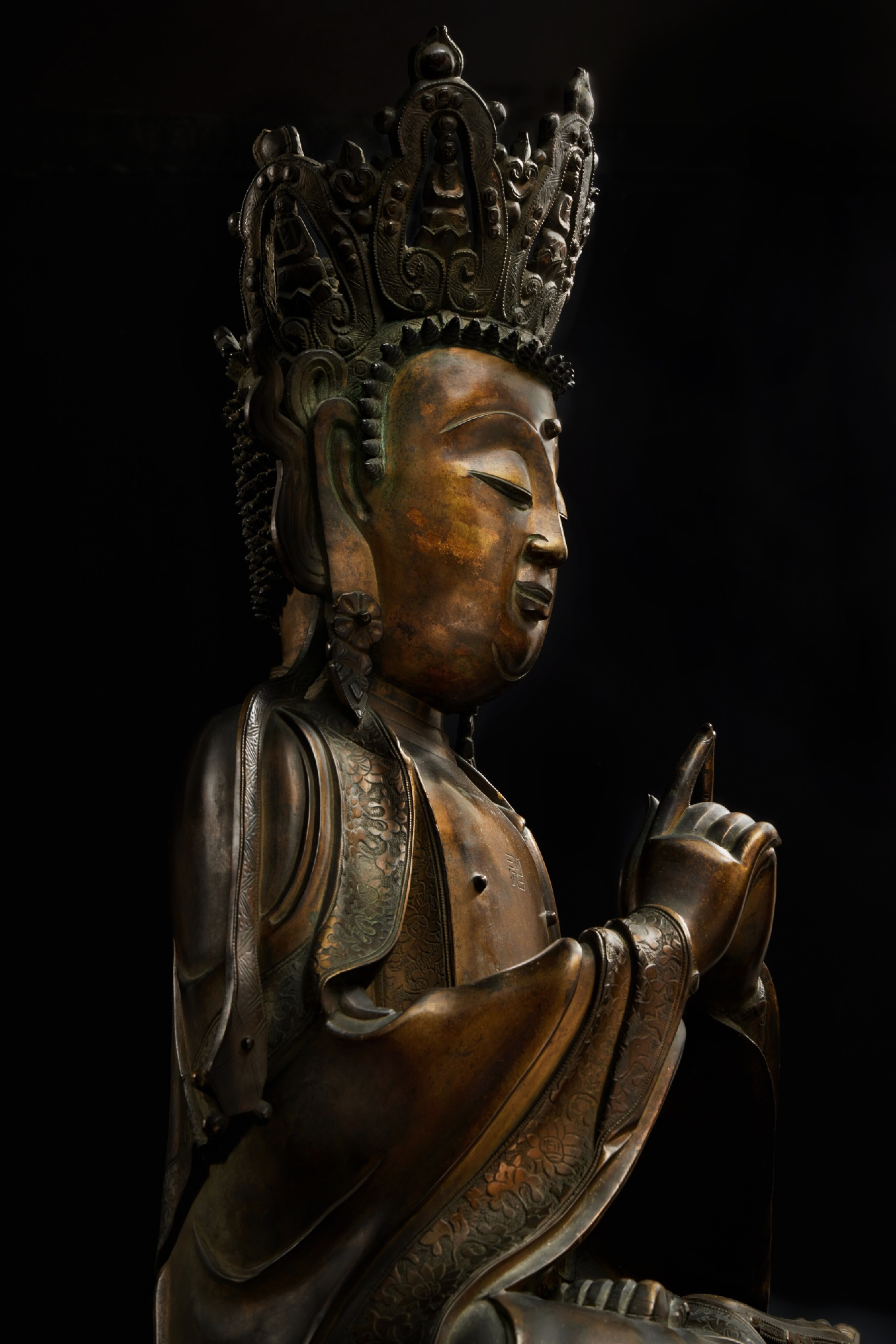
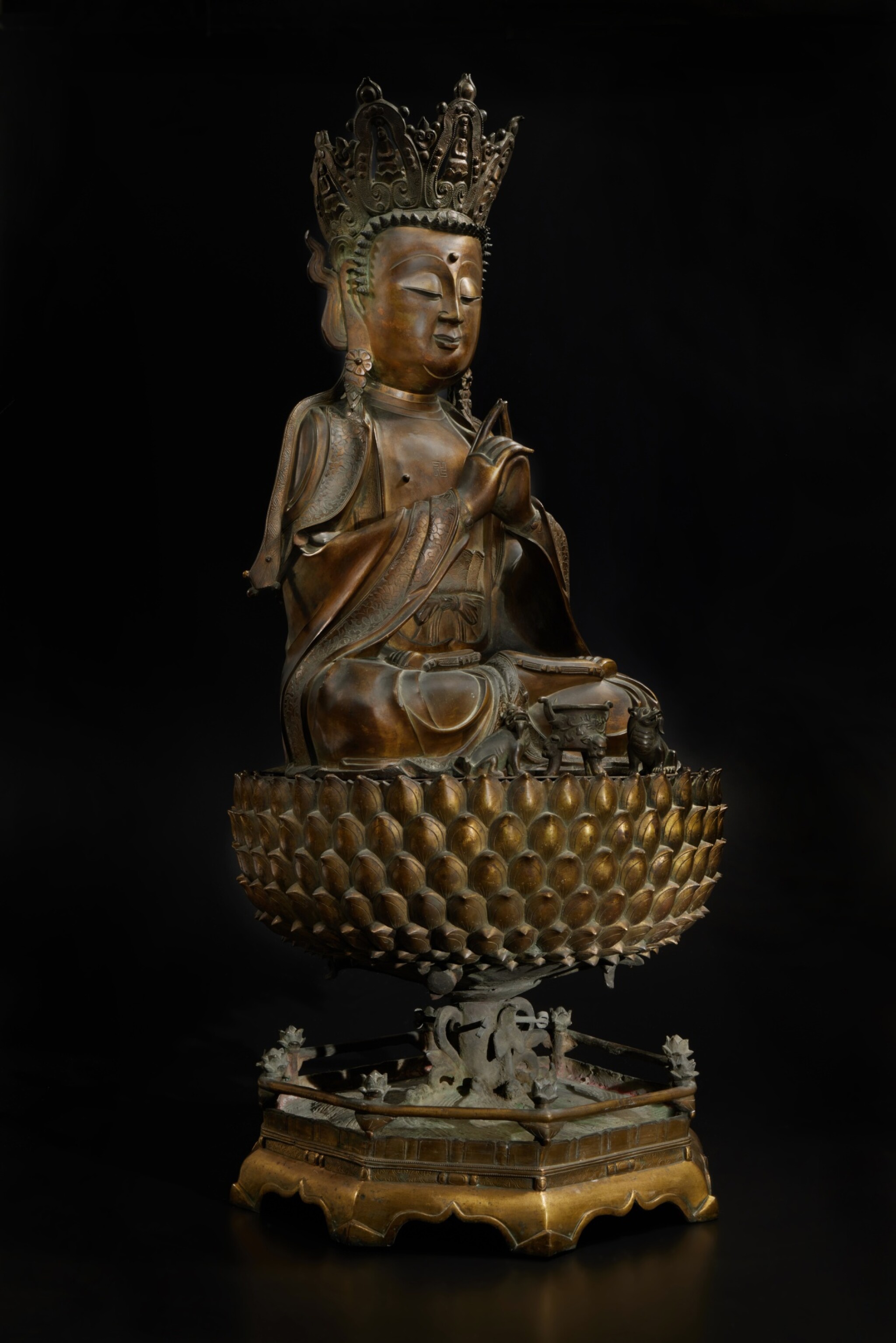
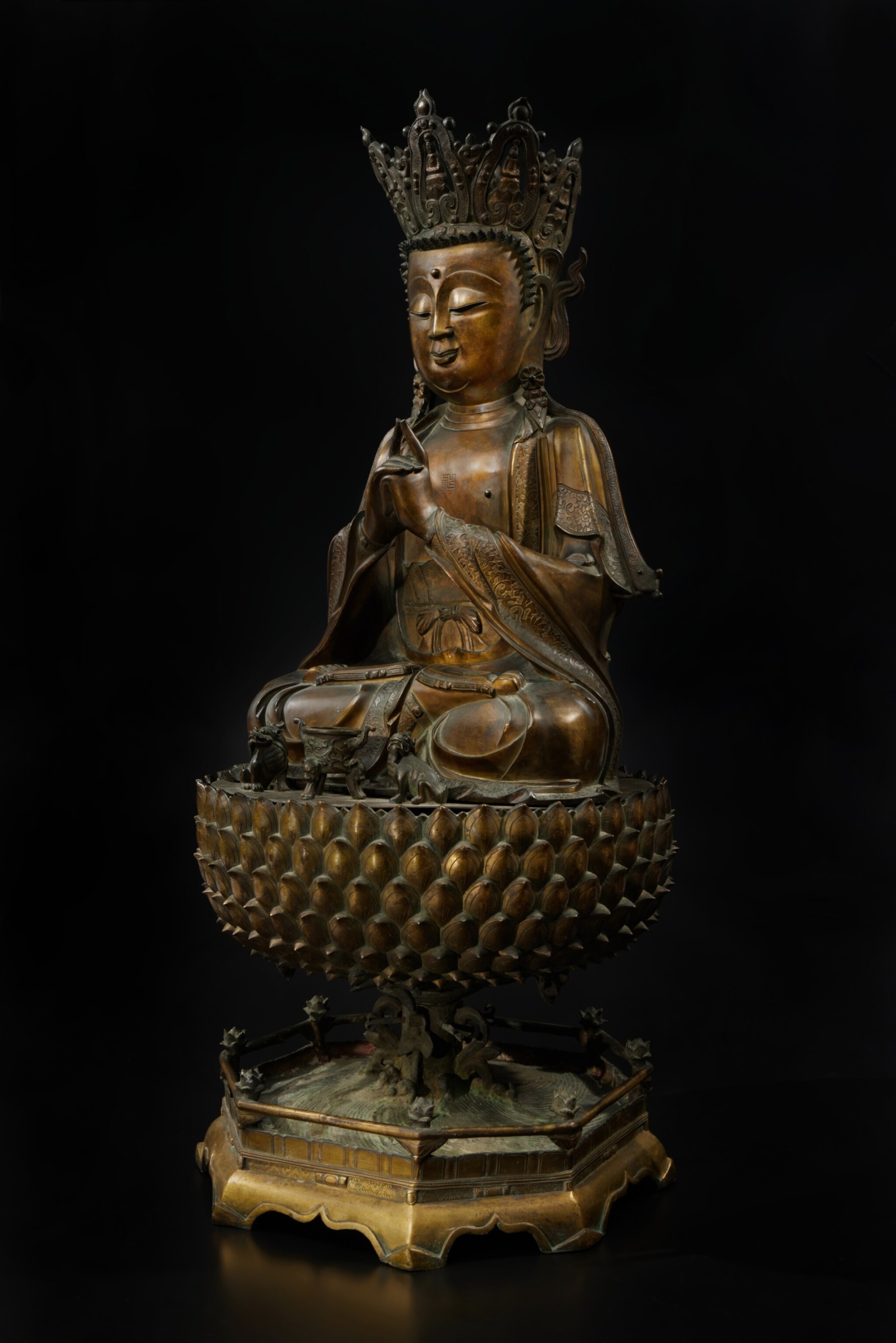
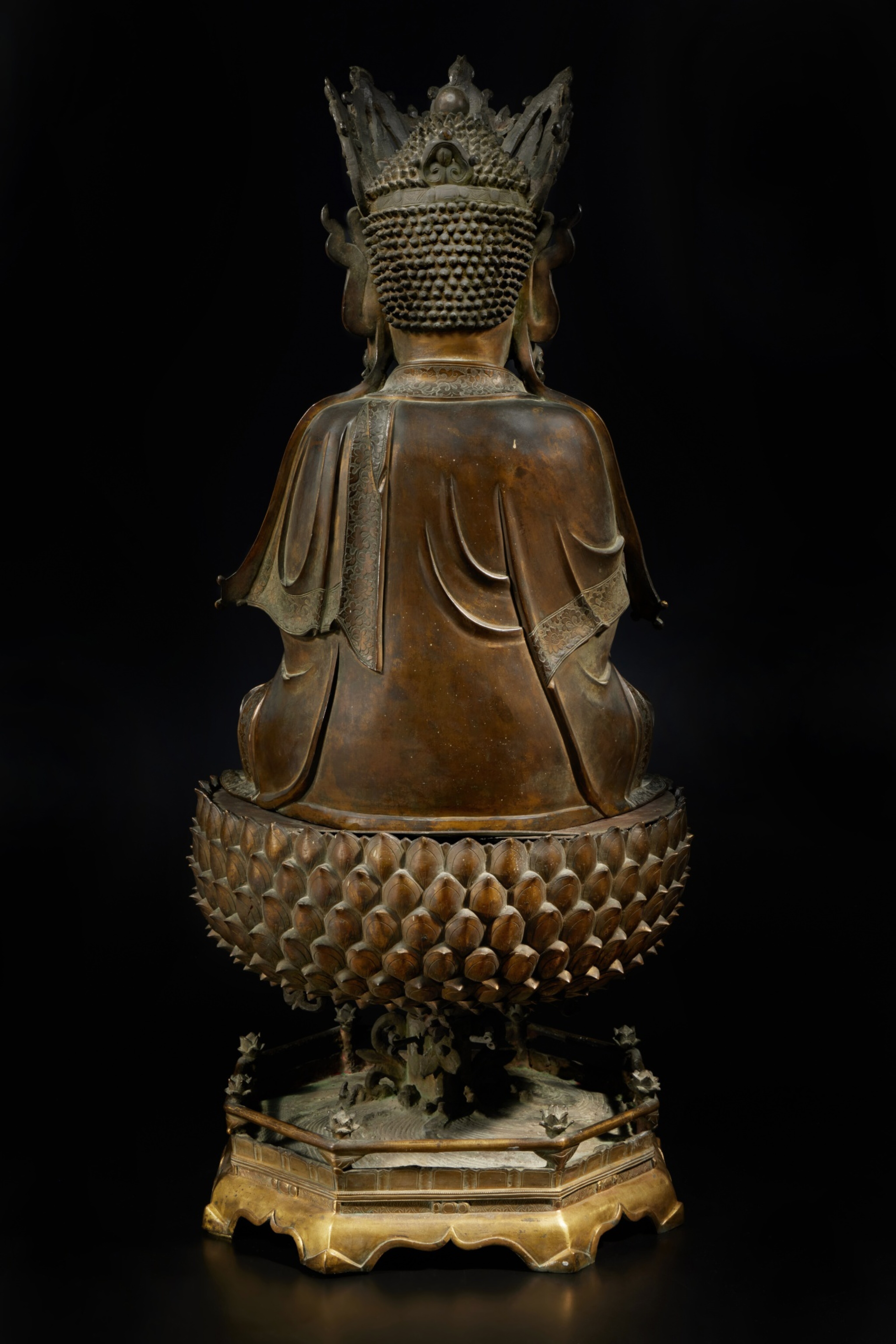 An exceptional and massive gilt-bronze figure of Vairocana on lotus pedestal, Ming dynasty, 16th / 17th century
明十六 / 十七世紀 銅鎏金大日如來佛坐像連蓮花座
Provenance:
New York Private Collection, acquired in the early 1960s, and thence by descent.
來源: 紐約私人收藏,得於1960年代初,此後家族傳承
The Vairocana Buddha, understood as the ‘luminous’ or ‘embodiment of light’ in Sanskrit, is a highly regarded figure in both Mahayana and Vajrayana Buddhism. In Mahayana practice, Vairocana Buddha is considered the Bliss Body of the historical Buddha, representing the ultimate reality and the cosmic order. Meanwhile, in the Vajrayana tradition, which is popular in Indo-Himalayan regions, he is revered as the principal figure among the Five Dhyani Buddhas, signifying the essence of emptiness and the limitless aspect of reality.
The present figure is notable for its representative style, reflecting a blending of the disparate Chinese and Indo-Himalayan traditions in sculpture casting from the mid to late Ming period. The squarish face of the figure follows a clear Indo-Himalayan style, whereas the body lacks the sense of roundness often found in works from the earlier Yongle period. The thick clothing depicted here follows a typical Han tradition, but the pleats are less smooth compared to Yongle examples. Most importantly, Vairocana wearing a crown of five Buddhas is a typical iconographical feature rooted in the Vajrayana practice, reflecting his central position among the five. The uttarabodhi mudra, the gesture of supreme enlightenment, is almost exclusively seen in the Han style representation of Buddha. The blended iconographical features are believed to be due to the widespread practice of Vajrayana Buddhism adopted at the early Ming court, in place of the Mahayana iconography that had been practiced locally for centuries.
According to Timothy Brook, many large-sized bronze figures of Buddha were melted down for weapons or coinage during the mid to late Ming period (The Confusions of Pleasure: Commerce and Culture in Ming China, Berkeley, 1999, pp 155-156). Consequently, very few large-sized bronze figures have survived today, and those retaining their original lotus pedestals, like the present one, are even rarer and more exquisite.
The iconography of the present piece is closely related to the giant three-tiered bronze statue of a thousand Vairocanas (6.27 meters) in the Vairocana Hall of the Longxing temple in Hebei province, illustrated in Longxing si / The Longxing Temple, Beijing, 1987, pp 29-30. Before its relocation to the Longxing Temple in 1959, this giant statue belonged to the nearby Chongyin Temple, which was constructed during the Wanli period (1573-1620), thereby dating it to that period. See also a massive figure of Vairocana, acquired in North China in the 1920s, preserved in the collection of the Royal Ontario Museum, Toronto, on display and published online (accession no. 921.31.30), also captured in an old photo from the 1920s, illustrated in Timothy Brook, op. cit., fig. 23.
Comparable examples that have appeared on the market rarely come with original lotus stands. See, for example, two closely related bronze figures of Vairocana, one of larger size, sold in these rooms, 16th March 2016, lot 368; the other sold at Bonhams London, 11th May 2017, lot 112. Compare also several related gilt-bronze figures, one sold in our Hong Kong rooms, 8th April 2011, lot 3048; one, sold at Christie's New York, 15th September 2011, lot 1383; and one, of smaller size, sold at Christie’s New York, 30th May 1991, lot 13.

