
浏览入口
主题列表
一. 佛像
二. 菩萨
三. 佛母
四. 金刚护法
- 等…
五. 财神
- 待…
六. 上师
- 更…
七. 印度教造像
- 新…
八. 道教&中原造像
- 哈…
尺寸:78.1 x 67.6 cm
年代:15世纪
质地:青铜鎏金(Gilt bronze)
风格:尼泊尔 马拉
来源:克利夫兰艺术博物馆
参阅:外部链接
鉴赏:
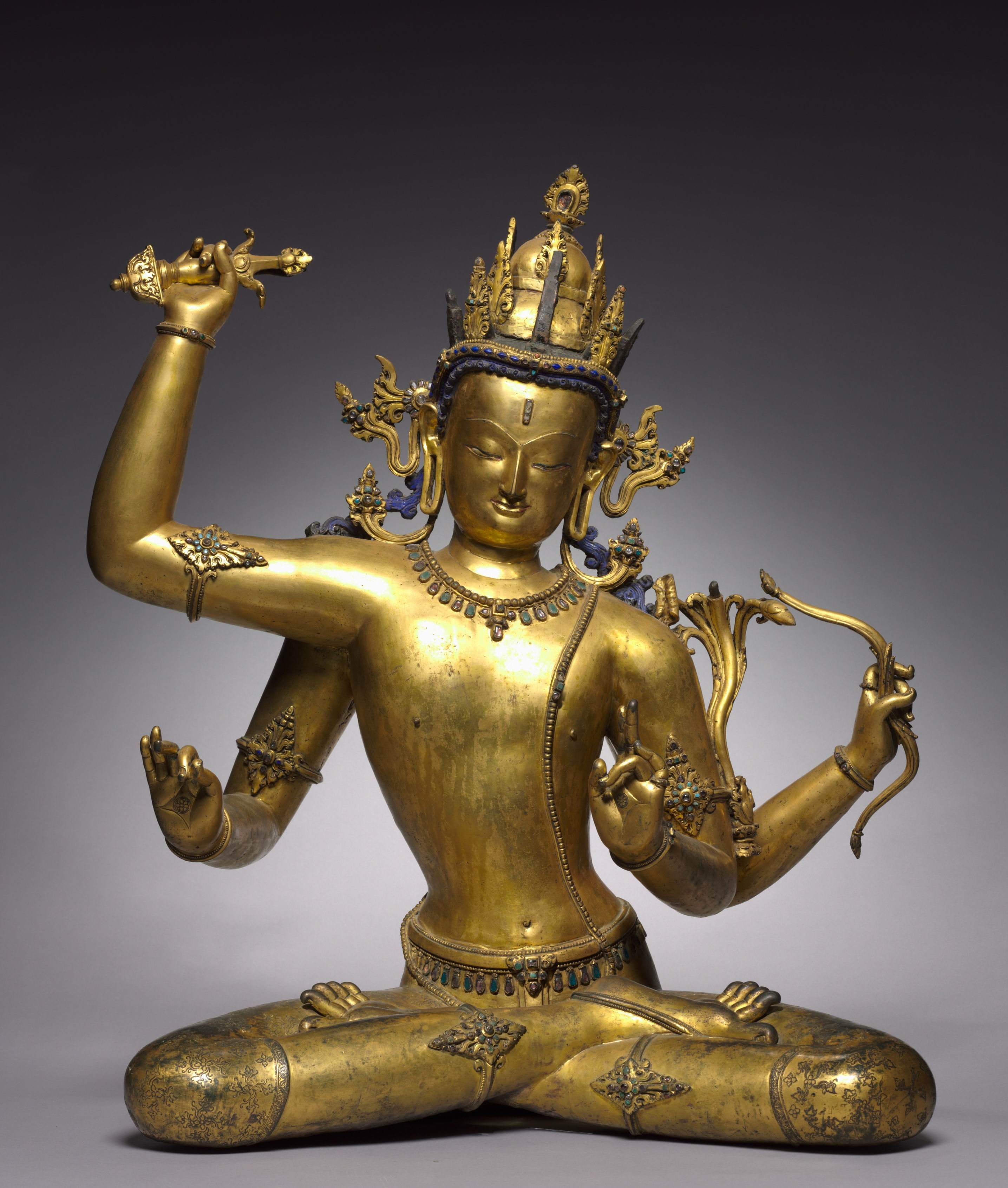
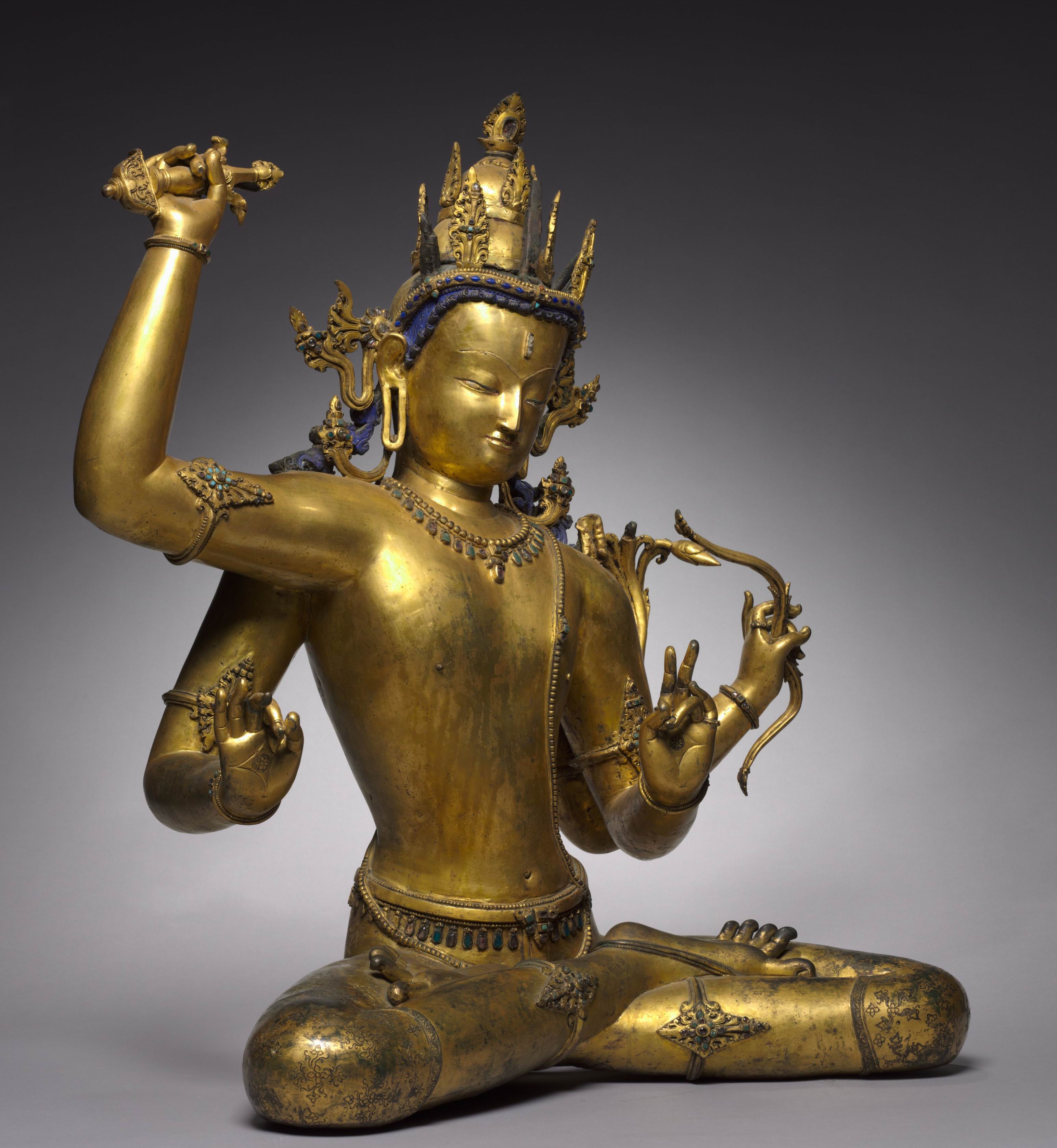
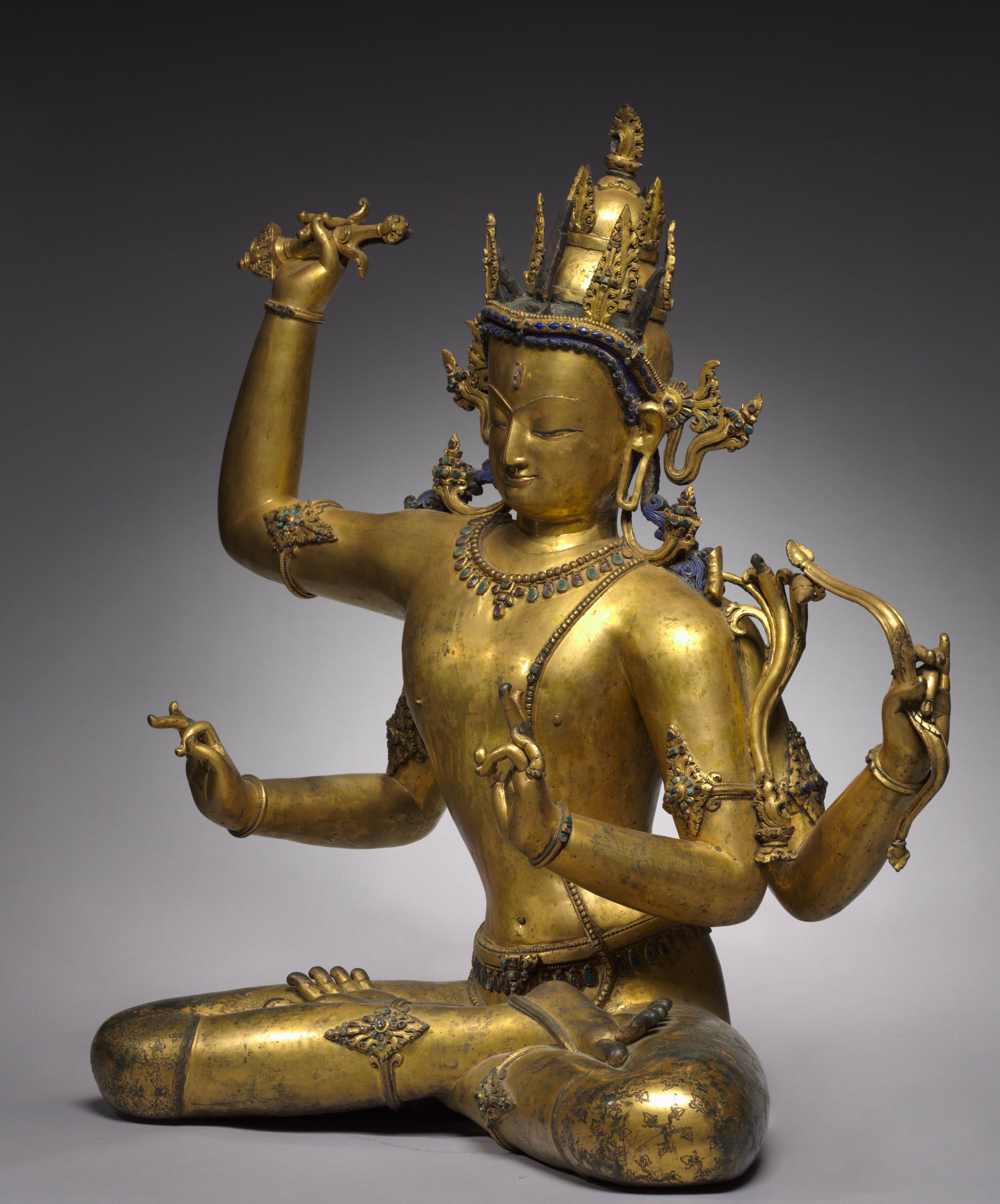
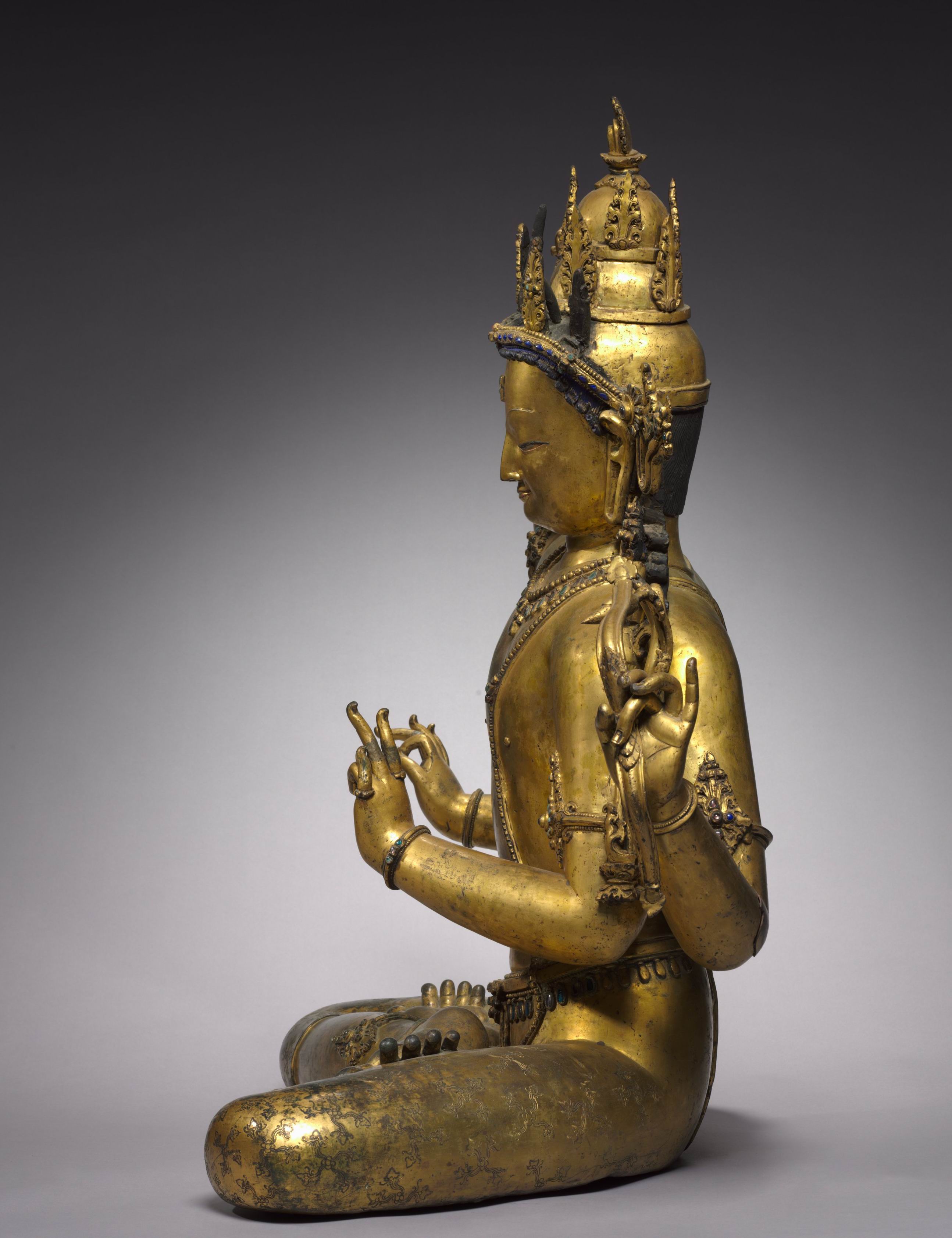
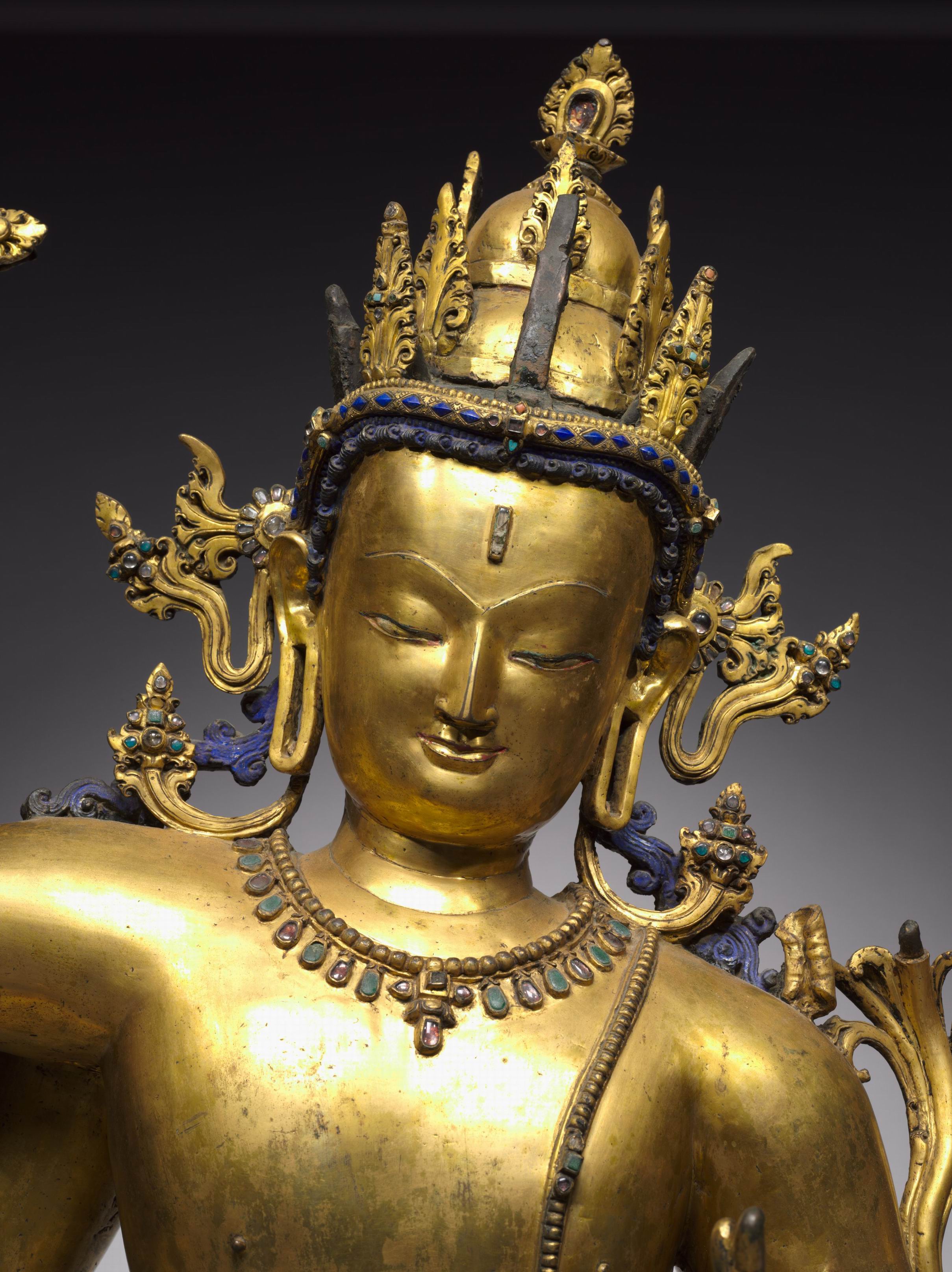
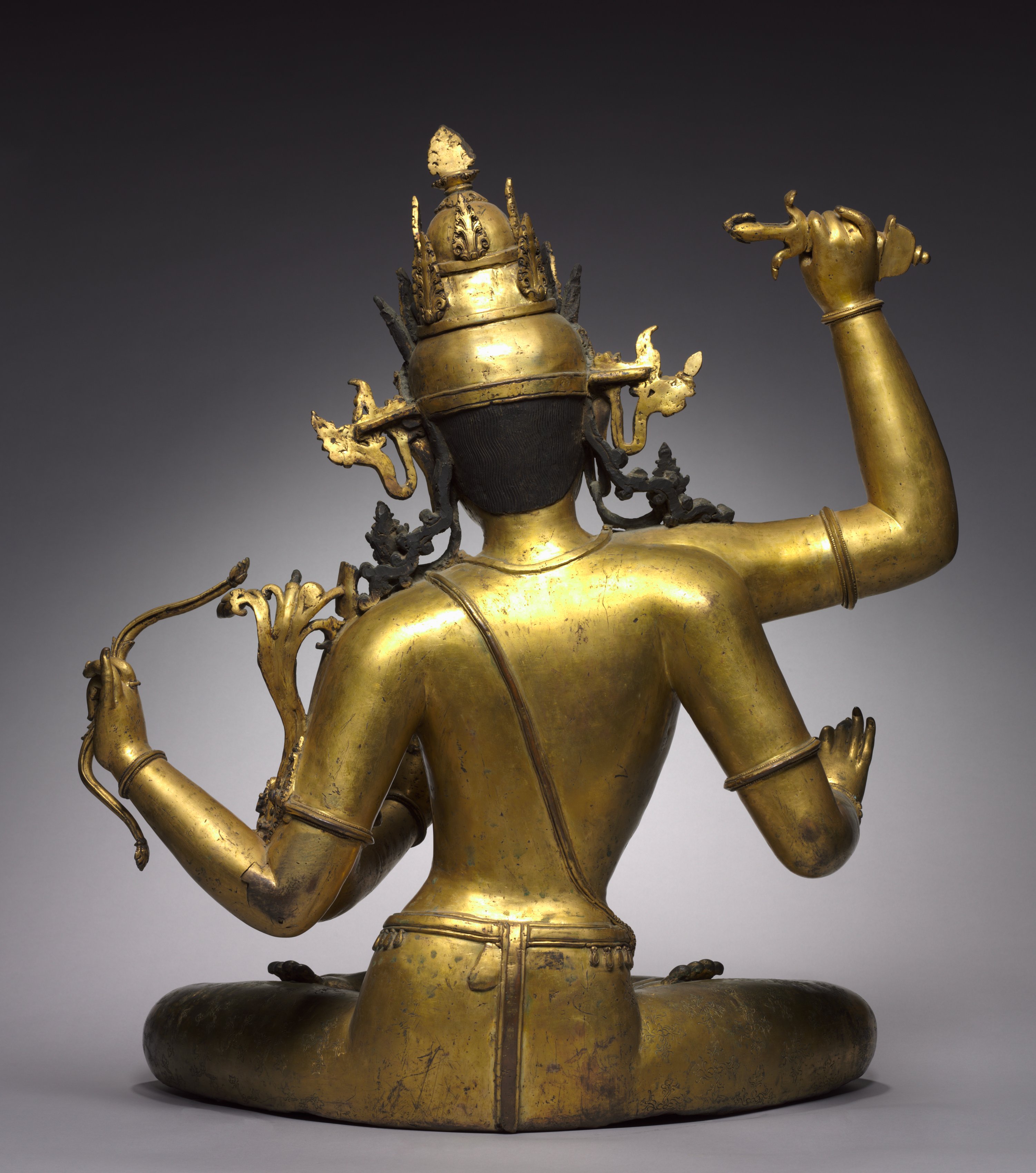 Bodhisattva of Wisdom (Manjushri)
1400s
Nepal, 15th century
Gilt bronze
古比特佛像网, 编号: 11001
Description
This image depicts one of the main bodhisattvas, beings only one stage away from full enlightenment. Because the historical Buddha was a prince prior to his renunciation and life as a wandering ascetic, bodhisattvas are depicted as royal princes. This example has the sharp features, sweet expression, and crisp details characteristic of images made in Nepal during the 1400s. In his upraised right hand Manjushri holds the hilt of a sword that, like wisdom itself, metaphorically cuts through and defeats ignorance. His lower, rear left hand grasps a bow, once probably strung with a wire. Also missing is the arrow that he likely held in his lowered right hand. Arrows were often symbols for mantras, or strings of syllables thought to have the power to focus the mind and work like missiles to destroy negativity and affliction. The gesture of his lowered left hand indicates the transmission of Buddhist teachings. The lotus stem that rises at the left elbows originally held a book of sutras. This figure is in the yogic posture of meditation with the big toe flexed in concentration. Yoga is of central importance in tantric Buddhism, because high-level practitioners are able to discipline the body to such an extent that the mind can also be controlled.
这幅图像描绘了诸位主要菩萨之一,这类圣者距离圆满成佛仅差一个阶段。由于历史上的佛陀在出家成为游方苦行僧之前本是一位王子,因此菩萨通常被塑造成王室王子的形象。此例造像具有鲜明的五官、甜美的表情和清晰的细节,这正是15世纪尼泊尔造像的特点。文殊菩萨高举的右手握着剑柄,这把剑如同智慧本身,能喻示性地斩断并战胜无明。他下方后方的左手持弓,弓上原本可能装有金属丝。他垂下的右手中原本很可能握着一支箭,如今也已遗失。箭常常象征咒语——即被认为具有凝聚心念之力、能像导弹一样摧毁负面情绪与烦恼的音节序列。他垂下的左手结印,表示传授佛法。左肘旁升起的莲花茎原本托着一部佛经。这尊像呈禅定中的瑜伽坐姿,大脚趾专注地勾起。瑜伽在密宗佛教中至关重要,因为高阶修行者能够如此深度地调伏身体,进而达到对心念的掌控。