
侧边栏

金代木雕彩绘水月观音菩萨(伦敦V&A博物馆)
尺寸:高114.2cm
年代:金代
质地:木雕彩绘
风格:中原
来源:伦敦V&A博物馆
参阅:外部链接
鉴赏:
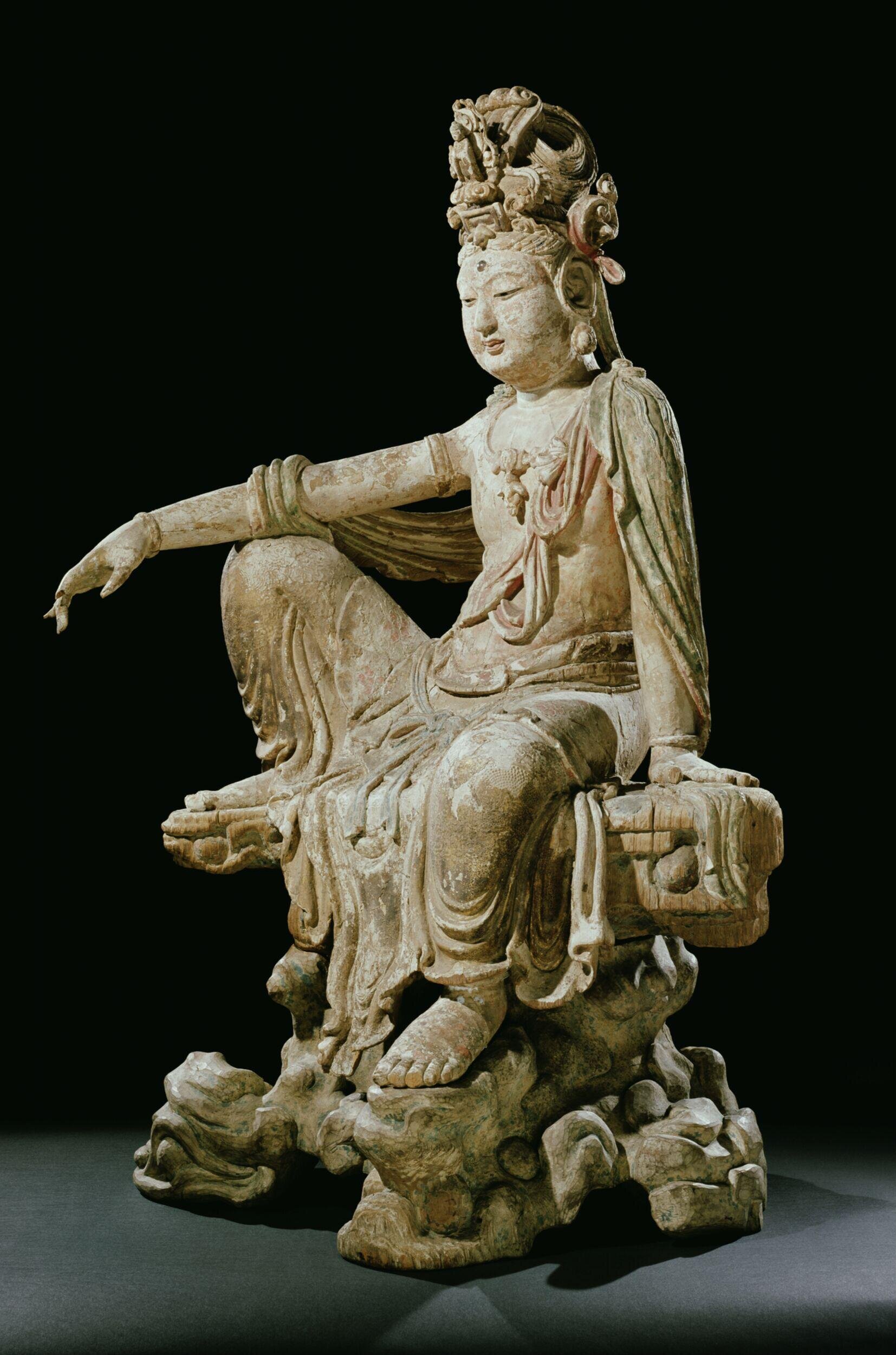
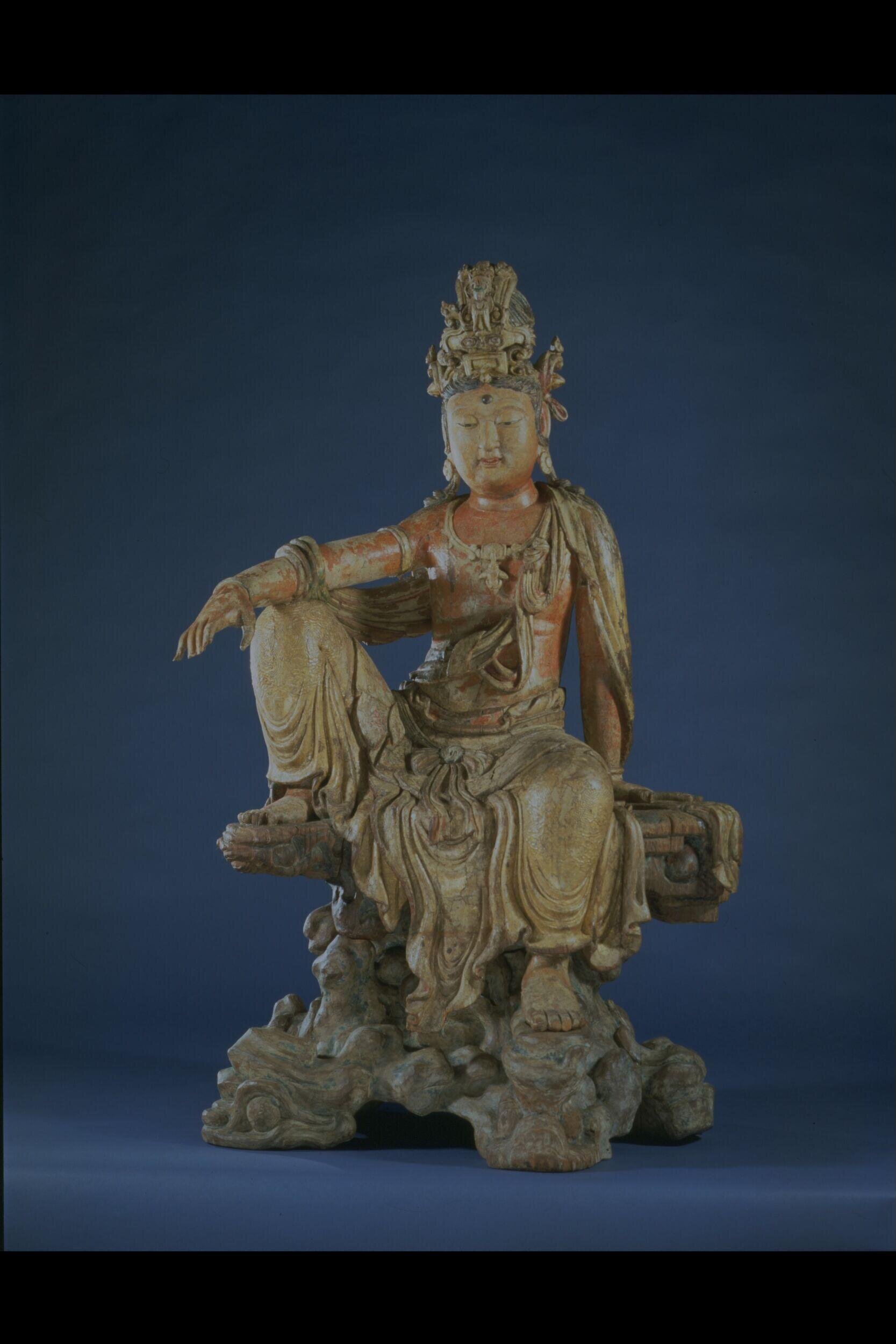
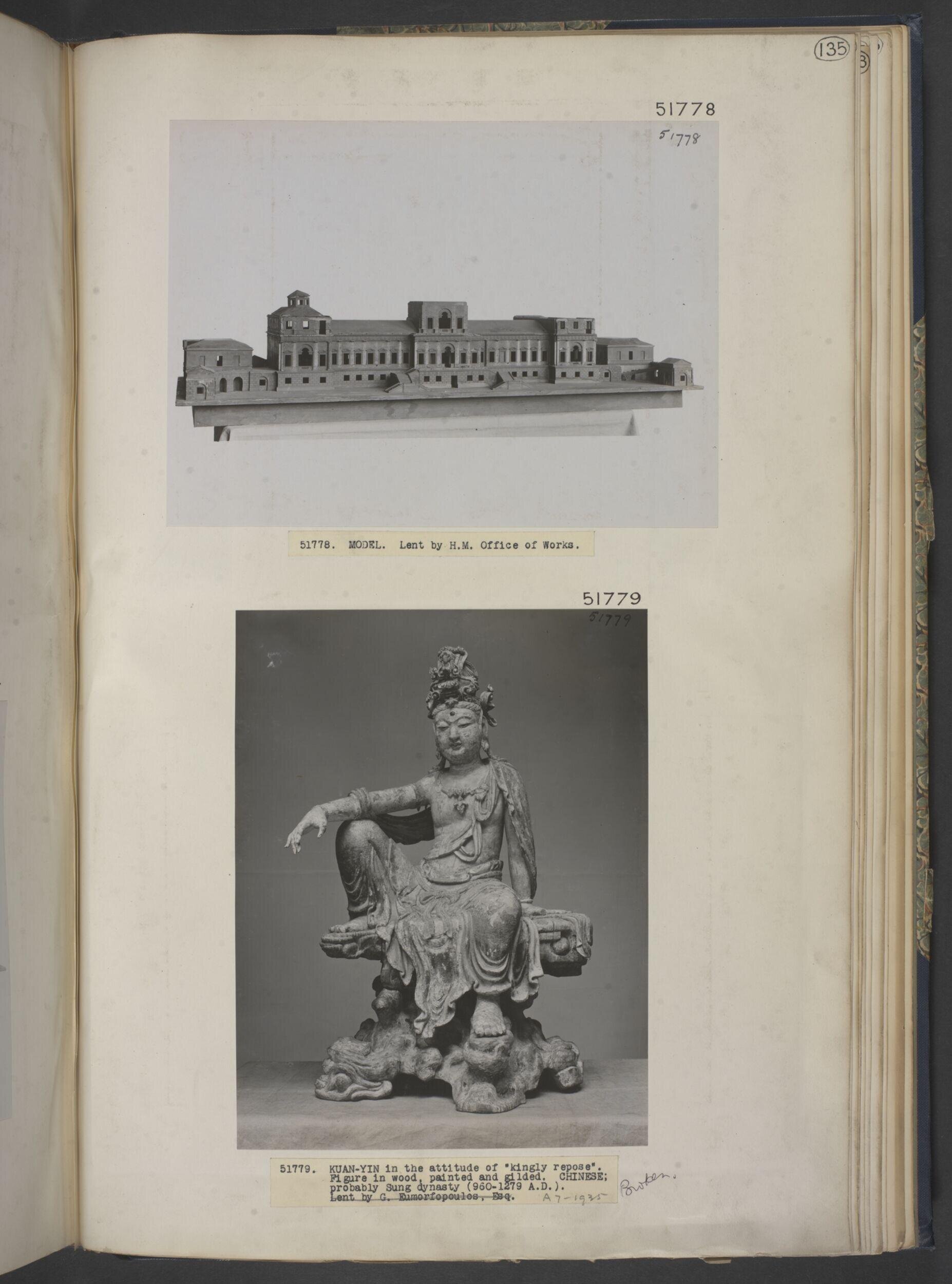
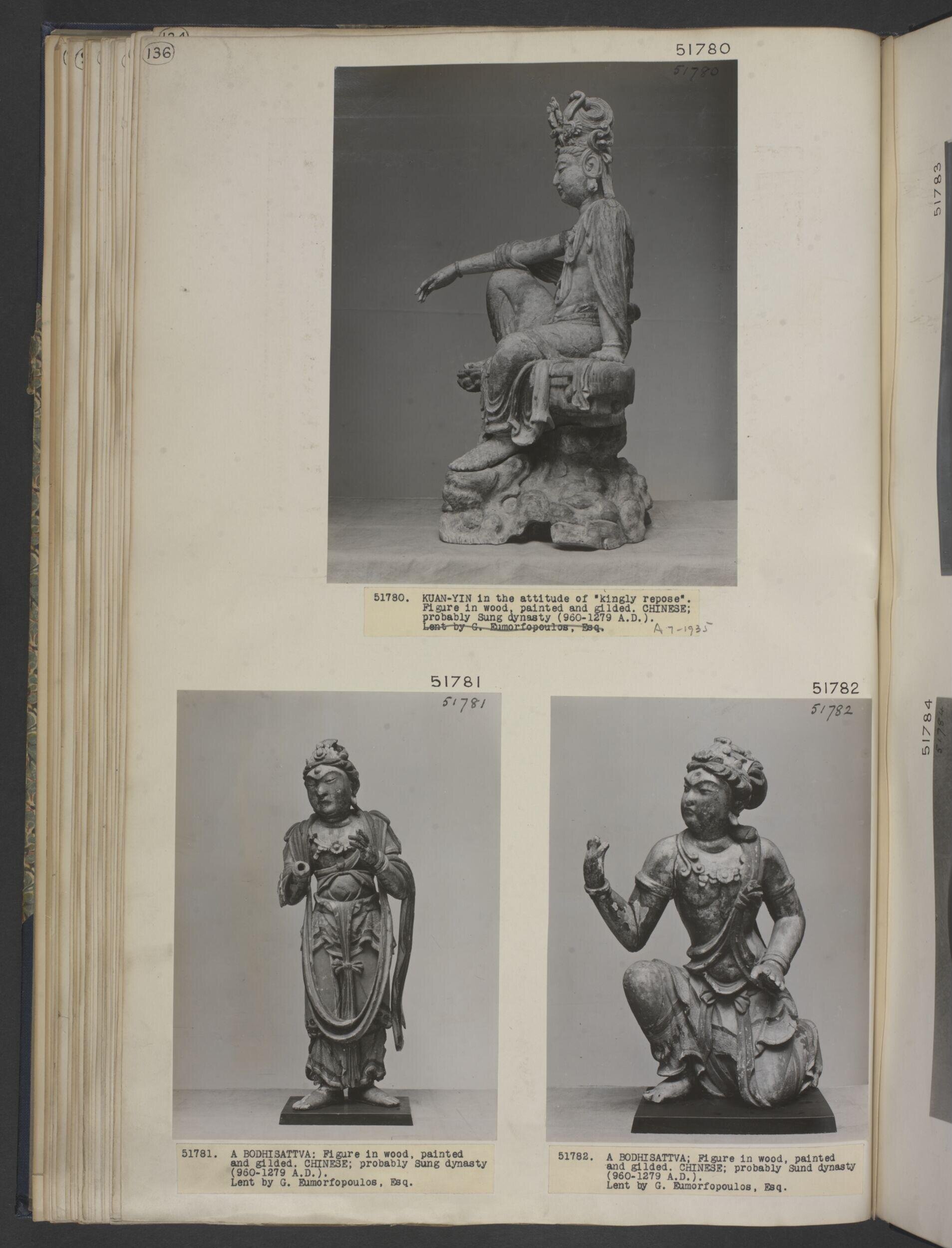
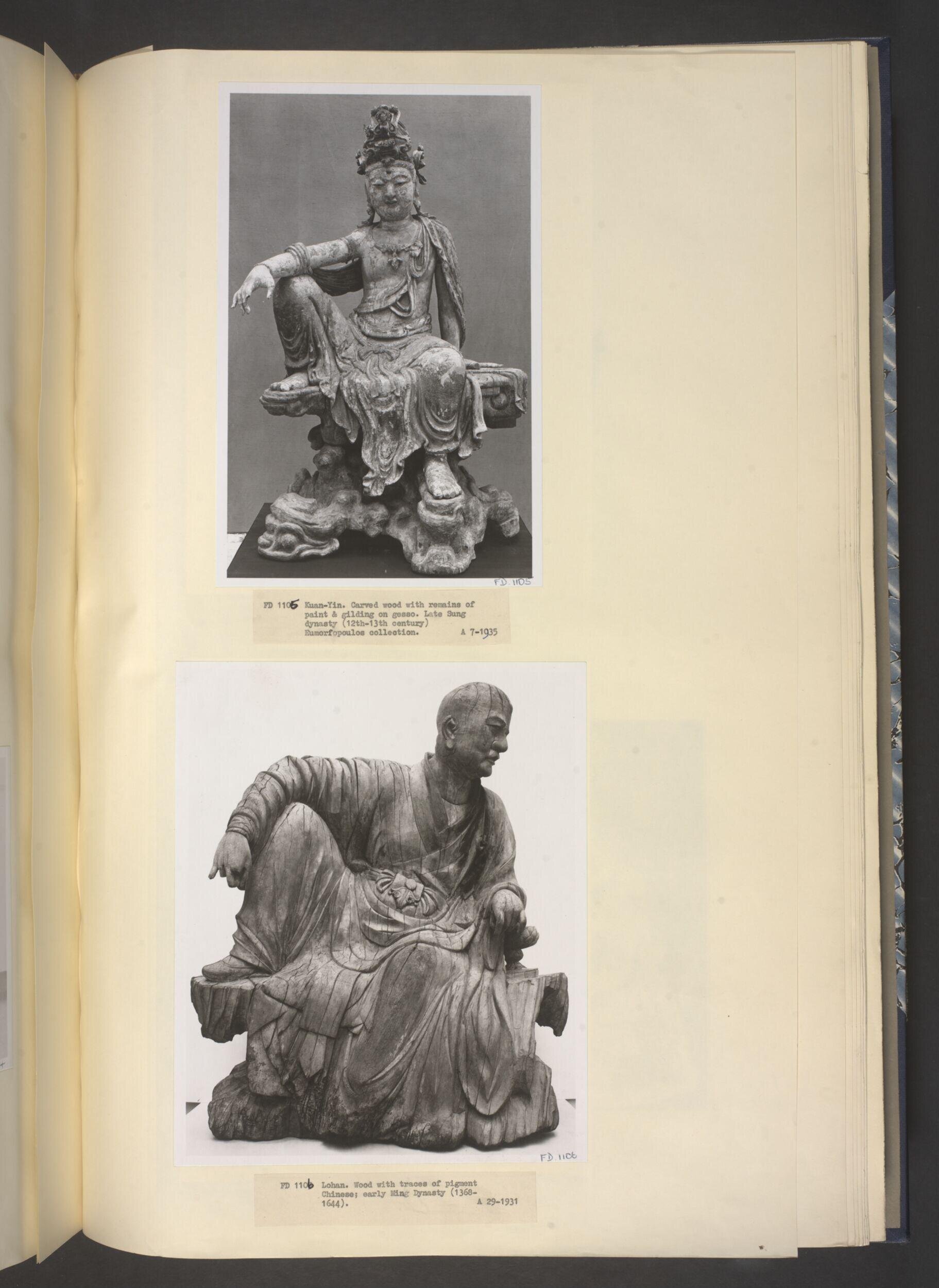 Figurine, 'Bodhisattva Guanyin', wood, carved, painted, lacquered and gilded, China, Jin Dynasty (1115-1234), ca. 1200
这尊优美宁静的雕像表现的是观音菩萨——最受尊崇的菩萨之一,其名号字面意为“恒常观听世间音声者”。在中国被称为“慈悲菩萨”的观音,垂听着每一个祈祷,常被安置于寺庙主佛身后。此像几乎可以肯定是供奉于中国北部山西省的一座寺庙中。观音的台座四周可能原本塑有岩石佛龛,与其所坐的岩座相呼应。精湛的雕刻与华美的表面装饰赋予造像摄人心魄的力量,而层层叠叠的颜料则揭示出有趣的科学信息与历史细节。
这尊木雕观音像以自在坐姿安坐于岩座之上。柔和的面部特征雕刻精细,身形符合典型的中国人身体特征——上身修长、腿部略短,双足小巧宽厚且足弓高挑,双手丰腴圆润,十指纤细。造像身着菩萨身份的华美王子装束:下束腰巾(一种纱笼式下裙),腰际翻卷并以丝带系成双重裙式,垂落的衣褶优雅流畅直至足际。婆罗门圣带缠绕身躯,长帔巾披覆左肩。头戴五叶冠,颈佩饰有金刚杵符号的项链,臂钏与腕镯庄严双臂,耳垂饰环,眉间白毫镶嵌水晶。左踝隐约可见足钏。发髻高耸精雕,冠中饰有阿弥陀佛立像。
此像由多块木材榫卯拼合而成,木料取自泡桐属的“毛泡桐”木。木材表面施以底料(动物胶调和的高岭土),再叠涂多层颜料(靛蓝等植物染料与矿物颜料)。造像原本写实性的彩绘在明代修复时被完全改变,呈现出仿铜鎏金的视觉效果。
This graceful and serene sculpture depicts Guanyin, one of the most popular of all Bodhisattvas, whose name literally means 'the one who always hears sounds'. Known in China as 'the compassionate Bodhisattva', who listens to every prayer, Guanyin was often placed behind the main Buddha image in a temple. This figure was almost certainly made for a temple in Shanxi province in northern China. Guanyin's altar surround probably took the form of a rocky grotto related to the throne of rocks he sits on. The fine carving and beautiful surface decoration lend the image its power, while the layers of pigment reveal interesting scientific and historical detail.
This carved wooden sculpture of Guanyin sits in the posture of Royal Ease on a rocky throne. The faintly feminine features are finely carved and the body corresponds to a typical Chinese body type, long in torso and short in the leg, having small, broad feet with high arches and plump hands with tapering fingers. He is invested with the fine garb of his princely status as a Bodhisattva: he wears a dhoti (a type of sarong), which is folded over at the waist and tied with a sash to form a double skirt, falling in a series of graceful folds to the feet. The Brahmanic cord is tied around his body, and a long scarf is draped over the left shoulder. On his head is the five-pointed crown, round his neck the necklace with the vajra symbol, on his arms armlets and bracelets, he has earrings in his pendant lobes and a crystal is embedded in the urna in the centre of his forehead. On his left ankle, an anklet may just be glimpsed. His hair is elaborately modelled in a high chignon, while his crown has a standing figure of the Buddha Amitabha. The figure is made of blocks of wood, jointed together. The wood has come from a Paulownia species, the 'Foxglove Tree'. The wood was then covered with a gesso ground (of Kaolin clay bound with an animal glue) and several layers of pigments (vegetable dyes like indigo and mineral pigments). The original, naturalistic painting of the figure was completely changed during Ming dynasty restorations when it was made to look like a gilt-bronze sculpture.
著录:
Orientations, July 1991
Kerr, Rose (ed.), Chinese Art and Design: the T.T. Tsui Gallery of Chinese Art. London: Victoria and Albert Museum, 1991. plate 36
The George Eumorfopoulos Collection (11 vols), London, Ernest Benn Ltd. 1925-1932. Vol. 3, pp. 62-3
Guanyin a masterpiece revealed. Kerr and Larson, London, 1985
Catalogue of the International Exhibition of Chinese Art, 1935-6, London : Royal Academy of Arts, 1935 1299
John Larson and Rose Kerr, Guanyin: A Masterpiece Revealed, V&A, 1985

