
侧边栏

11-12世纪印度帕拉铜鎏金莲花手观音立像(加拿大皇家安大略博物馆)
尺寸:19.9 x 6.4 x 7.7 cm
年代:11-12世纪
质地:铜鎏金
风格:印度帕拉
来源:加拿大皇家安大略博物馆
参阅:外部链接
鉴赏:
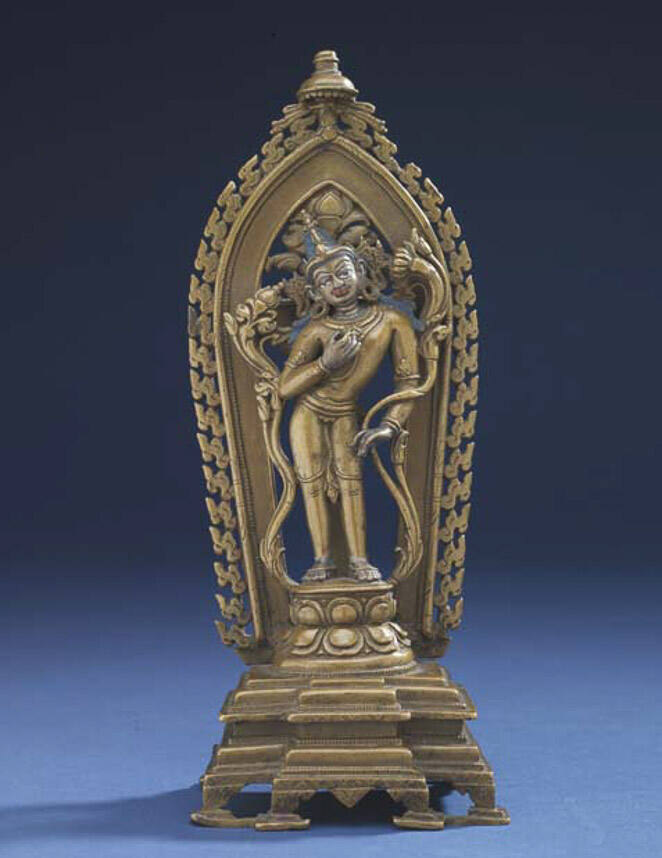
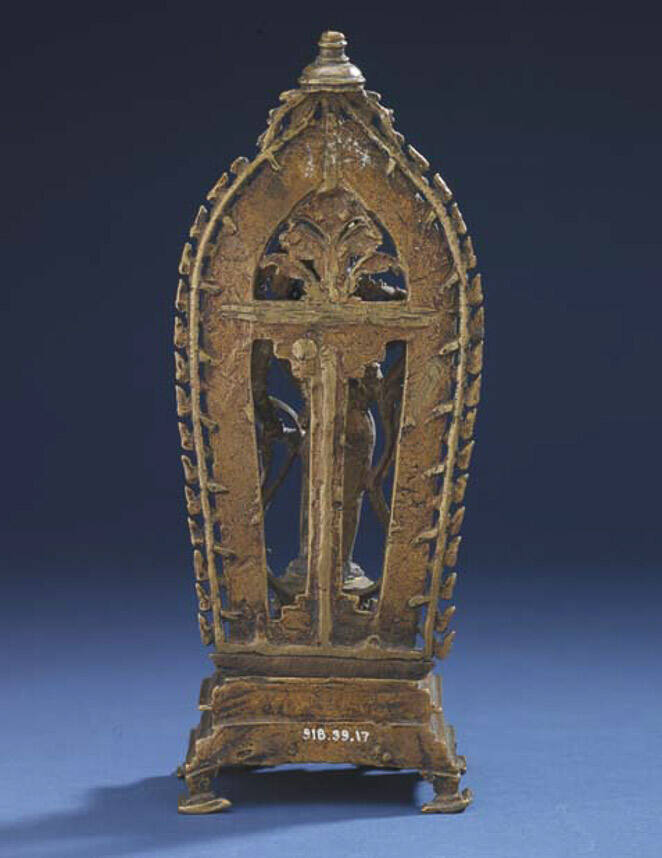 This bronze figure represents Ratnapani, translating to “jewel-holder”, a form of the bodhisattva Avalokiteshvara, distinguishable by the gems he holds in his right hand and on the lotus in his left. Ratnapani embodies Avalokiteshvara’s aspect of preciousness and abundance, and the iconography emphasizes his role as a compassionate and beneficent deity. The figure follows stylistic conventions associated with the Pala-period Kurkihar school, particularly in the detailing of the tripartite base and the radiating halo (prabhavali), with rays of light (prabha) nearly identical to known Kurkihar examples. These elements demonstrate the persistence and adaptation of eastern Indian sculptural models in early Tibetan Buddhist art.
The elegant tribhanga (thrice-bent) posture suggests that Ratnapani may have served as an attendant bodhisattva flanking a central figure, likely a Buddha, in a larger triadic composition. His pose and angled bearing mirror those found in symmetrical arrangements common in Indic and Tibetan devotional sculpture. Together with the related image of Mahavairocana, this work reflects a lesser-known sub-tradition within Tibetan metalwork, which drew heavily on Indian precedents while evolving localized visual expressions. This piece then offers valuable insight into the transregional artistic and doctrinal exchanges that shaped early Himalayan Buddhism.
这尊铜像代表的是宝手菩萨(Ratnapani),意为“持宝者”,是观音菩萨的一种化现。其区别特征在于右手持宝珠,左手所持莲花上也托有宝珠。宝手菩萨体现了观音菩萨珍贵与丰饶的面向,其造像图像学强调了他作为慈悲与利益众生之化身的角色。此像遵循与帕拉时期库尔基哈尔(Kurkihar)流派相关的风格惯例,尤其在三分式台座与放射状背光(prabhavali)的细节处理上,其光线纹饰(prabha)与已知的库尔基哈尔作品几乎一致。这些元素表明东印度雕塑模式在早期藏传佛教艺术中的延续与调适。
优雅的三折姿(tribhanga)暗示宝手菩萨可能原是更大三尊组合中主尊(可能为一尊佛陀)身旁的胁侍菩萨。其姿态与倾斜角度,与印度及藏传佛教供奉性雕塑中常见的对称布局相呼应。此像与大日如来像等作品共同反映出西藏金属工艺中一个鲜为人知的分支传统,该传统在深度借鉴印度范本的同时,也发展出本土化的视觉表达。因此,这件作品为理解塑造了早期喜马拉雅佛教艺术的跨区域艺术与教义交流,提供了宝贵的见解。

