
侧边栏

6世纪隋代(585年)石雕观音菩萨立像(日本东京国立博物馆)
尺寸:高2.5m
年代:隋代(585年)
质地:大理石雕
风格:中原
来源:日本东京国立博物馆
参阅:外部链接
鉴赏:
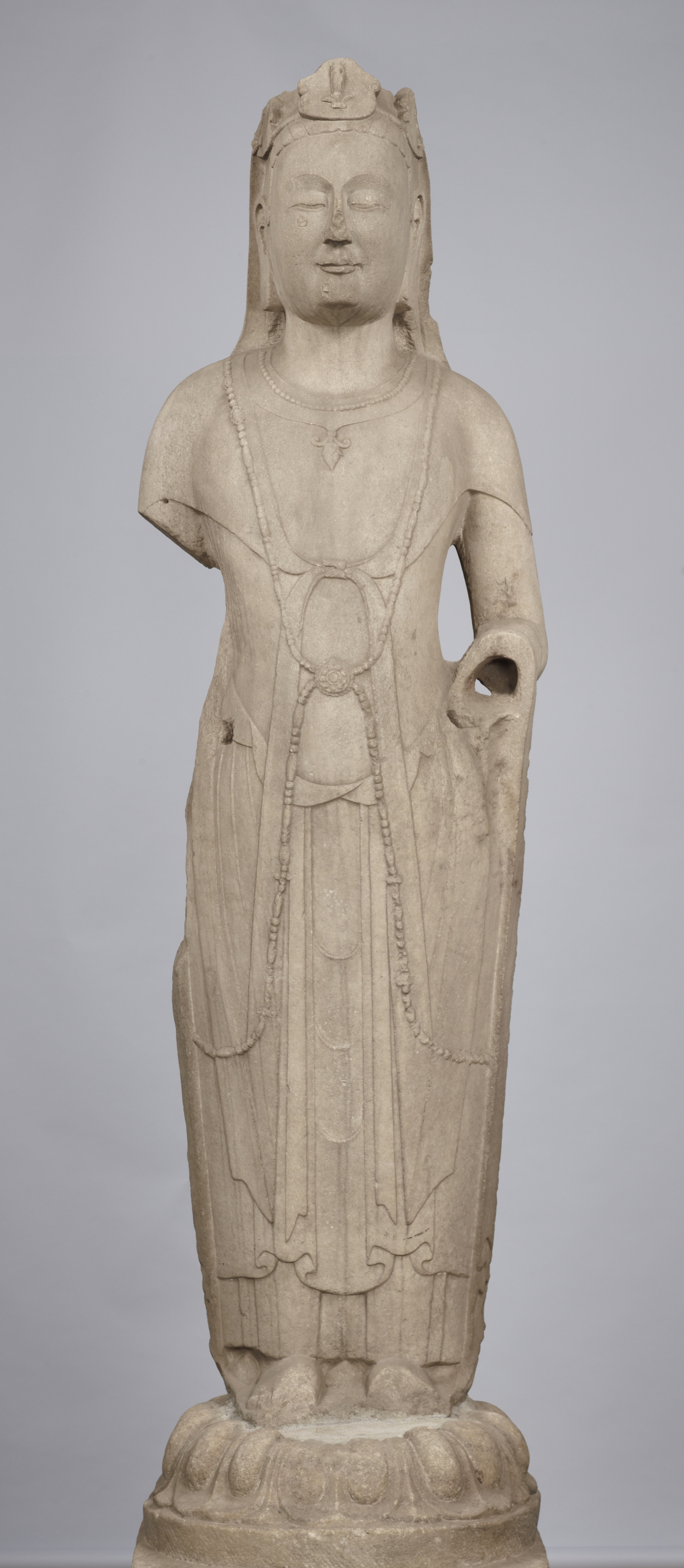
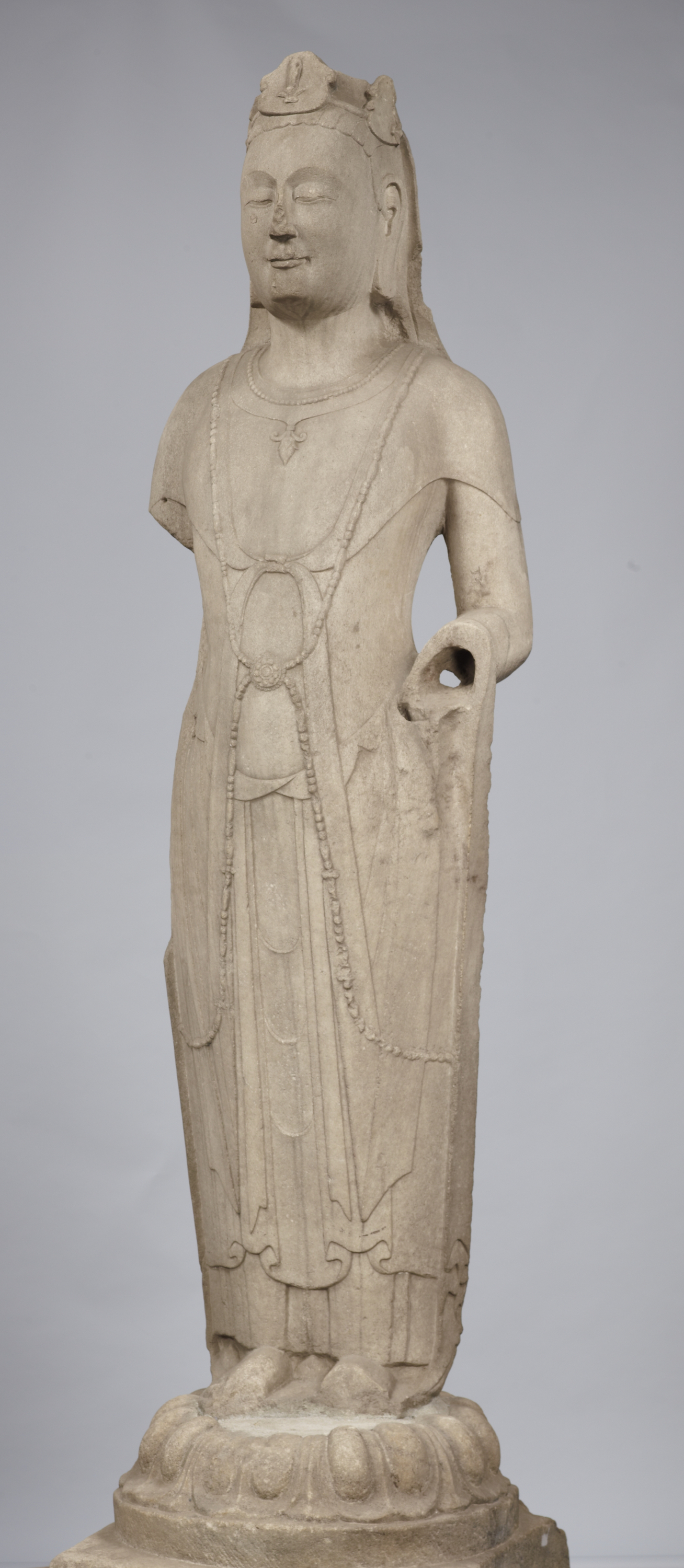
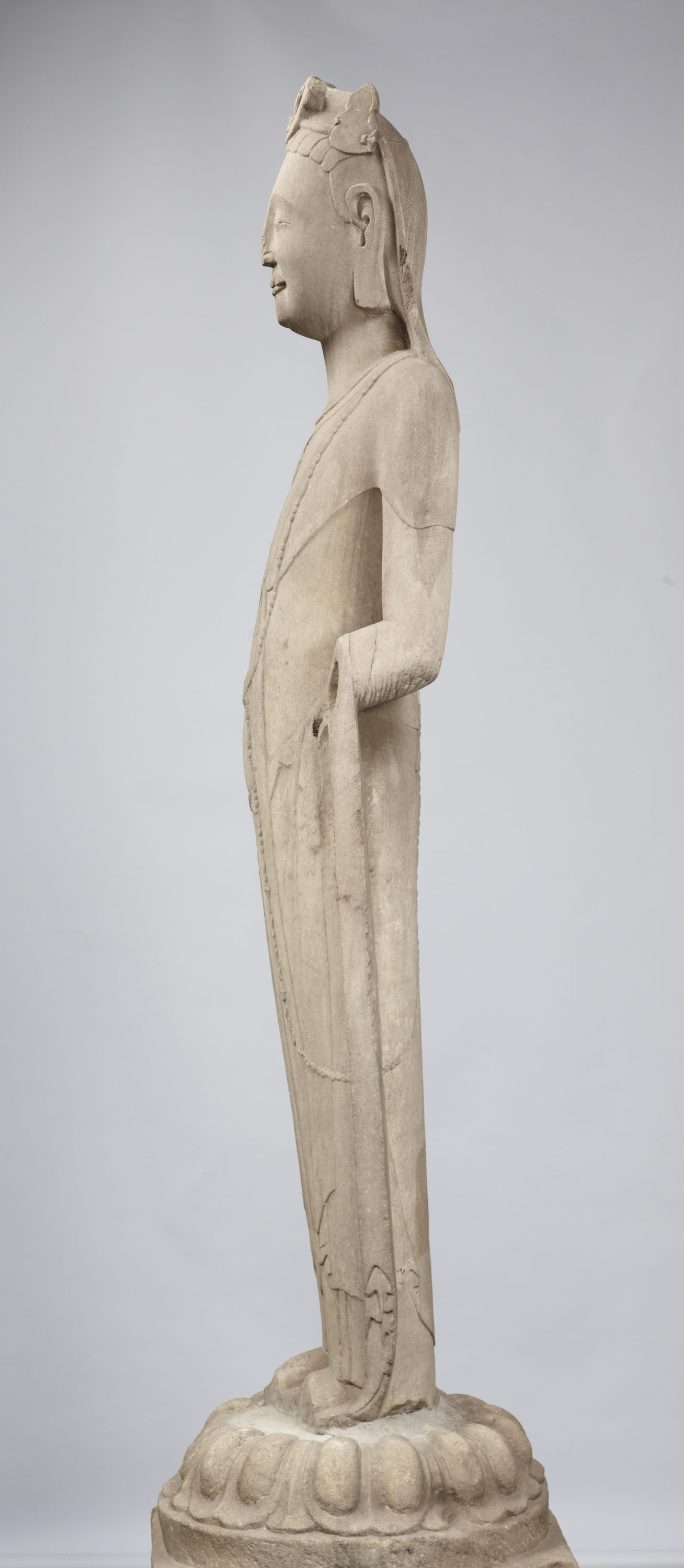
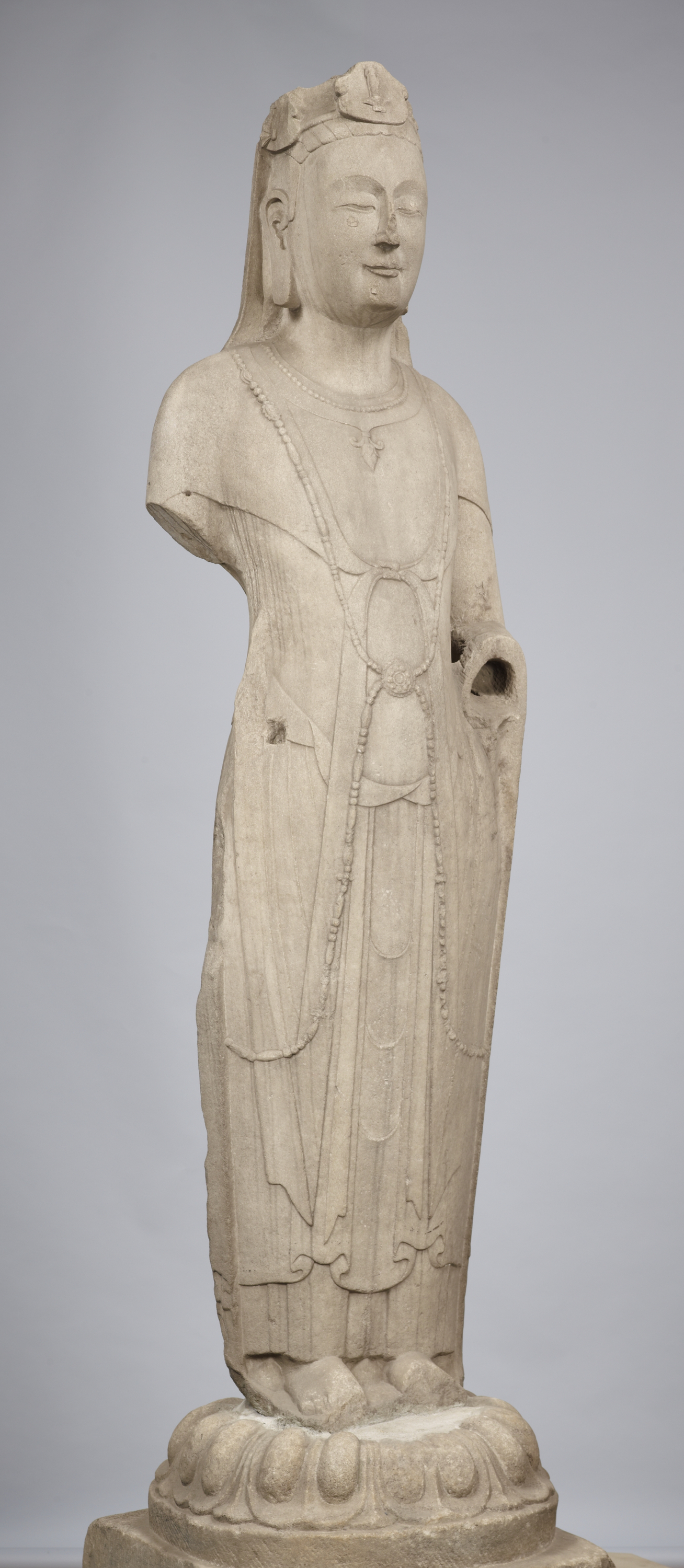
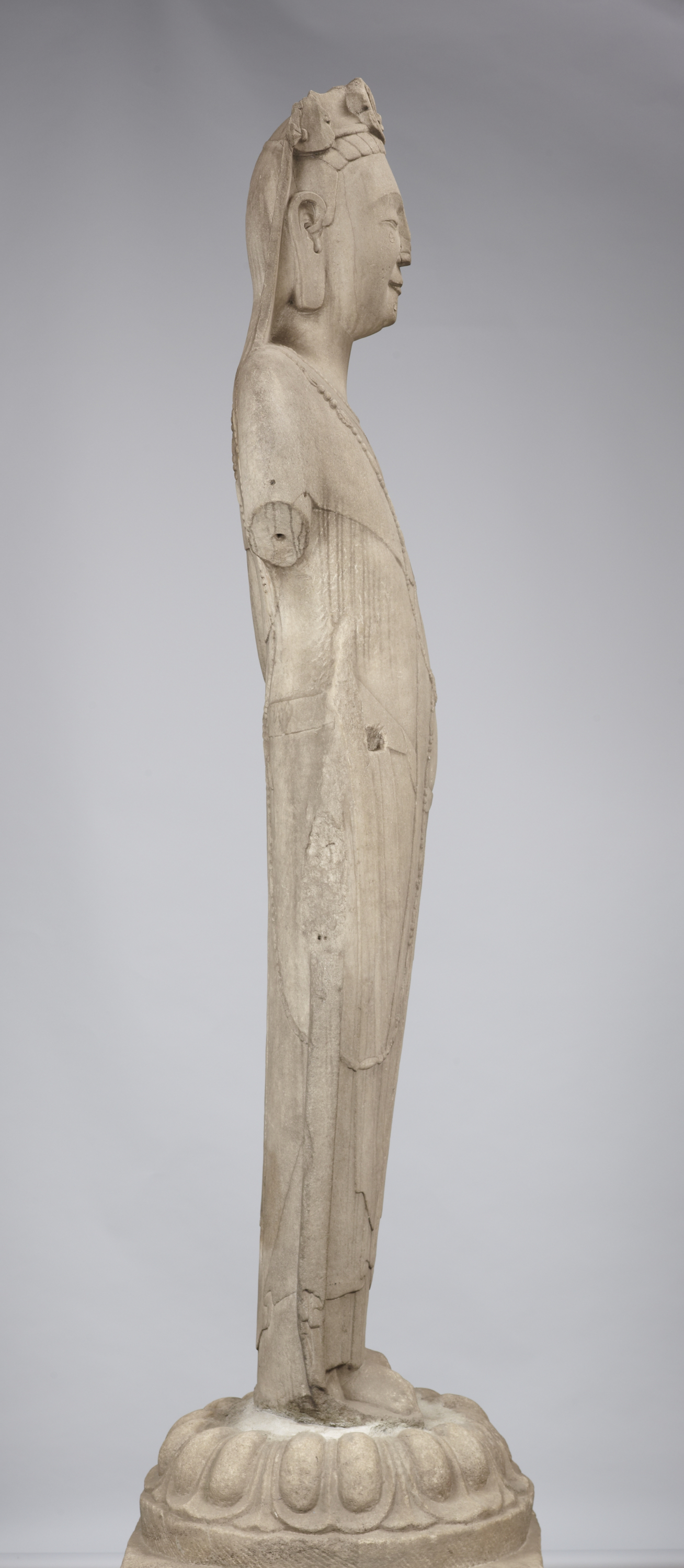
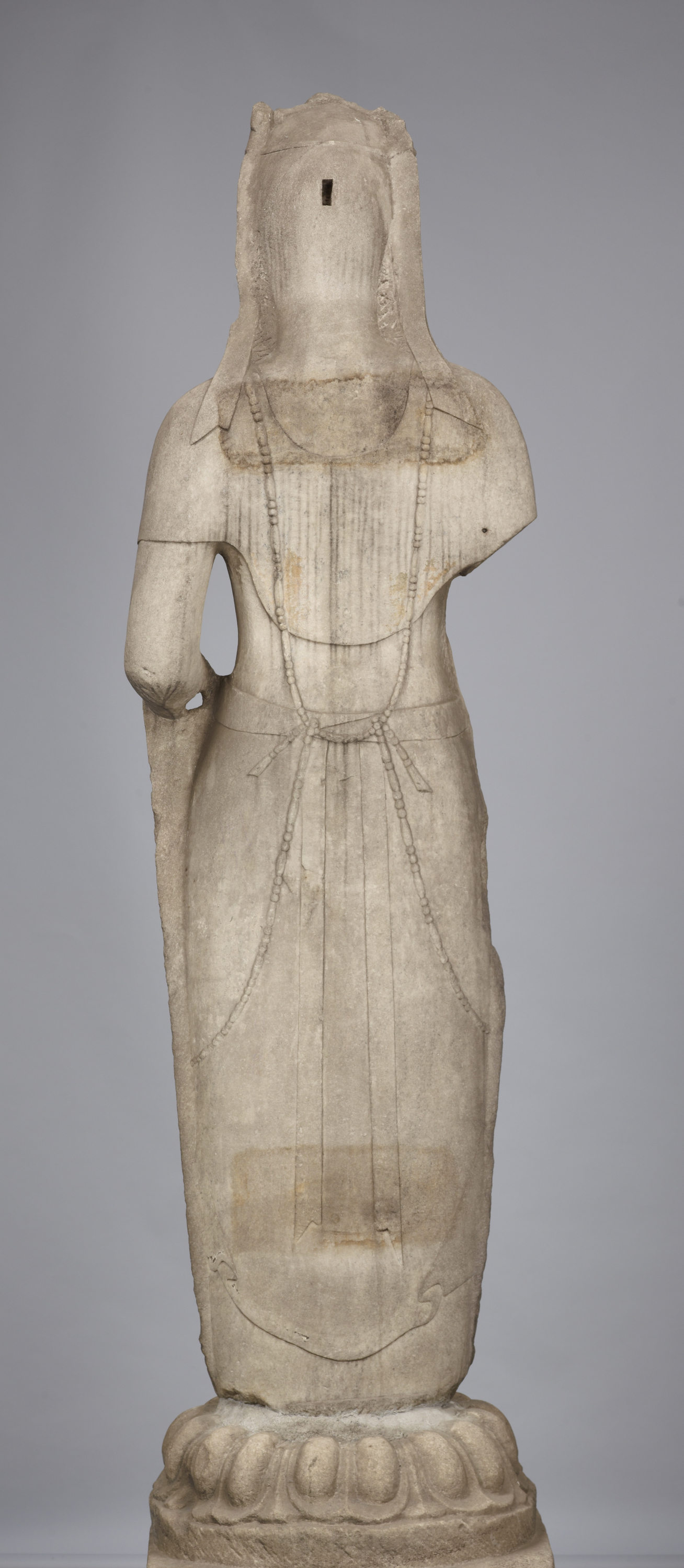 Both the year and place of creation of this statue are known from the inscription on its pedestal. This statue was originally part of a triad, whose central figure is held by the British Museum.
This large marble statue is approximately 2.5 meters tall and over 3 meters tall including its pedestal. The necklaces around the figure’s neck and his unclothed upper body with a long, thin garment over both shoulders suggest that this is a statue of a bodhisattva. Pay particular attention to his crown. The small image of the Buddha on its front shows that this is the Bodhisattva Kannon. This Bodhisattva Kannon statue looks rather stout from the front, while thin and flat, with a protruding belly, from the side. His garments and jewelry are depicted in shallow relief. These are all characteristics of Buddhist statuary from Sui-dynasty (581–618) China. There is an inscription on the front and right sides of the pedestal. It tells us that a large statue and two bodhisattva statues, which were made at a temple called Chongguang-si in 585, during the Sui dynasty, accumulated damage over a long period of time. The inscription has also revealed that the temple was restored in 674, during the Tang dynasty (618–907), and the statues were repaired in 685. In other words, this statue was originally one of a triad. An over-6-meter-tall standing statue of the Buddha Amida in the collection of the British Museum is actually the central figure of the triad to which this statue belongs. The whereabouts of the remaining bodhisattva statue are unknown. The statue of Buddha Amida in the British Museum’s collection and this statue have certain features in common; they are both made of marble and share a similar style. According to the inscription on this statue of Amida, more than 100 people, primarily from a family with the surname Han, became involved in the creation of this triad of statues through their ties to Buddhism. The inscription also tells us that the statues were originally located in a village in what is now Hebei Province in China. Hebei Province is known for the creation of numerous marble Buddhist statues beginning in the 4th century, during the Northern Wei dynasty (386-535), and continuing through the Tang and Song (960–1279) dynasties. Chongguang-si Temple, where this statue was originally located, no longer exists, but it is thought to have been in this area as well.
此像的创作年代与地点均可依据台座上的铭文得知。此像原为一铺三尊造像组合的一部分,其中主尊现藏于大英博物馆。
这尊大型大理石造像高约2.5米,连同台座在内则超过3米。像身所佩项链以及袒露上身、双肩披挂长薄衣袍的装束,表明这是一尊菩萨像。请特别注意其宝冠。冠正面中央的小化佛形象显示,此像为观音菩萨。
这尊观音菩萨像正面观之颇为敦实,侧面观之则显瘦削扁平,腹部微突。其衣饰与璎珞以浅浮雕手法表现。这些均为中国隋代(581–618)佛教造像的典型特征。
台座正面及右侧面刻有铭文。铭文记载,隋代开皇五年(585年),崇光寺所造一尊大像及两尊菩萨像,历经岁月,多有损毁。铭文还揭示,该寺于唐代(618–907)咸亨五年(674年)得到修缮,造像于垂拱元年(685年)得以修复。换言之,此像原为一铺三尊组合中的一尊。大英博物馆所藏一尊高逾6米的阿弥陀佛立像,实为此铺造像组合中的主尊。另一尊菩萨像的下落不明。大英博物馆所藏阿弥陀佛像与此像存在共同特征:二者均为大理石材质,风格相近。据阿弥陀佛像上的铭文记载,此铺造像的缔造,以韩姓家族为首,逾百人因佛缘而共襄盛举。铭文还记载,造像原位于今中国河北省的一处村落。自北魏(386-535)以迄唐宋(960–1279),河北地区以大量白石佛教造像闻名。此像原在之崇光寺虽已不存,但据信亦位于这一区域。

