
侧边栏

12世纪印度帕拉石雕释迦牟尼佛本生故事(纽约大都会博物馆)
尺寸: H. 3 15/16 in. (10 cm); W. 2 15/16 in. (7.5 cm); D. 1 3/16 in. (3 cm)
年代:12世纪
质地:泥岩(Mudstone)
风格:印度 帕拉
来源:纽约大都会博物馆
参阅:外部链接
鉴赏:
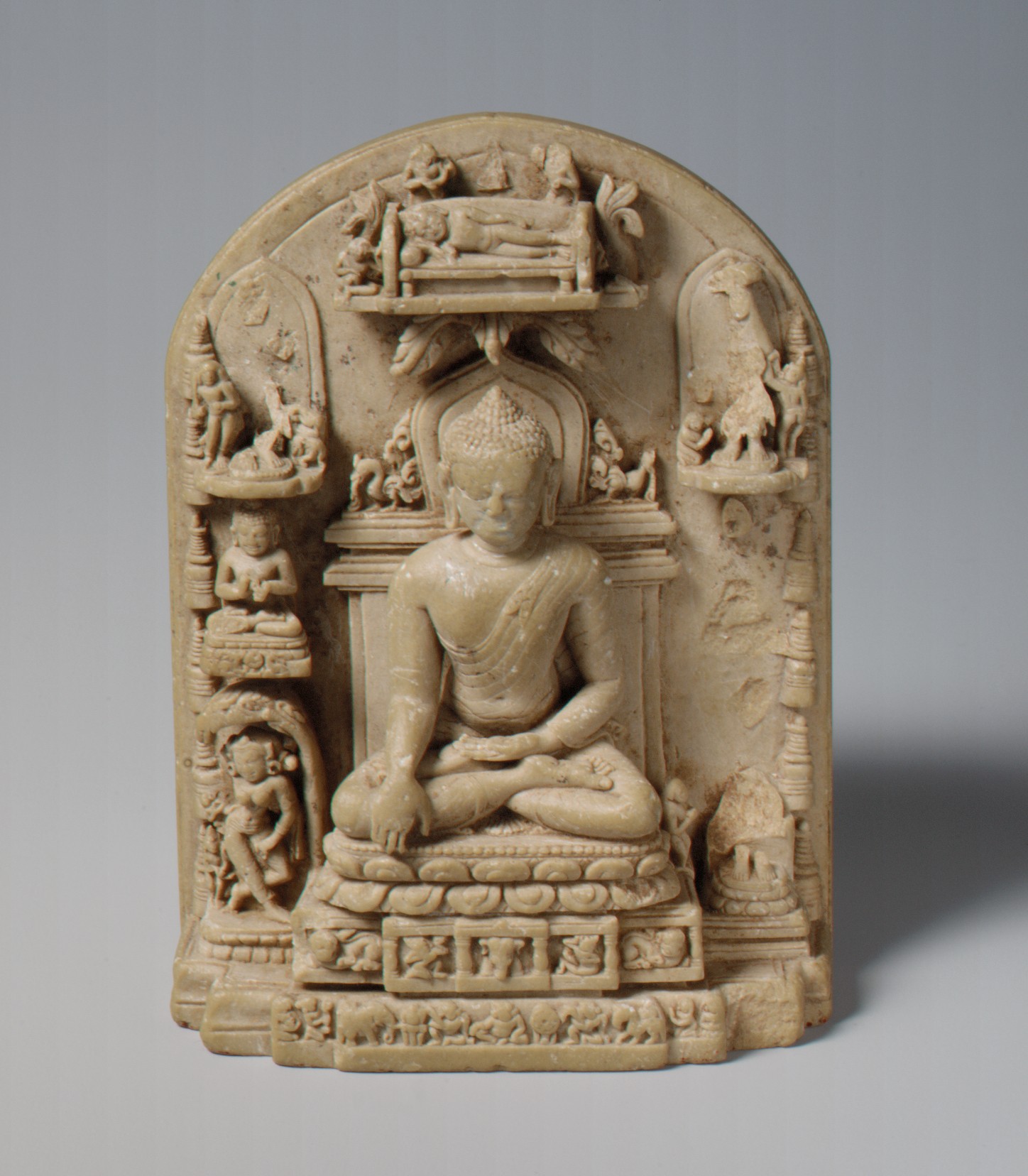 Plaque with Scenes from the Life of the Buddha
12th century
India (Bihar or West Bengal)
这件供奉饰板的中心场景描绘了悉达多降魔成道的故事。即将证悟的佛陀安坐树下冥想,当其成道时刻临近,魔王波旬用尽一切手段阻挠——先遣妖娆魔女诱惑,复派凶恶魔军侵扰。悉达多以右手触地(降魔印),召请地神见证其证悟的正当性。地神应允显圣,魔军溃散,悉达多终成释迦牟尼佛。
印度艺术常将佛陀生平凝练为八大事件。饰板中央图像周围便环绕着这些场景(从左下角顺时针起):摩耶夫人胁下诞佛;鹿野苑初转法轮;右侧跪伏白象象征调服狂象;顶端表现佛陀涅槃。右侧缺失部分原本应有从三十三天降凡、舍卫城现神通及猕猴献蜜等场景。底座浮雕转轮圣王七宝,两端胁侍供养人像。
此饰板尺寸小巧,应是私人供奉之物。此类小型佛龛在缅甸多有发现,长期以来被认定为当地制作。近年学者提出,其中许多实为印度造像,可能由朝圣者从印度佛教圣地携往缅甸。西藏亦发现大批同类造像,很可能同属朝圣纪念品。
The central scene of this devotional plaque depicts Siddhartha's victory over the demon Mara and his subsequent enlightenment. Siddhartha, the Buddha-to-be, sat under a tree in meditation and when it became clear that his enlightenment was near at hand, Mara tried everything in his power to prevent it. He sent his daughters to tempt Siddhartha as well as his armies to disrupt his meditation. The Buddha-to-be responded by touching the earth with his right hand (bhumisparshamudra), a gesture that called the earth goddess to witness his right to achieve enlightenment. She responded positively, Mara and his armies were dispersed, and Siddhartha became the Buddha Shakyamuni.
In Indian art, the Buddha's life was often condensed and codified into a series of eight events. Surrounding the central image on this plaque are depictions of these events (clockwise from lower left): the miraculous birth of the Buddha from the side of his mother Maya; his first sermon at the Deer Park in Sarnath; his taming of the elephant Nalagiri, as indicated by the presence of a kneeling elephant to the right; and at the top, his death. The missing scenes running down the right side would have illustrated his descent from Trayastrimsha Heaven, the miracles he performed at Shravasti, and his acceptance of the monkey's offering of honey. Depicted across the base are the seven jewels of the universal king, flanked on either end by devotees, possibly patrons.
The small size of this plaque suggests that it was a personal devotional object. Many such shrines were found in Burma, and they have been associated with that country until recently. Scholars are now suggesting that many are actually of Indian manufacture, and may have been brought to Burma, by pilgrims who had visited Indian Buddhist sites. A large group of like sculptures has been discovered in Tibet, and were also likely devotional souvenirs.
来源:
[Lawrence R. Phillips , New York, until 1982, sold to MMA]
展览:
College of the Holy Cross. “Pilgrimage and Faiths: Christianity, Buddhism, and Islam,” January 25, 2010–April 10, 2010.
Loyola University Museum of Art. “Pilgrimage and Faiths: Christianity, Buddhism, and Islam,” August 20, 2010–November 14, 2010.
Joel and Lila Harnett Museum of Art. “Pilgrimage and Faiths: Christianity, Buddhism, and Islam,” January 26, 2011–May 20, 2011.
Rubin Museum of Art. “Pilgrimage and Faiths: Christianity, Buddhism, and Islam,” July 1, 2011–October 30, 2011.
著录:
Woodward, Hiram W. Jr. “Influence and Change: Burma and Thailand in the 12th and 13th Centuries.” Arts of Asia, 24, no. 2 (March–April 1994) p. 103, fig. 8.
Raguin, Virginia C., Dina Bangdel, and F. E. Peters, eds. Pilgrimage and Faith: Buddhism, Christianity, and Islam. Exh. cat. Chicago: Serindia Publications, 2010, pp. 57–58, fig. 4.

