
侧边栏

3世纪犍陀罗石雕释迦牟尼佛立像(香港邦瀚斯)
尺寸:高122 cm
年代:3世纪
质地:片岩石雕
风格:犍陀罗
来源:拍卖会
成交:8,652,500港元(2021.12)
参阅:外部链接
鉴赏:
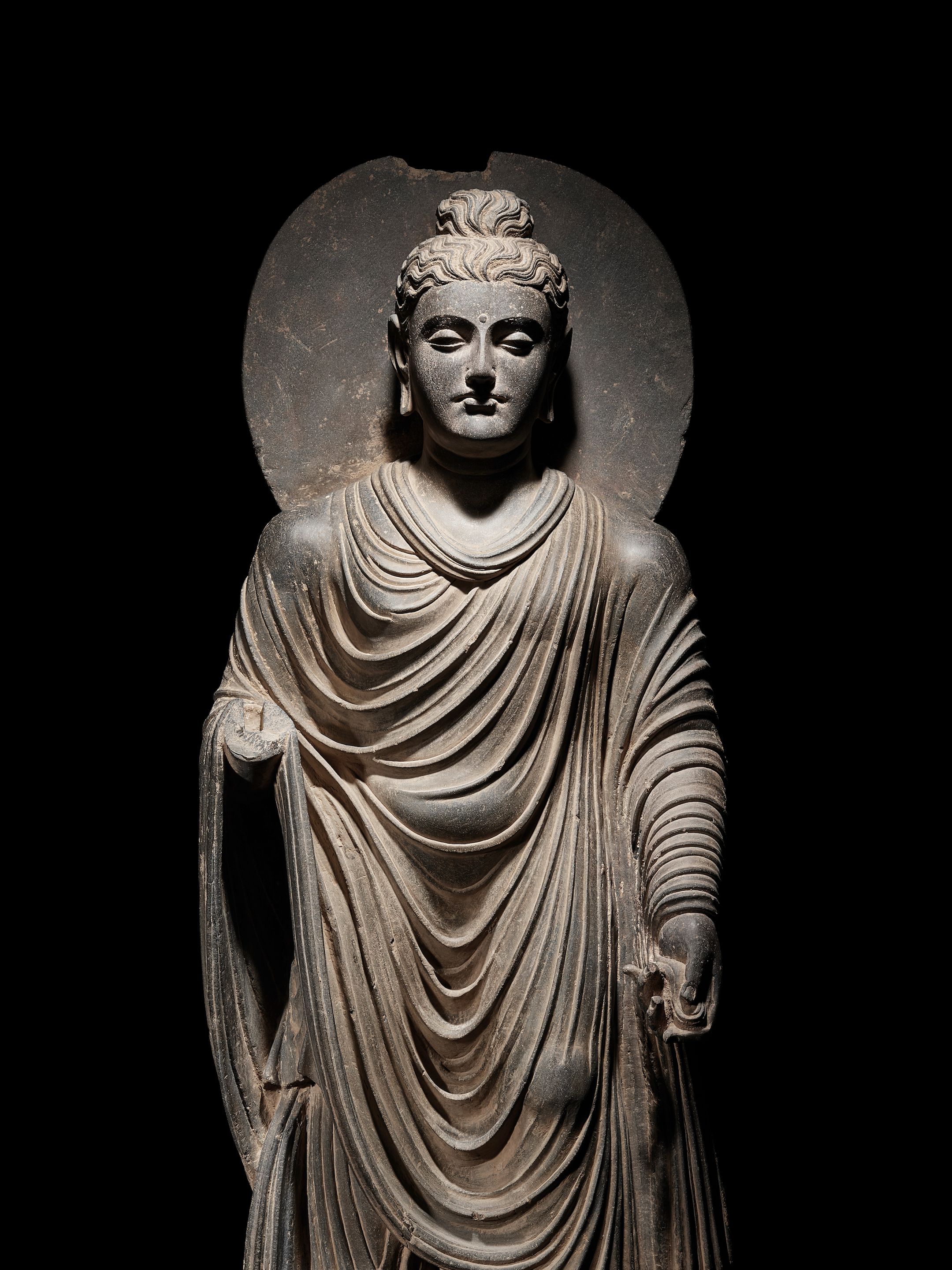
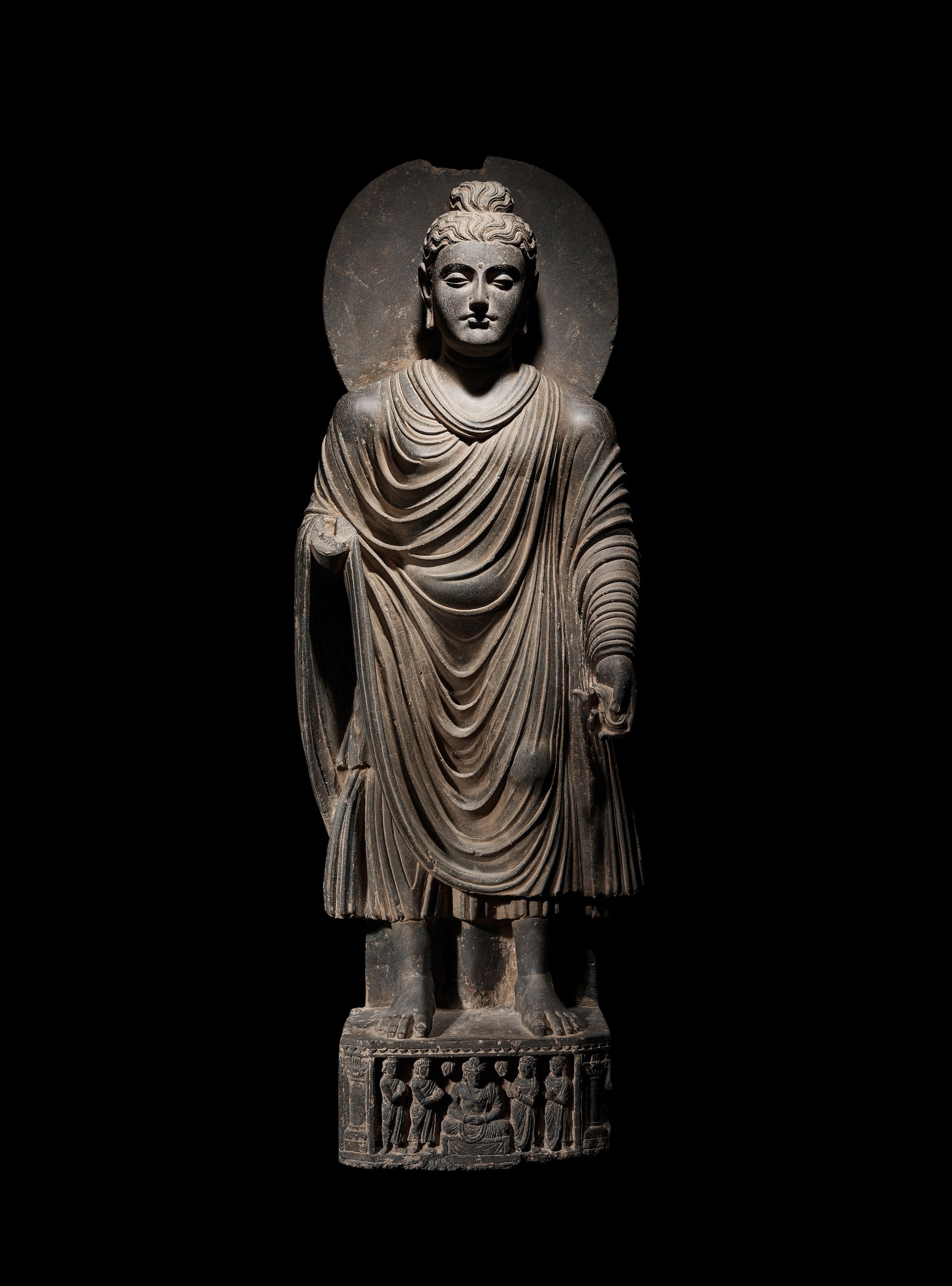
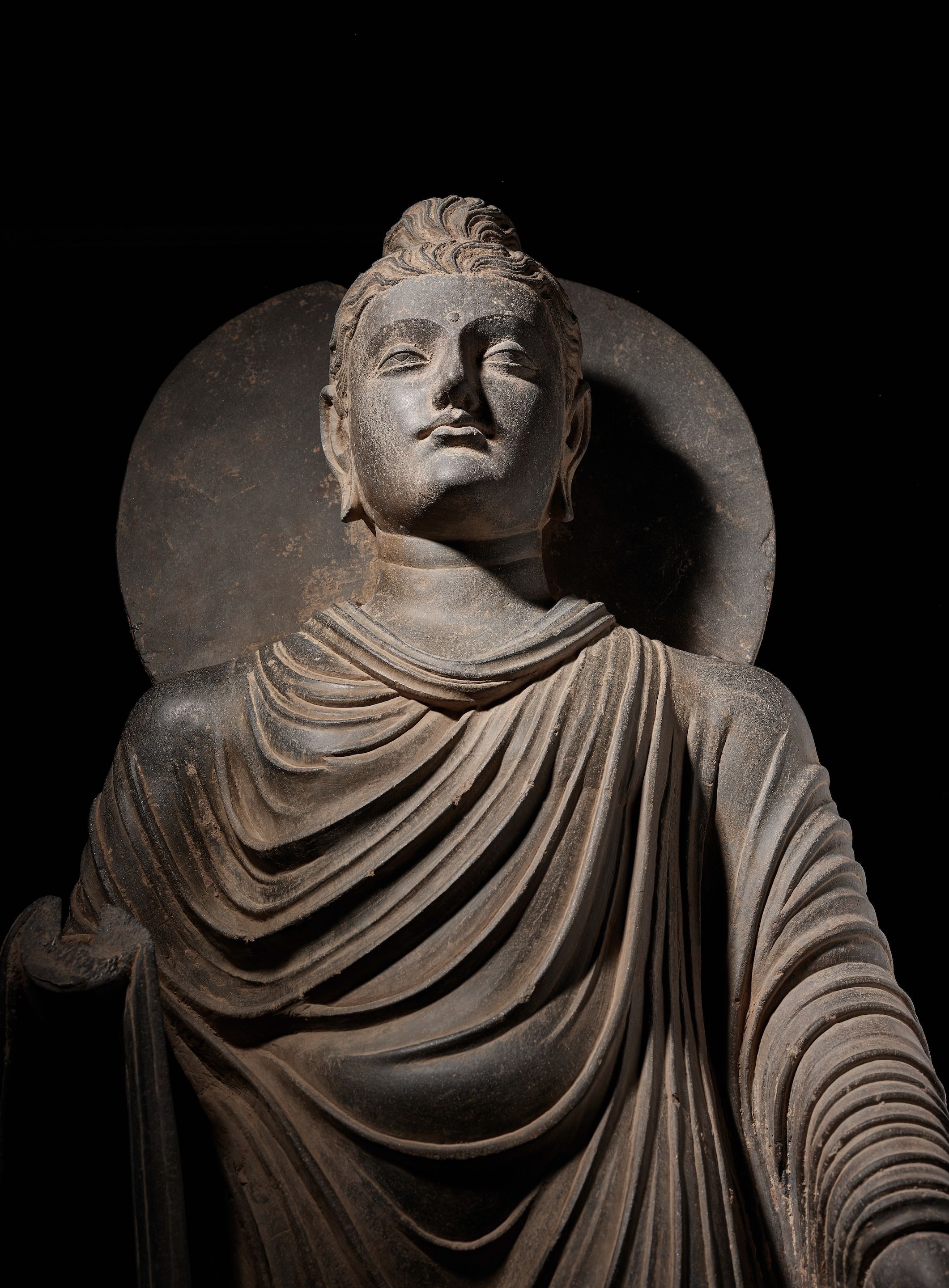
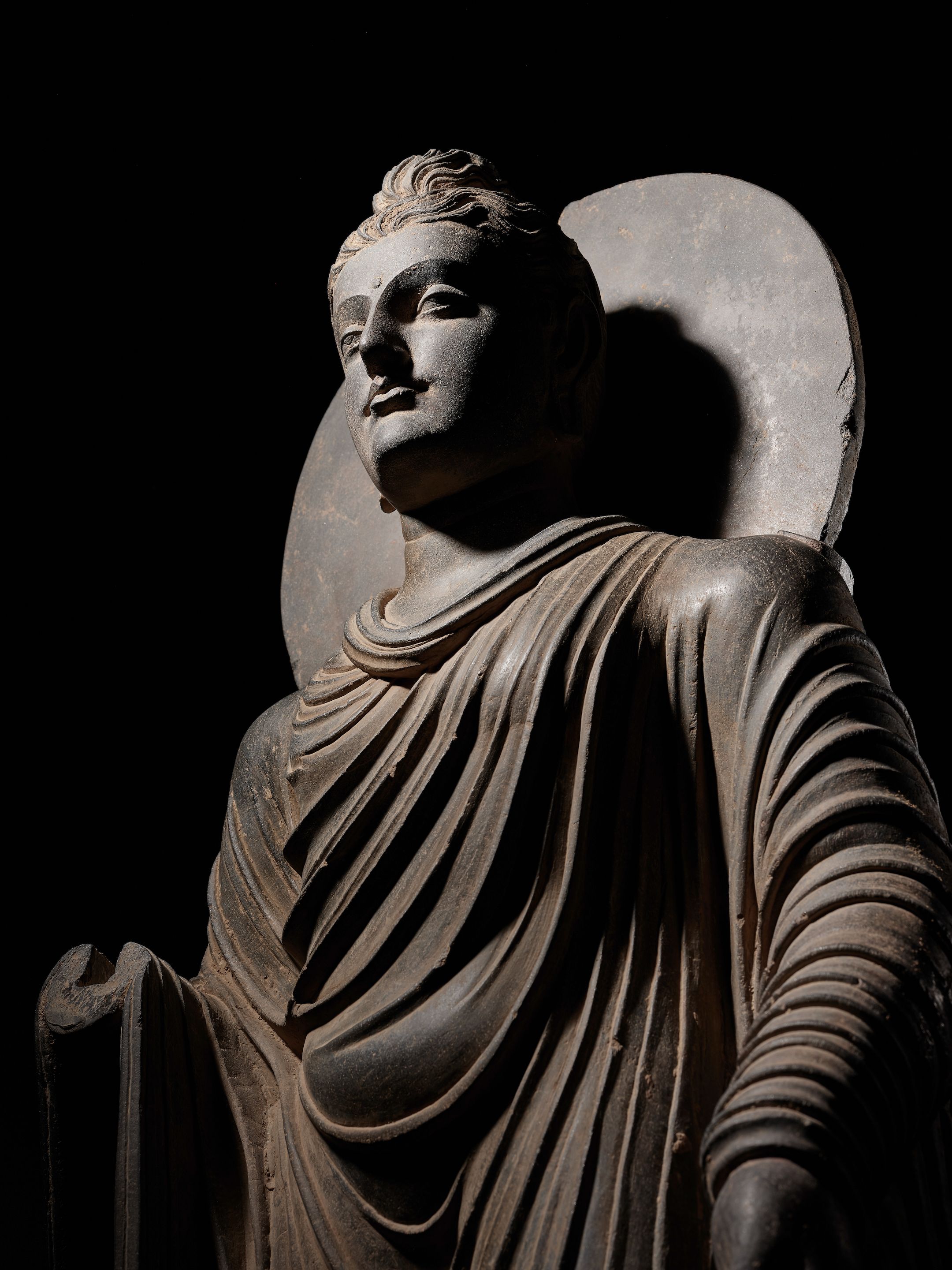 A SCHIST FIGURE OF BUDDHA
ANCIENT REGION OF GANDHARA, CIRCA 3RD CENTURY
122 cm (48 in.) high
Footnotes
犍陀羅 約三世紀 片岩佛陀像
This majestic figure of Buddha exudes both power and grace. His idealized face and classic, rippling hair rising over the wide ushnisha are framed by the circular nimbus affirming his divinity.
With universal appeal among collectors, the Gandharan style is a fascinating and accomplished idiom, testament to the cross-cultural origins and early spread of Buddhist art. Created by ateliers working in the Greco-Roman style that populated the region following Alexander the Great's invasion of modern-day Pakistan, Afghanistan, and Western China in 327 BCE, the sculptors drew on Mediterranean artistic traditions when catering to the demand from local Buddhist communities for carved stone monuments and iconic statuary. The Gandharan style, in turn, formed the precedent for the earliest Buddhist images in China, via contact and exchange across Central Asian trade routes.
The ancient region of Gandhara was once an important center for trade and religious activities. Carved stone monuments and iconic statuary were created for Buddhist patrons while drawing on Greco-Roman sculptural traditions. The present work is one such example, incorporating the emphasis on naturalism, seen in the treatment of his heavy, monastic robe wrapping around his neck in thick layers and forming U-shaped folds on his legs with a convincing sense of gravity. Compare with examples published in Ingholt, Gandharan Art in Pakistan, 1957, p.111, fig.207 and in the Tokyo National Museum (Kurita, Gandharan Art, vol.I, 2003, p.78, pl. 201).
The hems of Buddha's alluring robes are gathered in a soft roll clutched by his left hand to keep the garment tort and in place. The remains of his right forearm terminate with a commonly seen mortise that would have supported a separately carved hand modelling the gesture of reassurance (abhaya mudra). Referring to similar examples in the British Museum, Zwalf discusses this arrangement in detail which forms an iconic trope in Gandharan art (Zwalf, Gandharan Sculpture, vol.I, London, 1996. p.81; also p.9, no.1). As with the British Museum examples, the present sculpture's base is carved in low relief depicting the Future Buddha, Maitreya venerated by pairs of donor figures. This scene is also presented (with only a single donor either side) on a Gandharan sculpture of Buddha in The Metropolitan Museum of Art (Behrendt, The Art of Gandhara, New York, 2007, p.51, no.40).
Exhibiting such representative stylistic and iconographic features, the present lot is a superior, textbook example of the Gandharan Buddha. Compare a smaller, more fragmentary example sold at Christie's, New York, 22 September 2020, lot 619 and a larger sculpture sold at Christie's New York, 17 March 2021, lot 406.
Provenance:
Private American Collection by 1994
Private Asian Collection

