8-9世纪印度帕拉(库基哈尔)青铜东方不动佛(阿閦佛)坐像(克利夫兰艺术博物馆)
尺寸:38.8 x 26.3 cm
年代:8-9世纪
质地:bronze with silver and copper inlay
风格:帕拉 东北印度(Bihar, Kurkihar)
来源:克利夫兰艺术博物馆
参阅:外部链接
鉴赏:
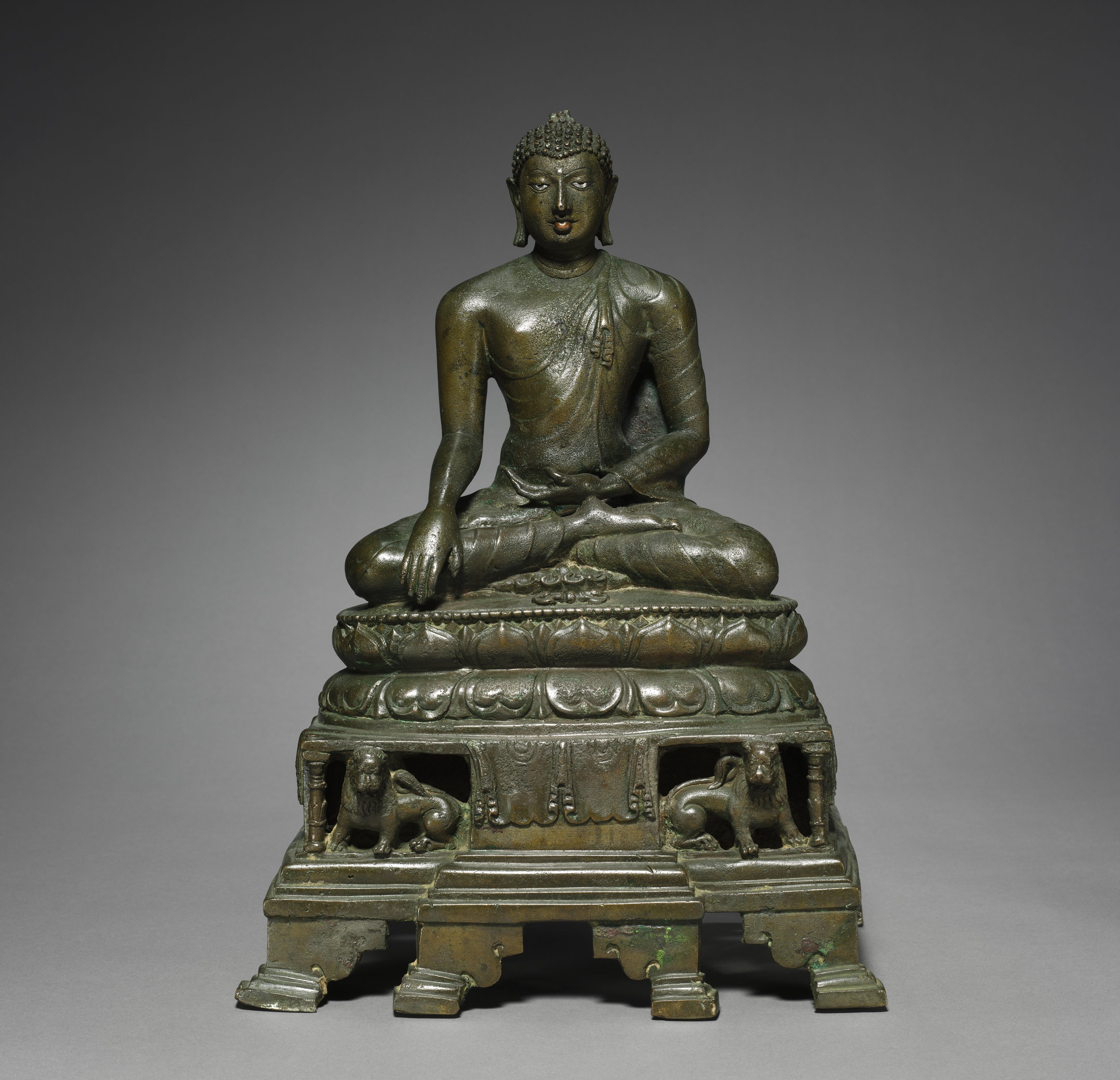 这件雕塑制作于帕拉时期(750-1134年),当时密宗图像正在印度东北部初现。它出自一处窖藏,该窖藏出土了北印度青铜传统中一些最为精湛的作品。密宗从这一地区传播至东南亚。置于台座前方、像前的双头雷电杵(即金刚杵)表明这是一尊密宗造像。其手印表明他是五方佛之一,每位佛各与空间的一个方位(北、南、东、西、中)相对应。阿閦佛尤为被祈请以灭除瞋怒这一有害情绪。
Made during the Pala period (750-1134) when tantric imagery was first emerging in northeastern India, this sculpture is from a cache that yielded some of the most masterful works of the north Indian bronze tradition. From this region, Tantra spread to Southeast Asia. The double-headed thunderbolt, or vajra, placed on top of the pedestal in front of the figure indicates that this is a tantric image. His hand gestures identify him as one of the Five Cosmic Buddhas, each of whom is associated with a cardinal direction of space: north, south, east, west, and center. The Buddha Akshobhya is especially invoked to eradicate the harmful emotion of anger.