
侧边栏

11世纪尼泊尔铜鎏金莲花手观音菩萨立像(克利夫兰艺术博物馆)
尺寸:H. 62 cm
年代:11世纪
质地:铜鎏金(bronze with gilding, pigment, and semiprecious stones)
风格:尼泊尔
来源:克利夫兰艺术博物馆
参阅:外部链接
鉴赏:
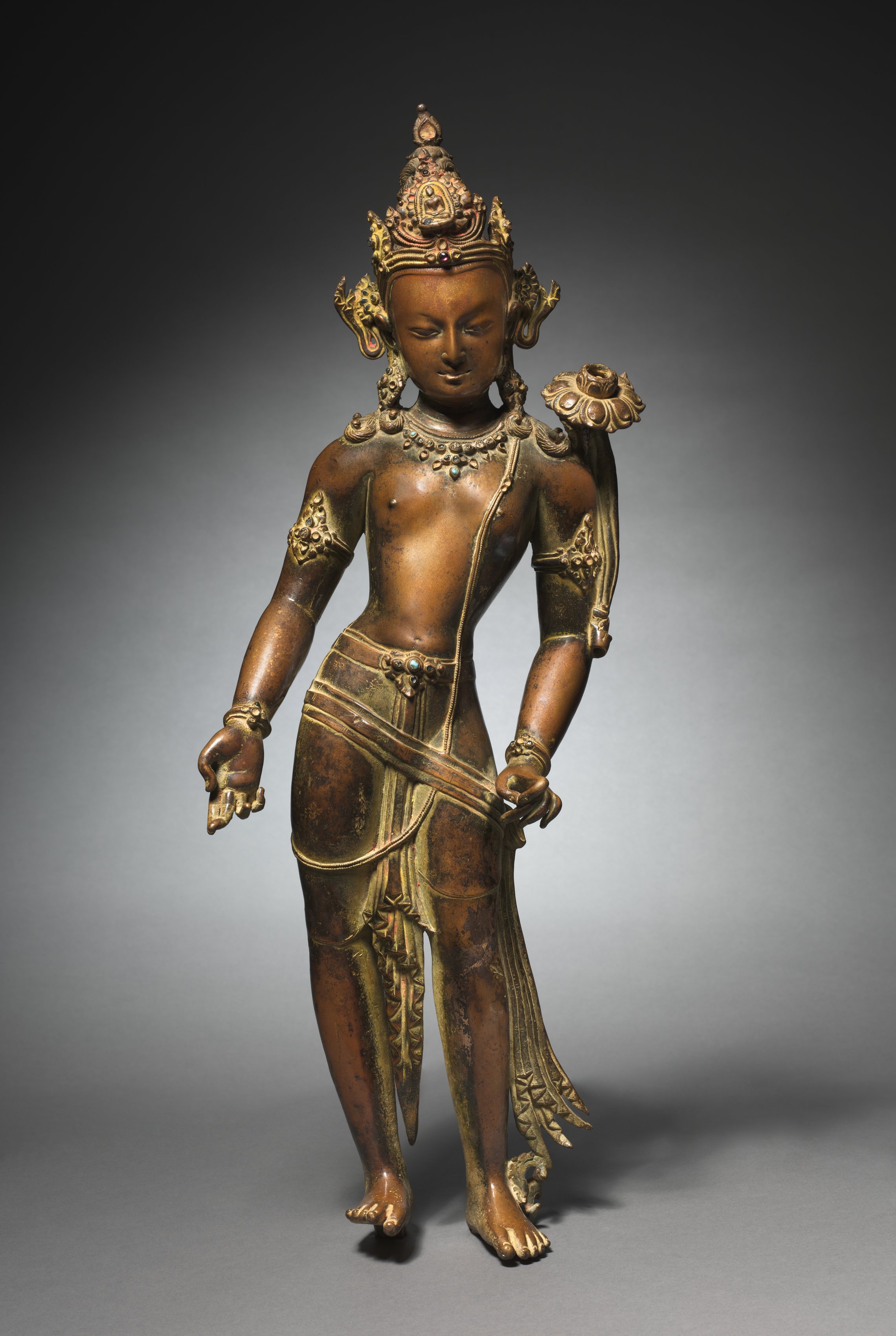
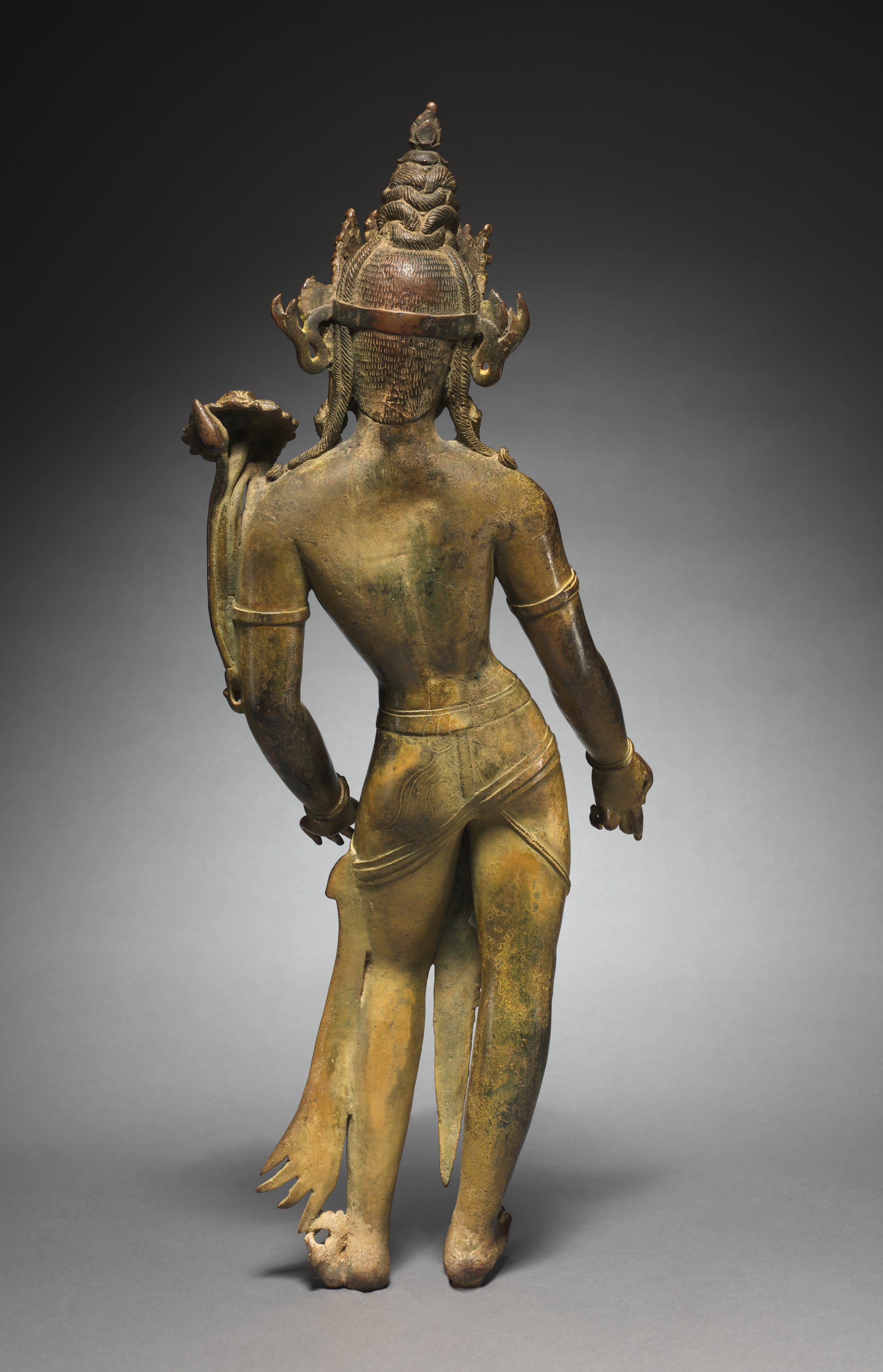
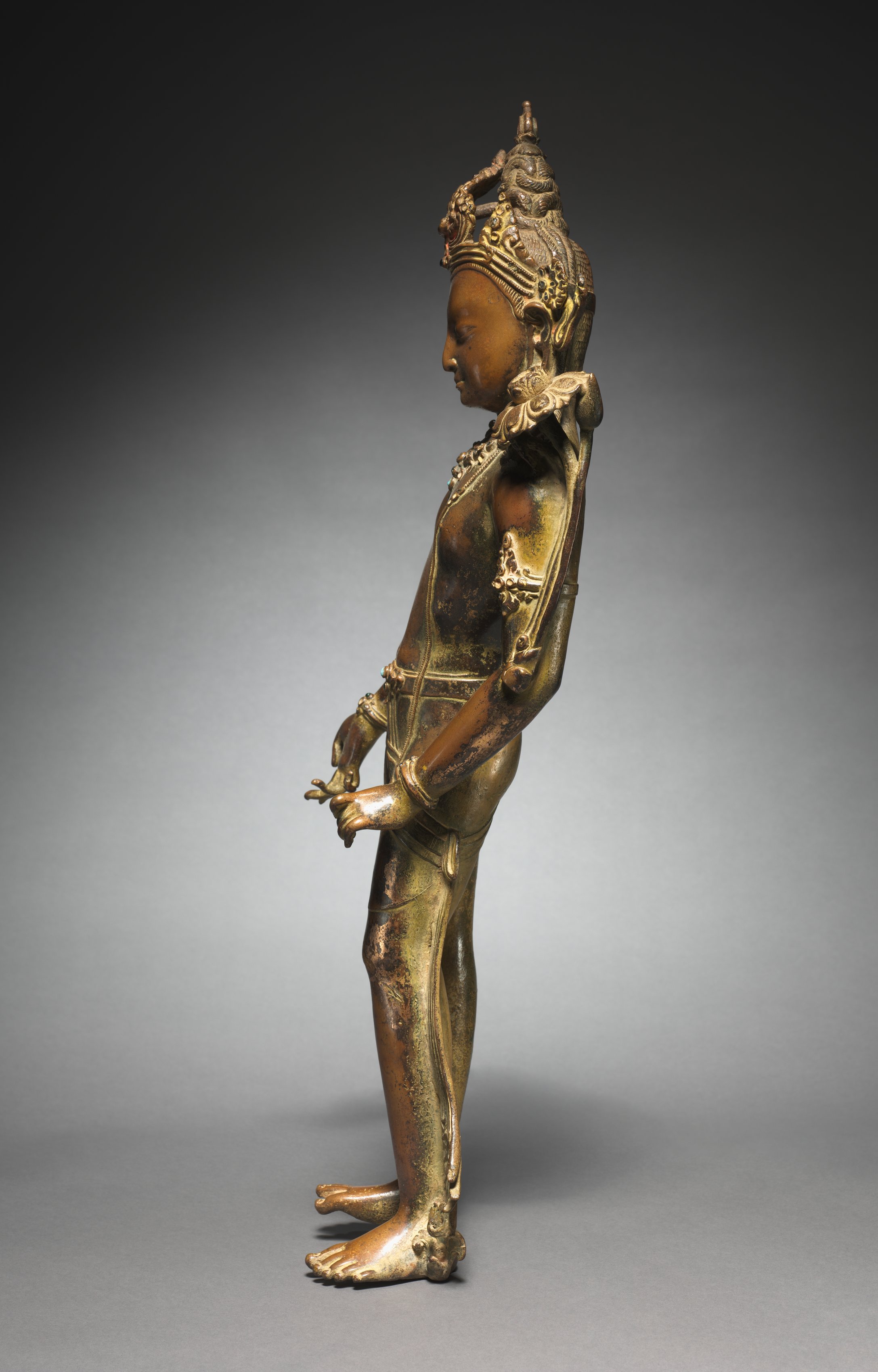
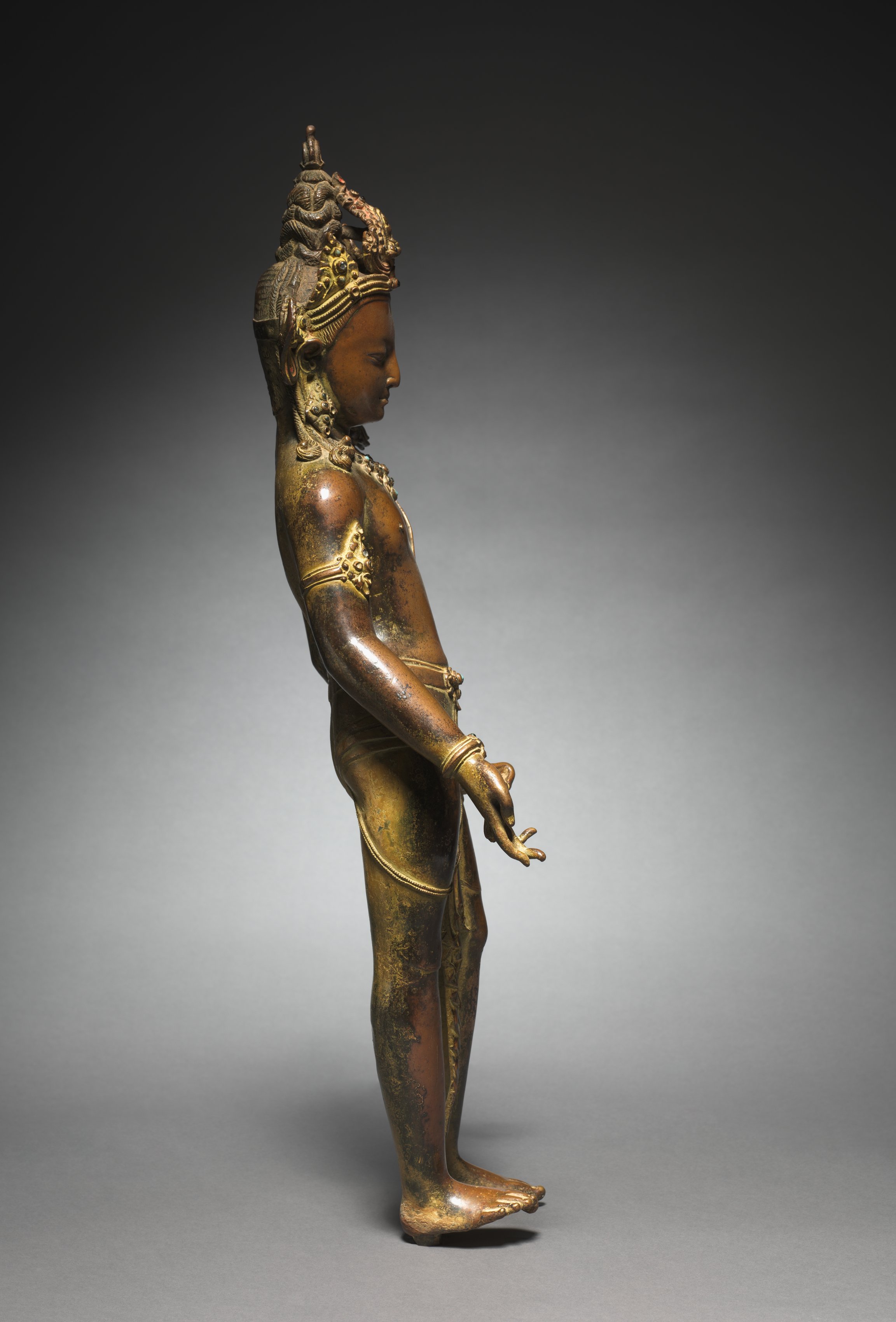
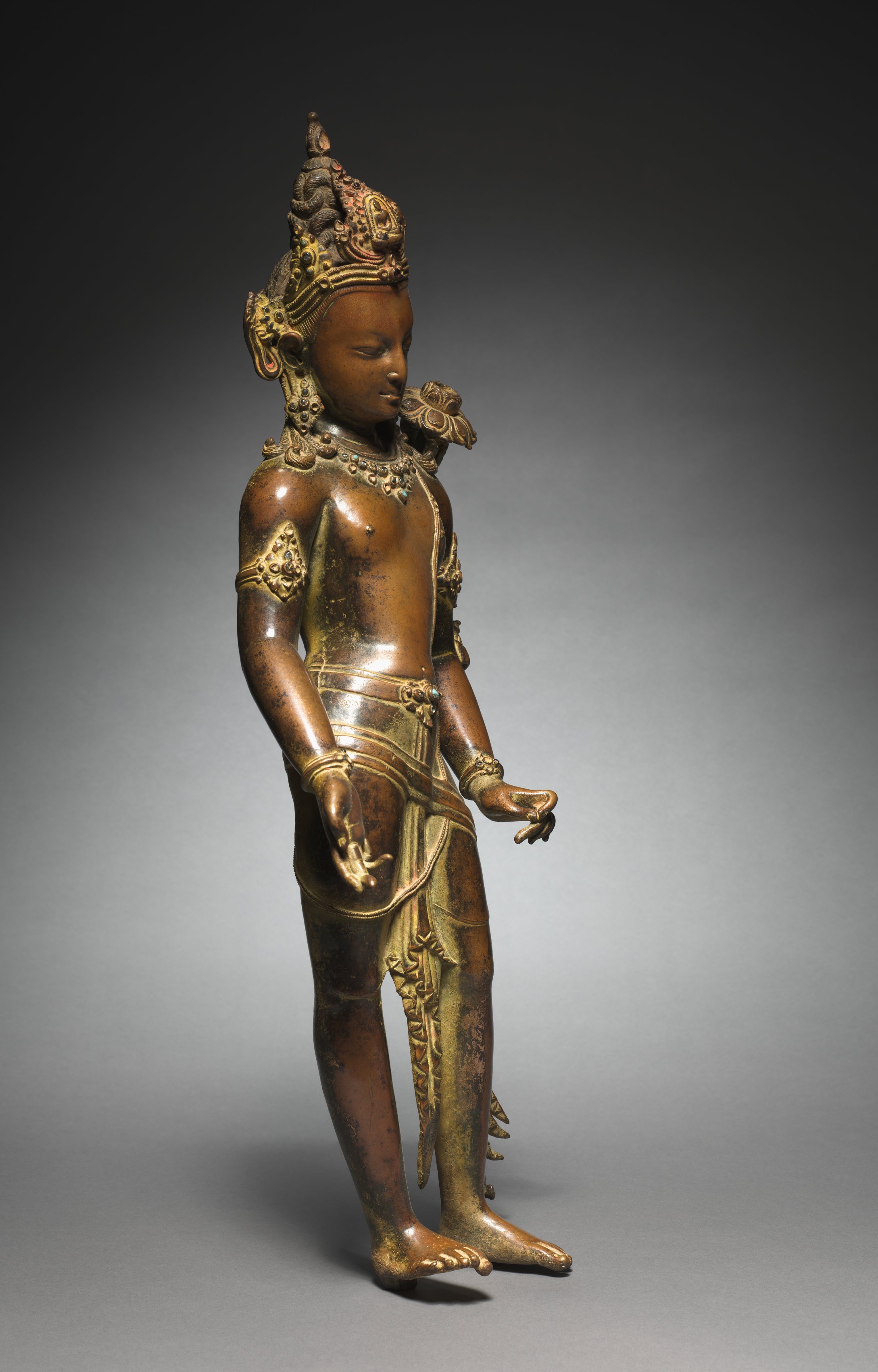
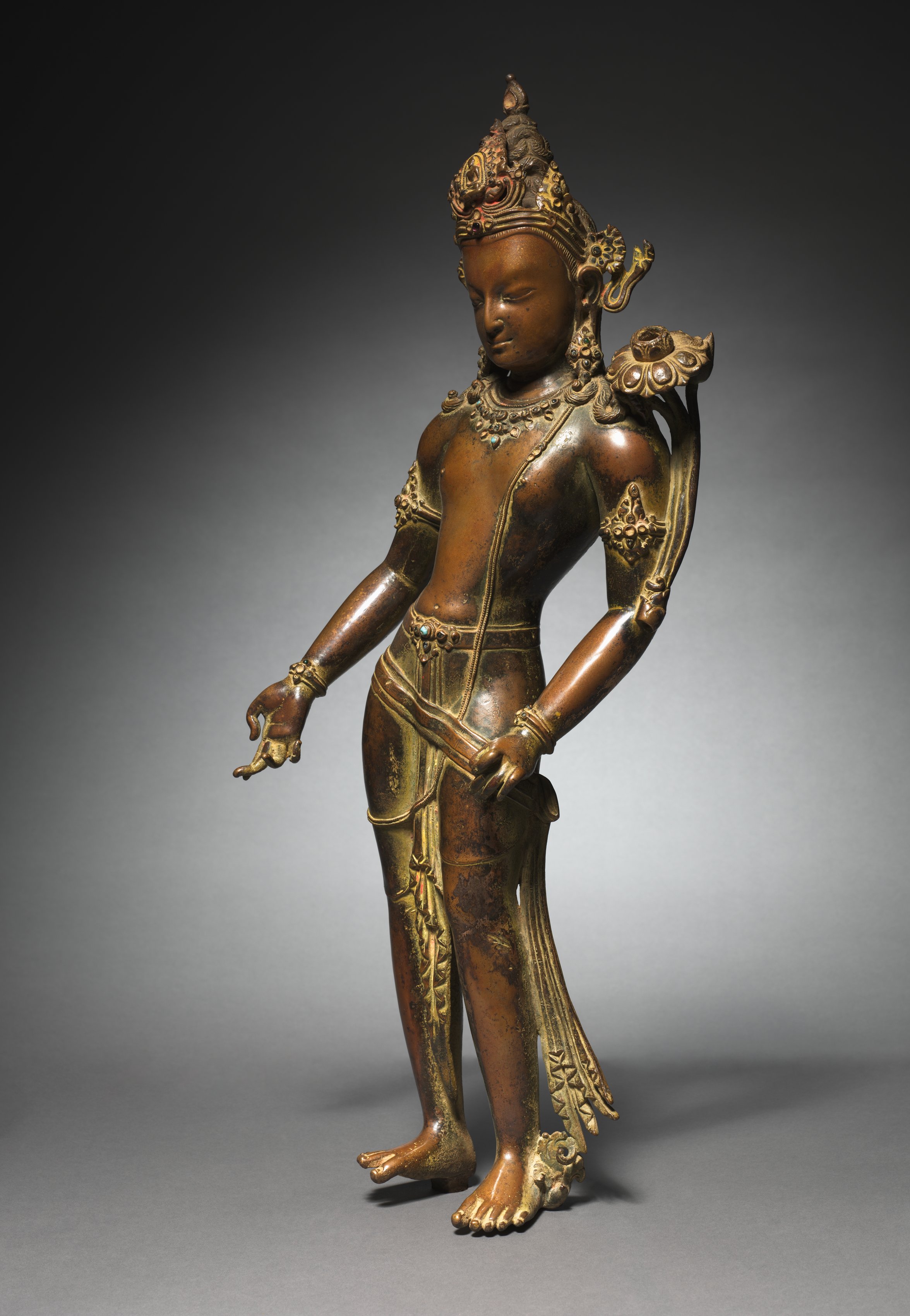
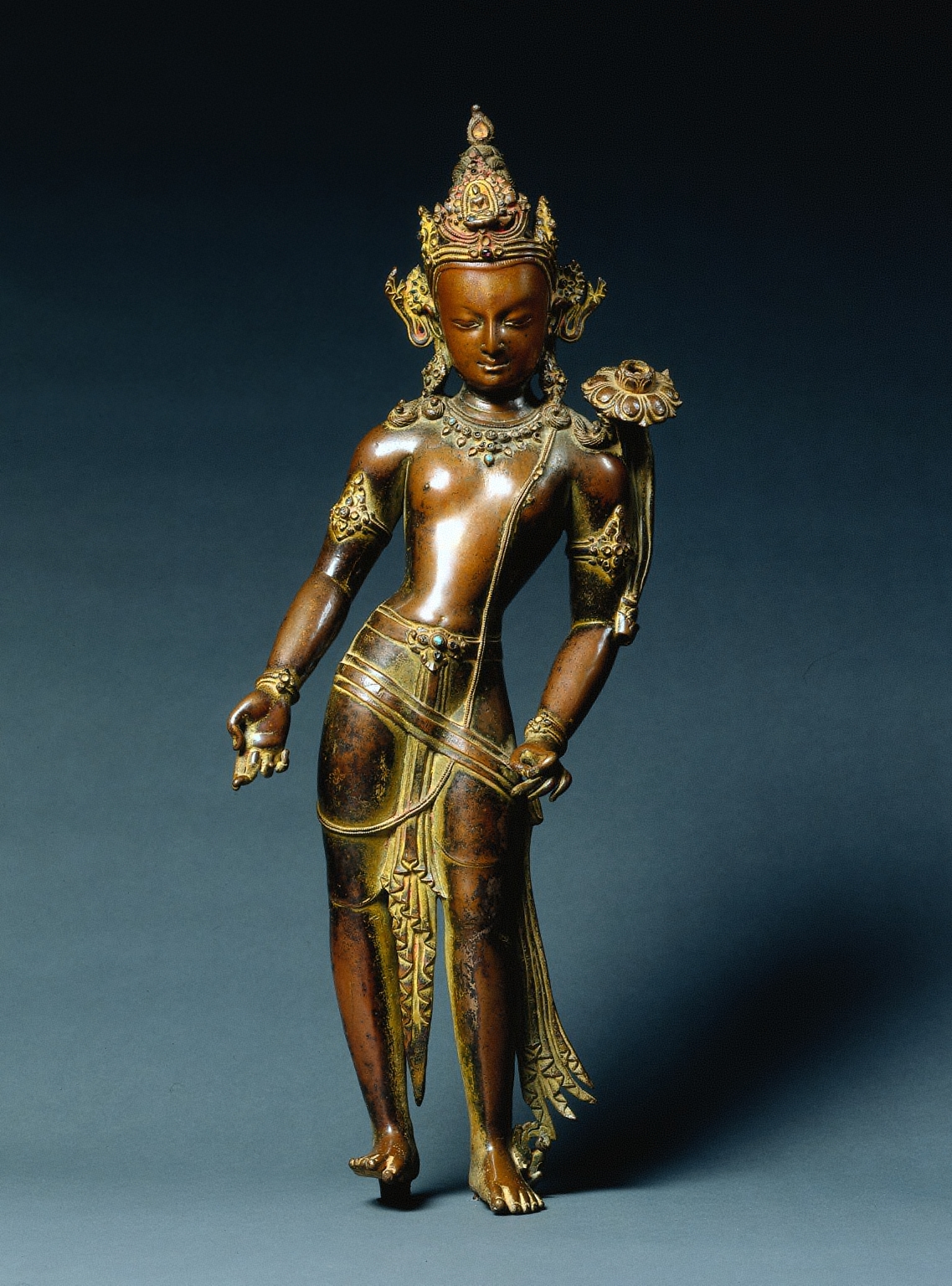 Avalokitesvara Padmapani: Bodhisattva of Mercy Bearing a Lotus
c. 1000s
Nepal
这位菩萨被世界各地的佛教徒尊奉为慈悲众生的完美化身,距离圆满觉悟仅一步之遥。他以右手轻柔结与愿印,左手曾持一朵莲花的花茎,莲花在左肩处绽放,象征着慈悲善行所产生的无量利益。
所有菩萨皆身着王室衣饰、佩戴珠宝,这源于历史上的佛陀在森林中通过禅定证悟之前,曾贵为太子。在其宝冠中央,有一尊小巧的禅定阿弥陀佛坐像,明确标识出此尊为观音菩萨。
11世纪的尼泊尔青铜像采用实心铸造工艺,合金中含铜量极高,这使得造像在制作过程中难以塑形。然而,高铜含量所呈现出的色泽,为雕像赋予了一种独特的温润与柔和。
右脚弯曲的脚趾与摆向一侧的衣袍下摆,为他持续的布施之举注入了一种动感。其面容柔和、平静却又敏锐,仿佛对人间的苦难有着深切的体察。
Venerated by Buddhists across the world as the perfect embodiment of compassion for all beings, this bodhisattva-a being only one stage away from complete enlightenment-holds his right hand out gently in the gesture of gift-giving. In his left hand, he once grasped the stem of a lotus flower that blossoms over his left shoulder, indicative of the abundant benefits that result from acts of loving kindness.
All bodhisattvas wear royal garments and jewels, in reference to the historical Buddha’s early life as a prince, prior to his achievement of enlightenment through meditations in the forest. In the center of his crown is the tiny seated image of the meditating Buddha Amitabha that identifies this figure as Avalokitesvara specifically.
Nepalese bronzes of the 11th century are solid cast and have an exceptionally high copper content in the alloy that makes the bronze difficult to manage during fabrication. The color achieved by the extra copper creates a distinctive warmth and softness in the sculpture.
The flexed toes of the right foot and the swinging to one side of the gathered ends of his garment impart a sense of dynamism to his ongoing act of giving. His facial expression is sweet and placid but sharp, as though he is keenly aware of the sufferings of the world.
著录:
Lee, Sherman E. “The Year in Review for 1976.” The Bulletin of the Cleveland Museum of Art 64, no. 2 (February 1977): 39–78.
Mentioned: no. 161, pp. 42 and 79; Reproduced: no. 161, p. 61 www.jstor.org
“Art of Asia Acquired by North American Museums, 1975-1976.” Archives of Asian Art 30 (1976): 103–126. Mentioned: p. 110, fig. 20; Reproduced: p. 111, fig. 20 www.jstor.org
The Cleveland Museum of Art. Handbook of the Cleveland Museum of Art/1978. Cleveland, OH: The Cleveland Museum of Art, 1978. Reproduced: p. 295 archive.org
Schroeder, Ulrich von. Indo-Tibetan Bronzes. 1st ed. Hong Kong, Glattbrugg, Switzerland: Visual Dharma Publications; Sole distributor, Nanda Distribution, 1981. Mentioned: p. 348, no. 90F; Reproduced: p. 349, no. 90F
Cunningham, Michael R., Stanislaw J. Czuma, Anne E. Wardwell, and J. Keith Wilson. Masterworks of Asian Art. Cleveland, OH: The Cleveland Museum of Art, 1998. Mentioned and Reproduced: pp. 156–157
Fortenberry, Diane, ed. The Art Museum. London; New York: Phaidon Press, 2017. Reproduced: P. 214, no. 4
展览:
Object Lessons: Cleveland Creates an Art Museum. The Cleveland Museum of Art, Cleveland, OH (organizer) (June 7-September 8, 1991).
Sacred India. The Cleveland Museum of Art, Cleveland, OH (organizer) (November 5, 1985-January 12, 1986).
Year in Review, 1976. The Cleveland Museum of Art, Cleveland, OH (organizer) (February 1-March 6, 1977).

