
侧边栏

11世纪印度帕拉高岭石雕彩绘空行观音菩萨(克利夫兰艺术博物馆)
尺寸:Overall: 7.7 cm
年代:11世纪
质地:高岭石雕彩绘(Kaolin with traces of pigment)
风格:印度 帕拉
来源:克利夫兰艺术博物馆
参阅:外部链接
鉴赏:
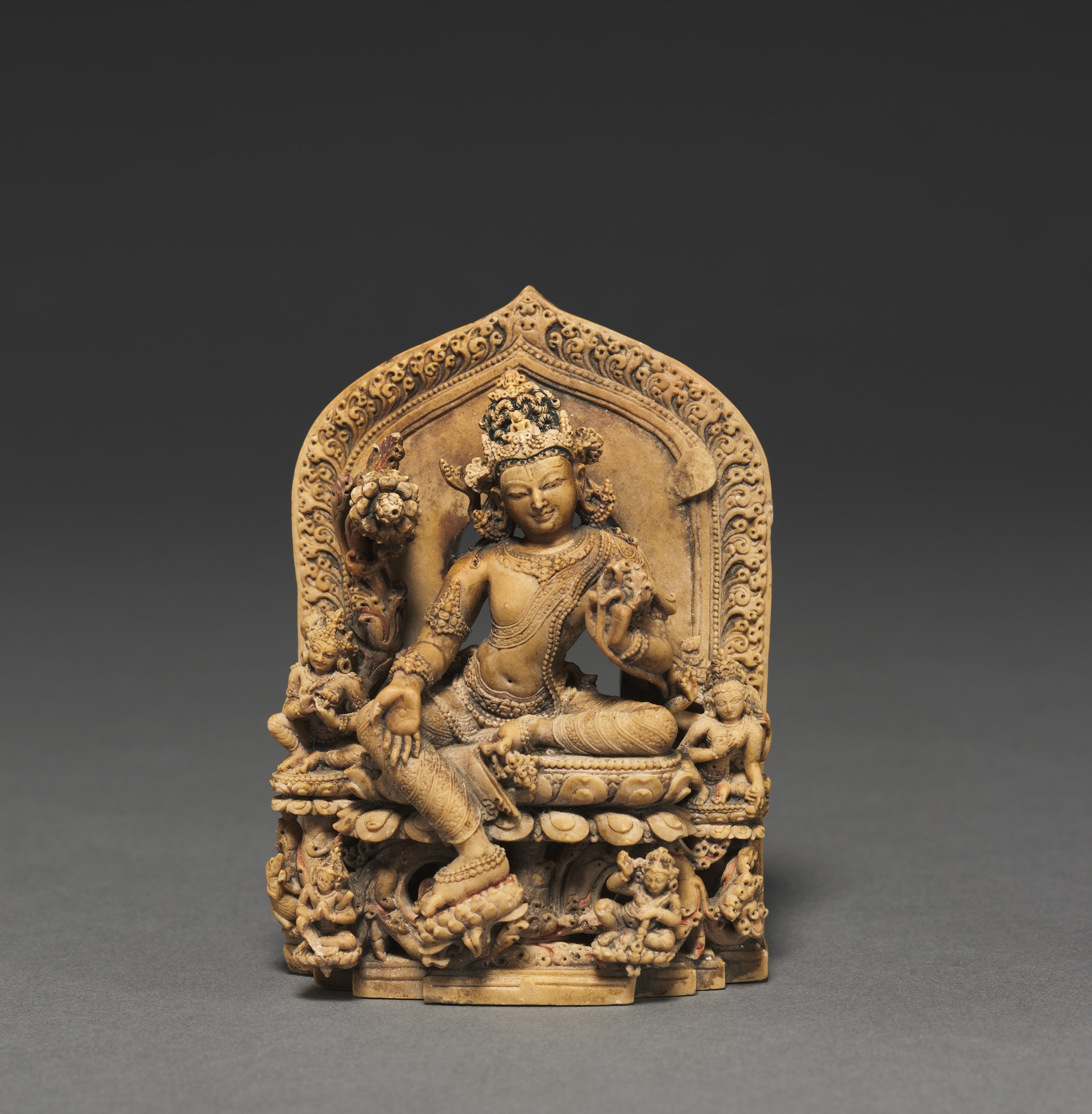
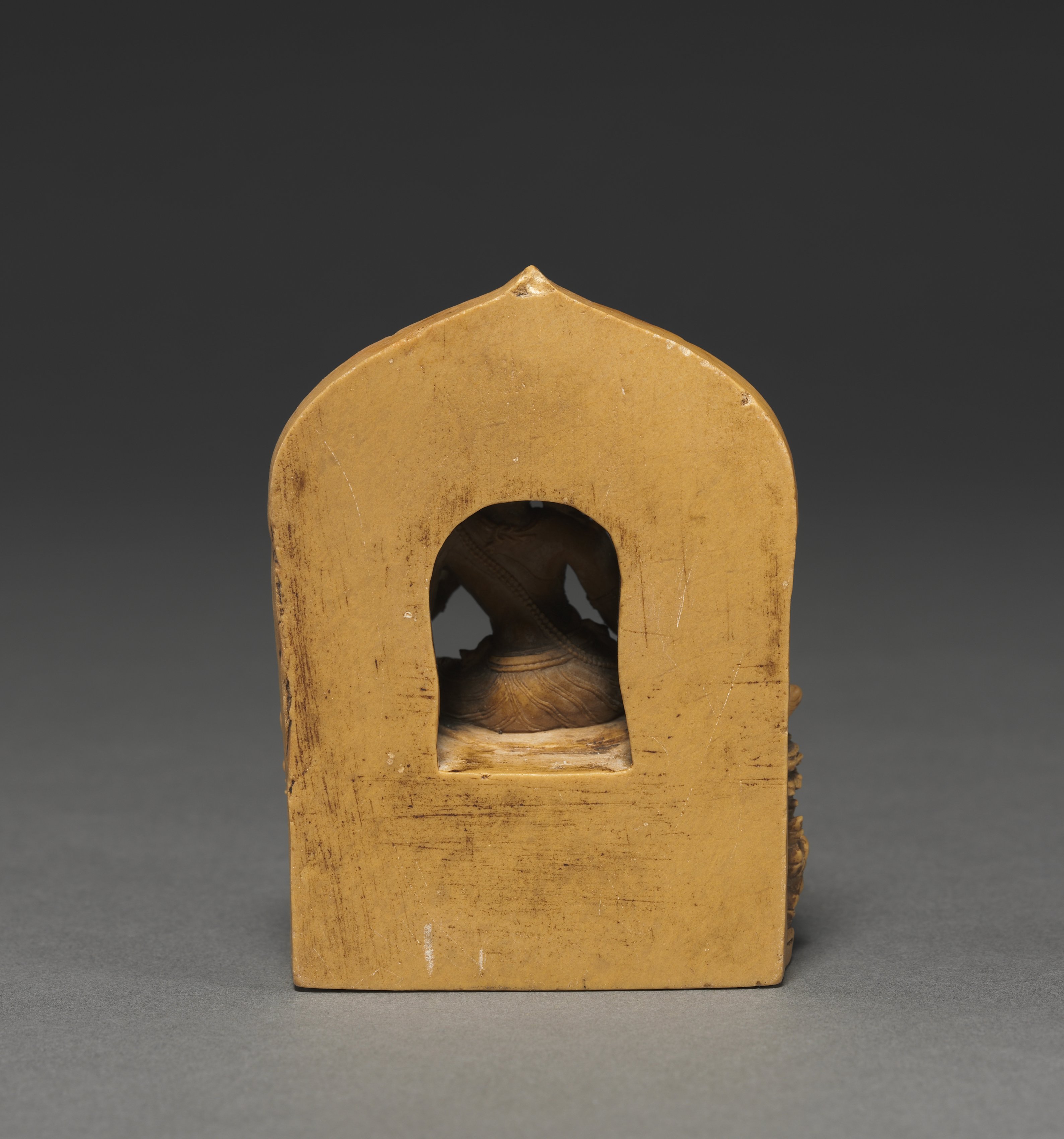 Bodhisattva of Compassion as Lokeshvara the Sky Flyer (Khasarpana)
late 1000s
Eastern India, Bihar, Pala dynasty, reign of Ramapala
(reign 1078/79–at least 1130)
这件精美的佛教还愿碑雕刻于如象牙般温润的软质石材上,尤其盛行于11至12世纪,供个人修行使用。
此像为观音菩萨(具有大威德力的慈悲菩萨)的一种特殊身形,呈自在坐(一脚垂下),冠中有阿弥陀佛化佛。这一特殊形制的观音菩萨能为饿鬼道众生带来救度。在碑板左下角,一位肚子鼓胀的饿鬼正在赞颂观音,其左侧有一位小小的王者形象,左臂间夹着一份经卷。
观音的右侧是绿度母,手持莲花;左侧是四臂的毗俱胝(Bhrikuti)女神,手持念珠和净瓶。
Exquisite Buddhist votive sculptures carved from soft ivorylike stone were made for personal devotional use during the 11th and 12th centuries in particular.
This form of Avalokiteshvara, the powerful bodhisattva of compassion, sits with one foot down in the posture of royal ease, the Buddha Amitabha in his crown. This special form of the bodhisattva of compassion brings relief to hungry ghosts. A hungry ghost with a distended belly praises him in the lower left corner of this plaque, to the left of the tiny regal figure with a manuscript tucked in his left arm.
Green Tara is at Avalokiteshvara's proper right, holding a lotus, and the four-armed goddess Bhrikuti holds a rosary and water bottle at his left.
传承:
?–1991
(David Tremayne, Ltd., London, UK, sold to the Cleveland Museum of Art)
1991–
The Cleveland Museum of Art, Cleveland, OH
著录:
Turner, Evan H. “Selected 1991 Acquisitions.” The Bulletin of the Cleveland Museum of Art 79, no. 2 (February 1992): 63–83. Reproduced: p. 66; Mentioned: p. 83 www.jstor.org
Czuma, Stanislaw J. “Some Tibetan and Tibet-Related Acquisitions of the Cleveland Museum of Art.” Oriental Art, Winter 1992/3, vol. XXXVIII no. 4, pp. 231–242. Reproduced: fig. 4, p. 235
“Permanent Collection Installations.” Cleveland Art: Cleveland Museum of Art Members Magazine vol. 63, no. 1 (2023): 18–19. Reproduced: p. 18.
展览:
Text and Image in Southern Asia. The Cleveland Museum of Art, Cleveland, OH (organizer) (August 26, 2022-March 5, 2023).

