
侧边栏

7-8世纪印度喜马偕尔邦黄铜思惟观音菩萨(牛津大学阿什莫林博物馆)
尺寸:16 x 9.5 x 7cm
年代:7-8世纪(671 - 730)
质地:黄铜
风格:印度 喜马偕尔邦(Himachal Pradesh)
来源:牛津大学阿什莫林博物馆
参阅:外部链接
鉴赏:
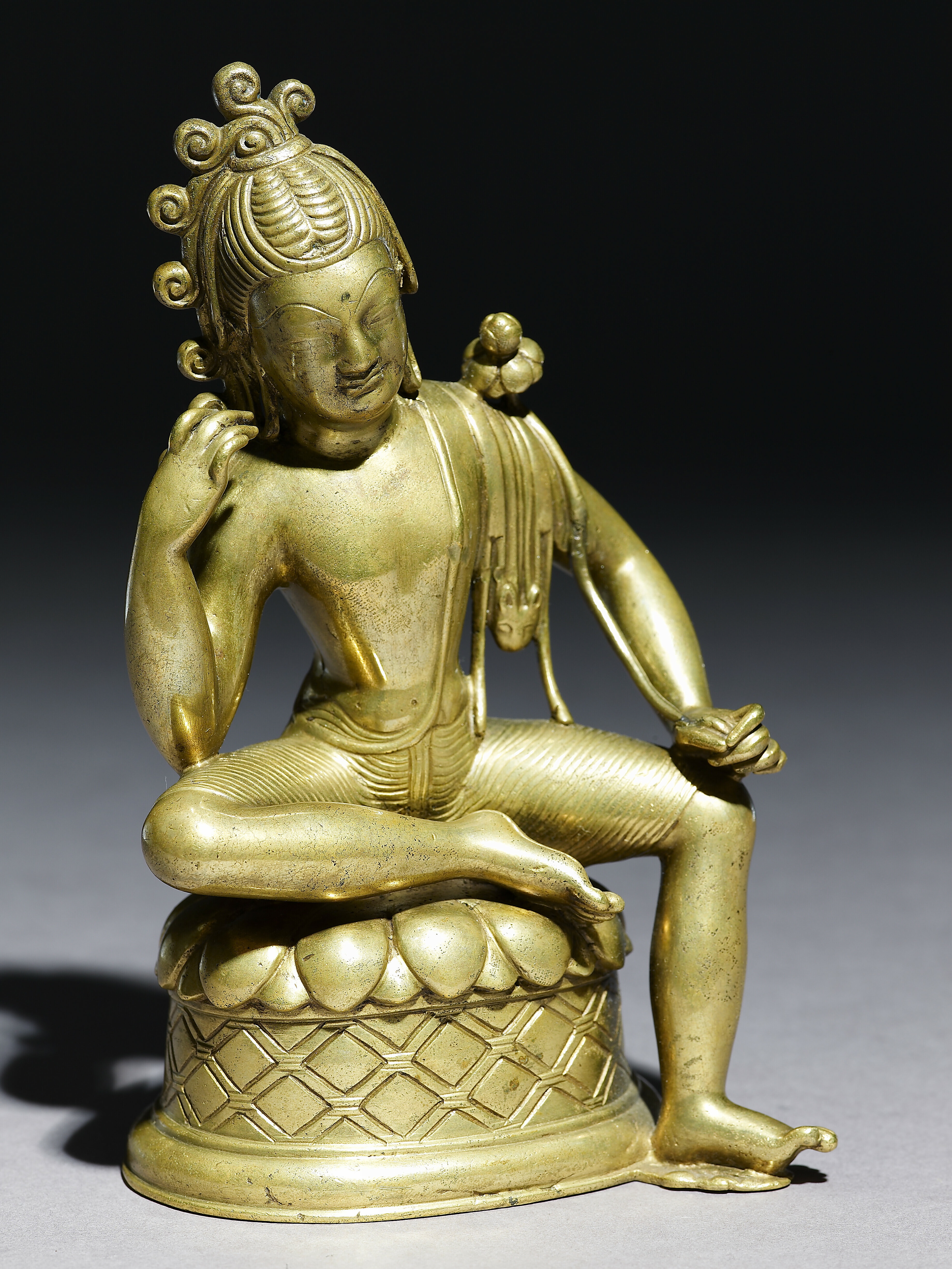
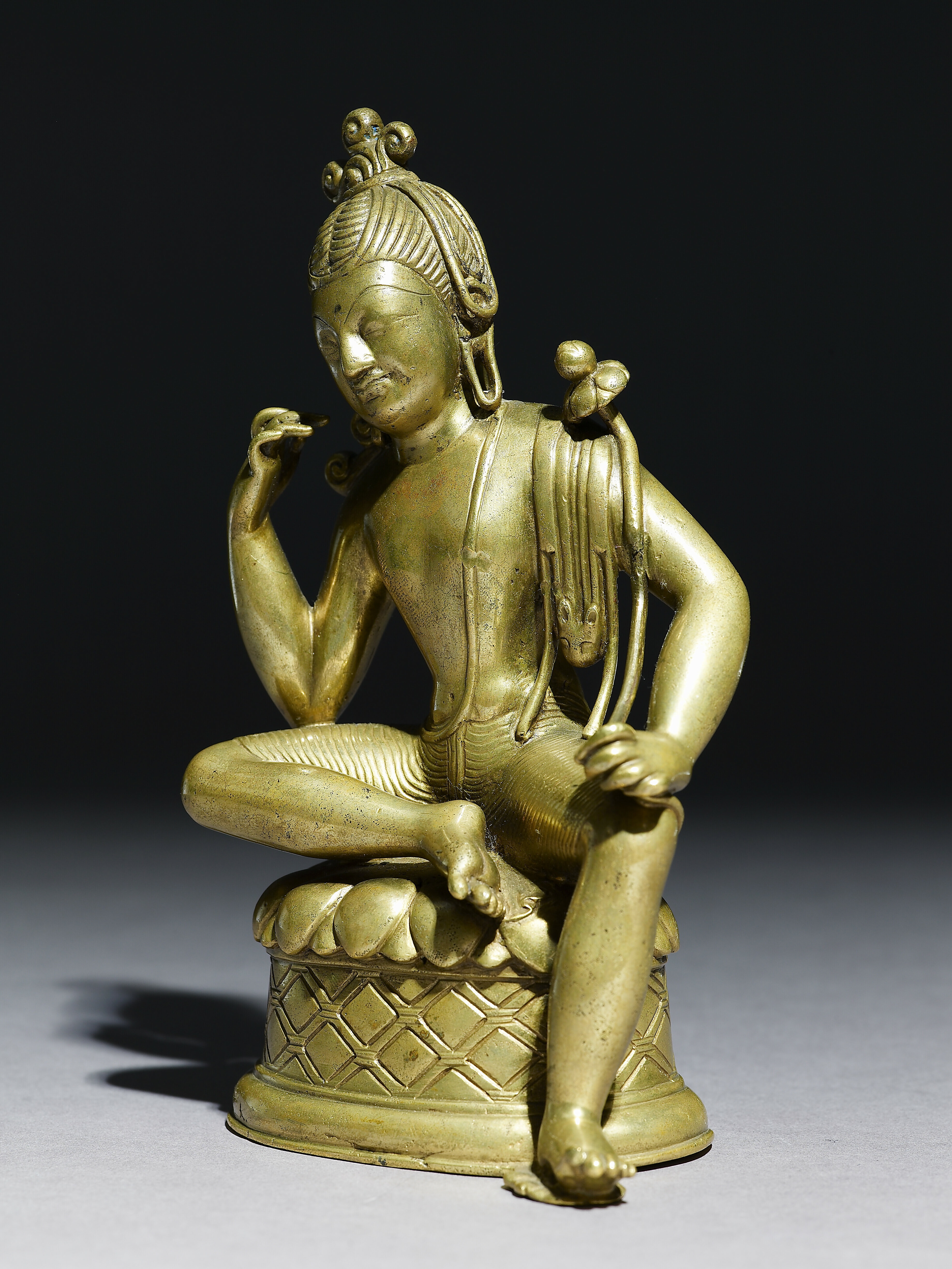
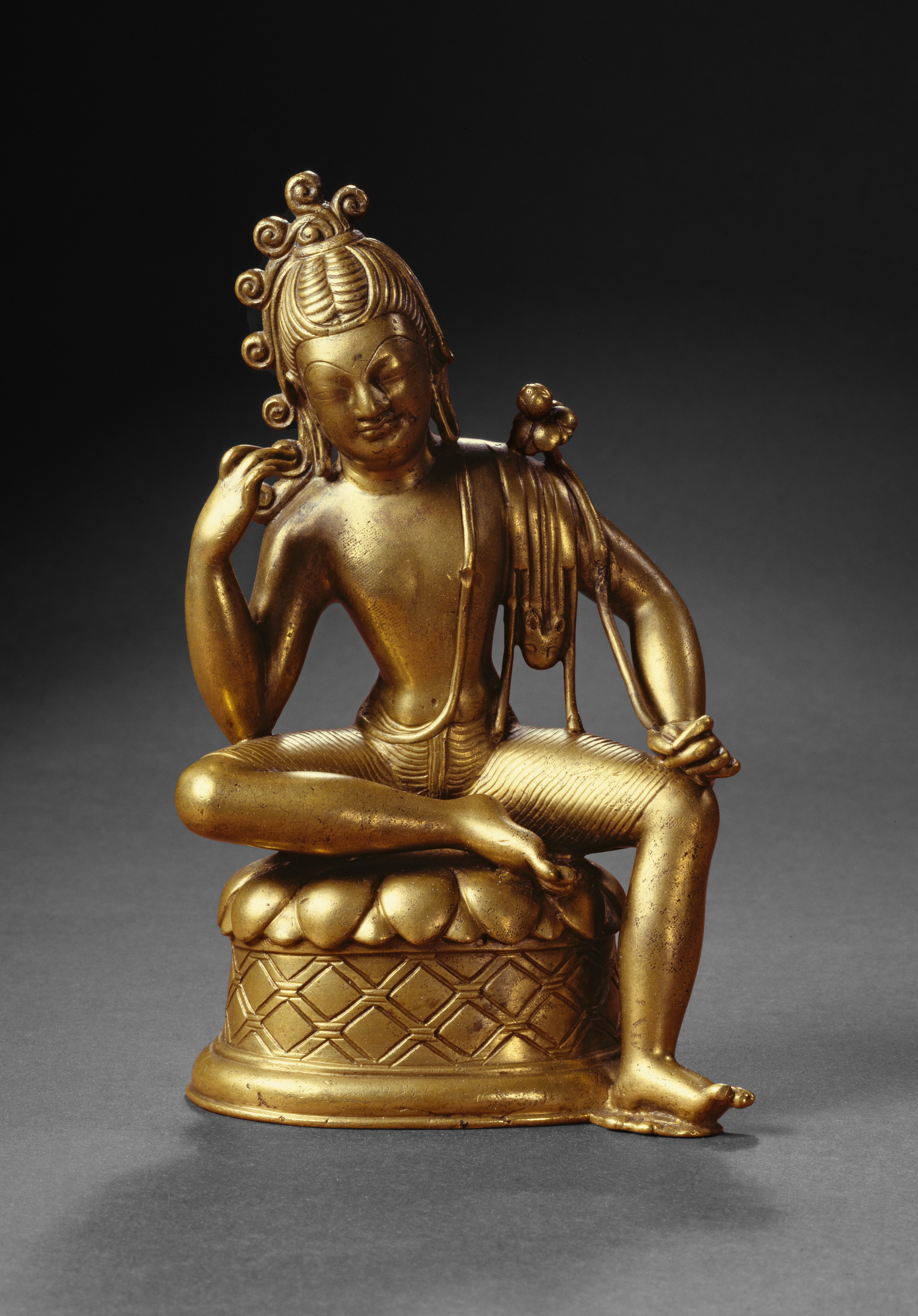
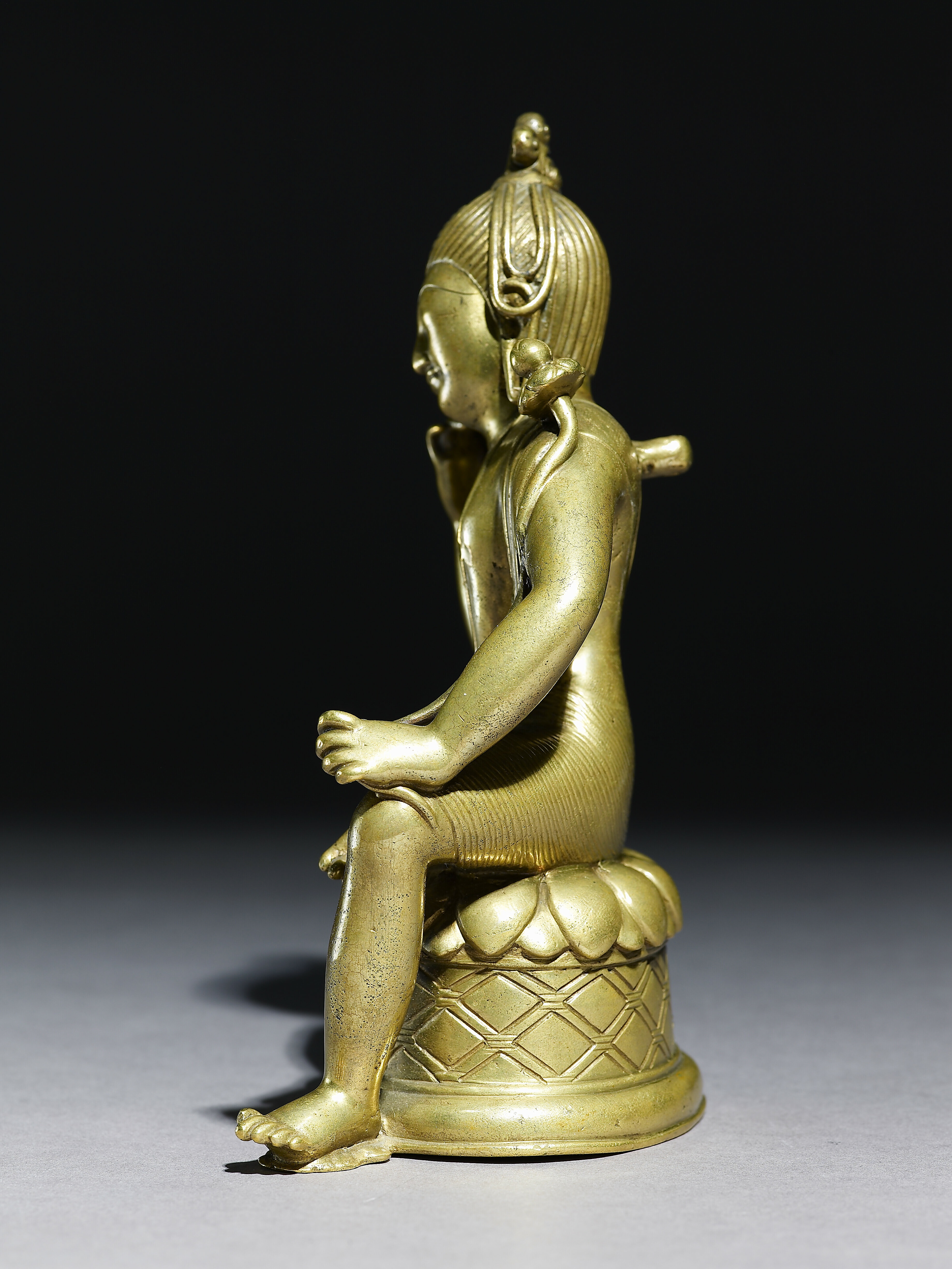
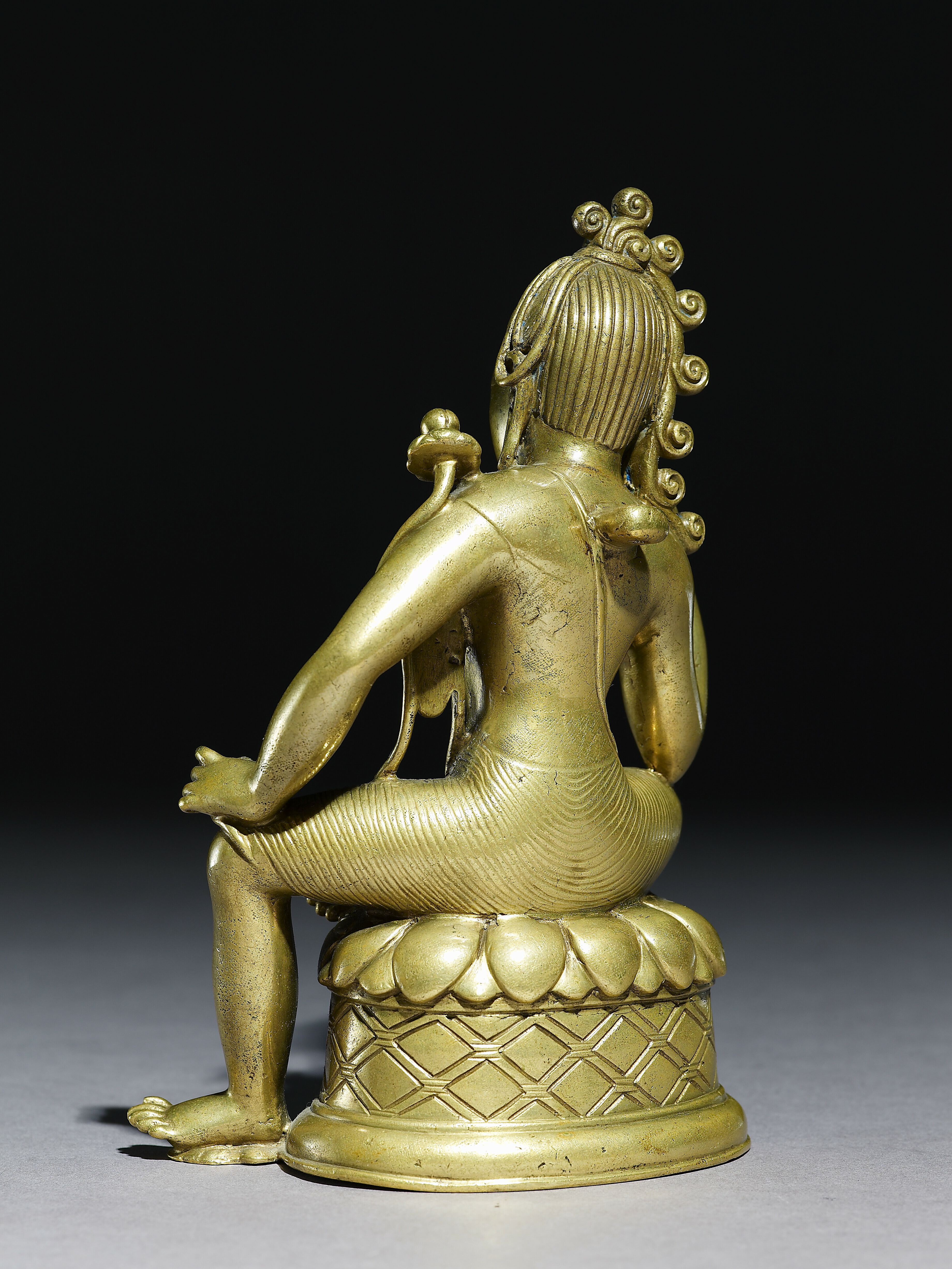
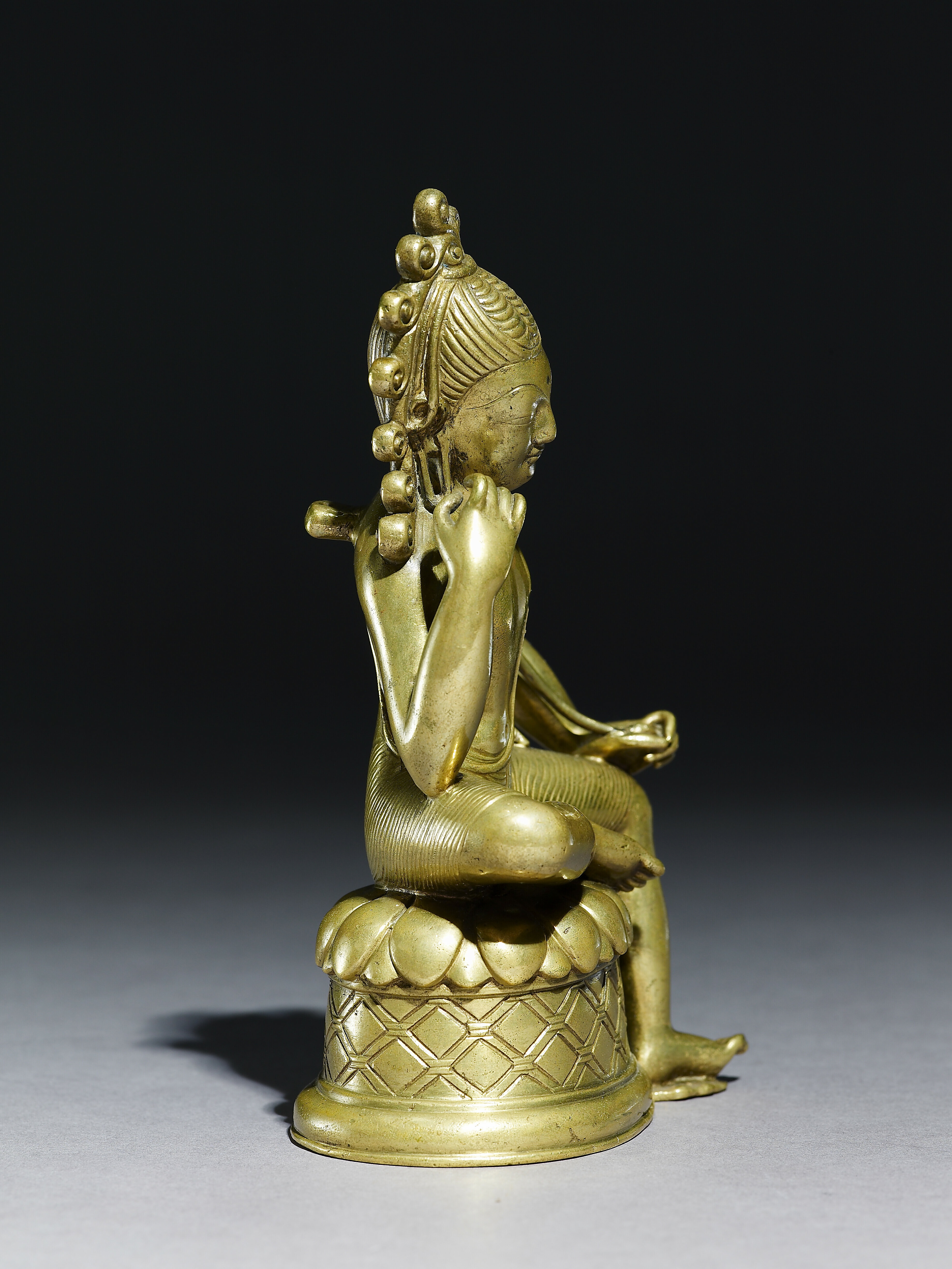
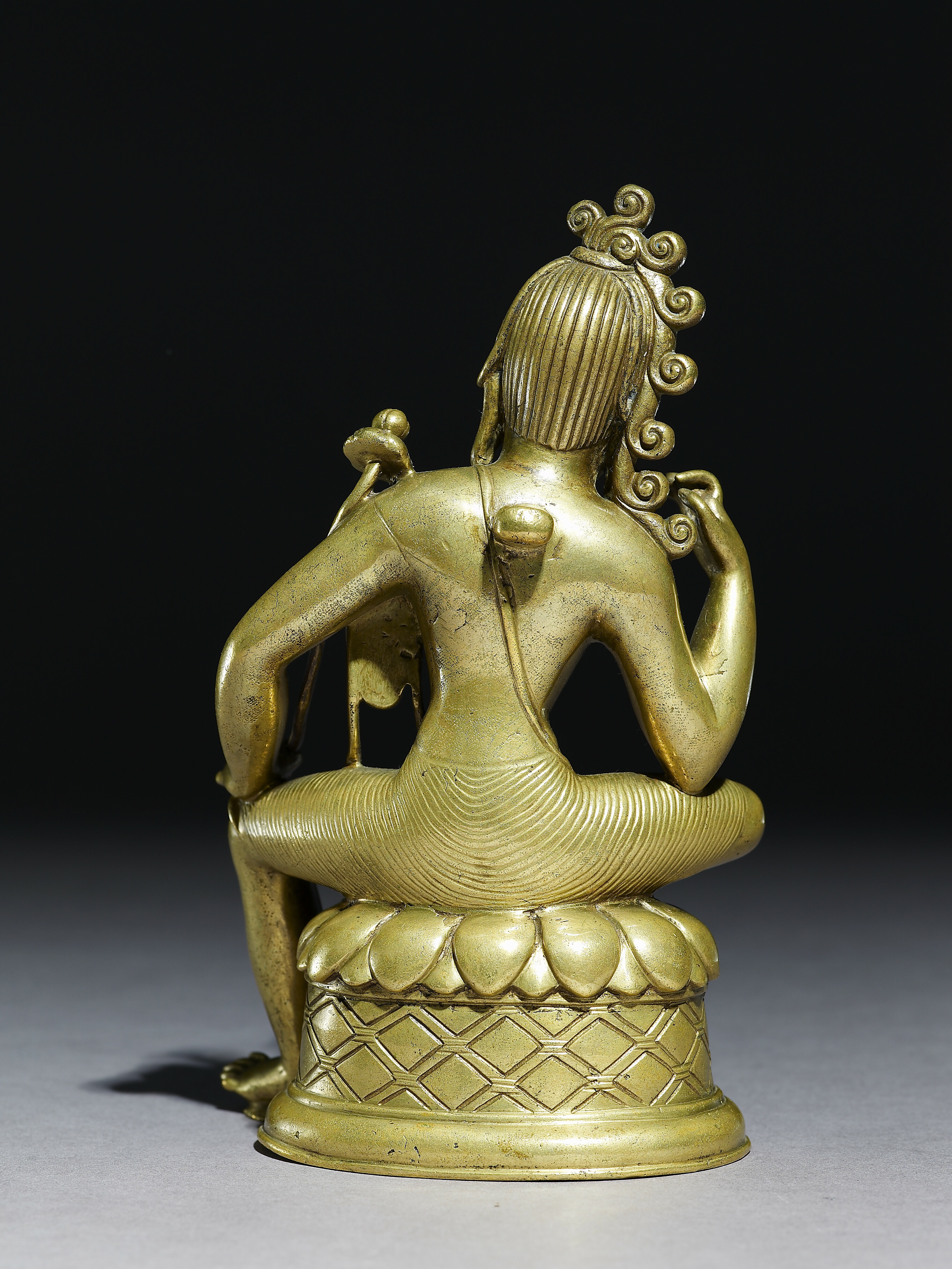
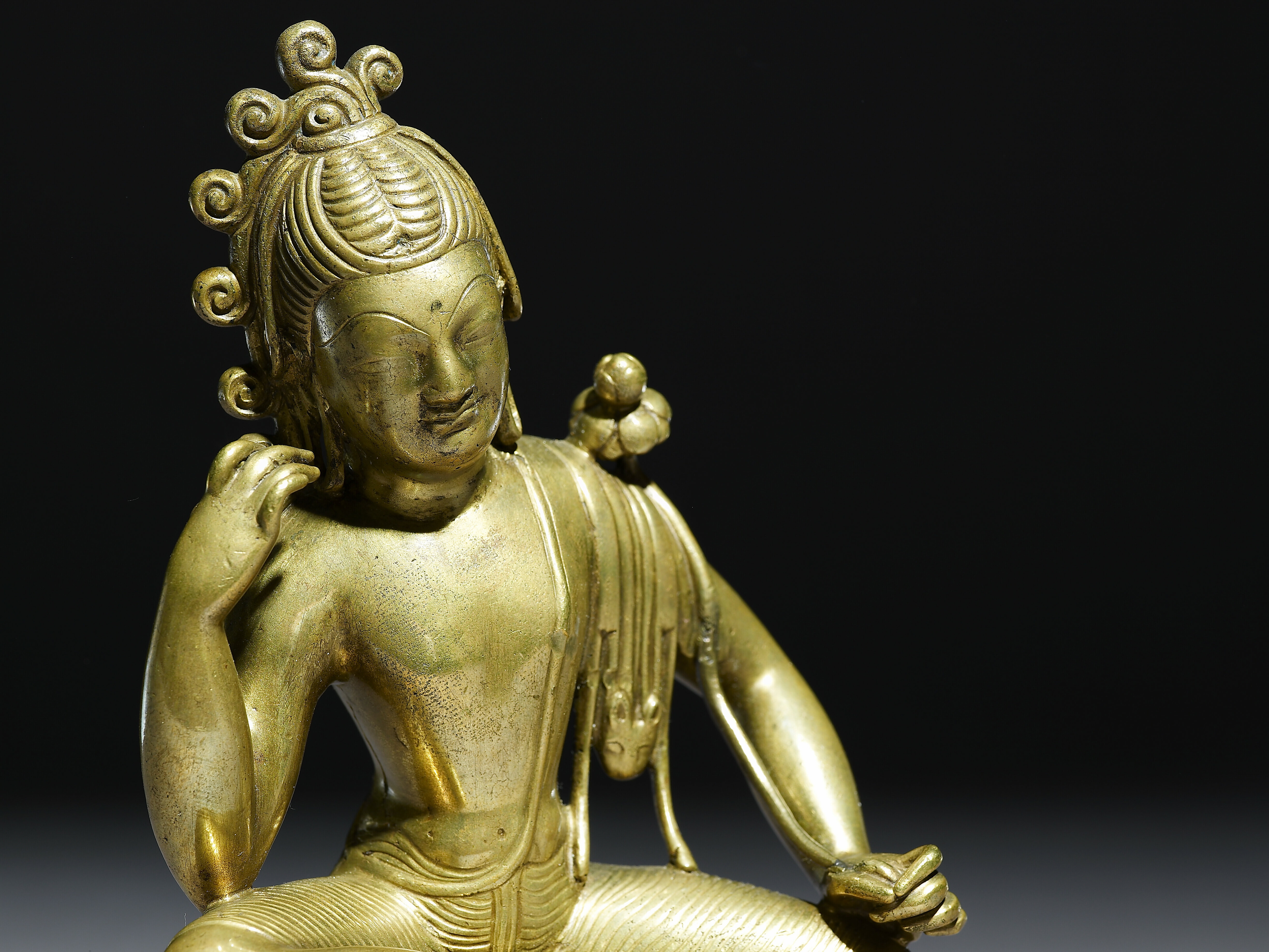 这尊引人注目的金属造像,本文尝试将其产地定为旁遮普地区——即德里西北、由印度河五大支流(旁遮普一词意即“五河”)灌溉的平原。尽管该地区目前尚未有同时期的金属造像出土,但这一推断似属合理:一方面,造像的图像与风格特征与克什米尔、斯瓦特河谷(包括后一地区的岩刻)的众多造像颇为相似;另一方面,其造型之圆融柔和,又更接近印度本土笈多及后笈多早期的雕刻风格。
其图像程式可追溯至犍陀罗艺术——菩萨坐于藤凳,一腿屈起平放(游戏坐),右肘支于膝上,手轻抵微倾的头部。犍陀罗浮雕中的胁侍菩萨常以此姿态出现,通常右手食指触颊。这一姿态虽未见经论明确记载,但其沉思、乃至悲悯的神情,或正暗示菩萨“大悲者”的身份。更常见的辨识特征在于:二臂像,左手持长茎莲花。据此可确定此像为观世音(即莲花手)。
数件来源明确的造像,尤其是纽约Asia House所藏精品(John D. Rockefeller 3rd夫妇旧藏),皆具上述特征,且佩圣线、左肩披兽皮,确属克什米尔或斯瓦特地区之作。然彼等通常冠中有禅定佛像(参见EAOS.61),此像缺失。阿什莫林此像所坐藤凳顶部精美的双层莲瓣纹样为纯克什米尔风格,左腿轮廓略显浮肿亦是克什米尔特征。但塑形质感迥异——其圆融更接近后笈多早期规范,不同于克什米尔铜像常见的草率造型及其近乎油腻的质感(后者部分源于合金中高比例的铅)。此像光滑的躯干完全不见克什米尔造像那种刻意凸显的胸肌表现。值得注意的是,此像合金中明显缺失的铅被高比例的锌取代,形成黄铜质地,呈现出一种硬朗精准的质感。
另有两点特征可将此莲花手观音与克什米尔造像区别开来:其一为发式——顶部挽髻,一侧发绺呈涡卷状垂落,左侧则垂两股大环,此种组合为他处所未见。其二为肩披兽皮为狮首而非鹿首——这再次指向后笈多印度,彼时与狮皮相关的湿婆与观世音菩萨在图像细节上常有交融。
此像与印度次大陆西北部众多金属造像一样,近年流出西藏,而此前很可能已在其地供奉数百年。
——译自Harle, J. C.与Andrew Topsfield合著《阿什莫林博物馆所藏印度艺术》(牛津:阿什莫林博物馆,1987年)
This notable metal sculpture is here attributed, with some temerity, to the Punjab, meaning the plains north-west of Delhi watered by the five great rivers (Panj-āb: five waters or rivers) tributary to the Indus. No metal images of the period have yet been found there, but the attribution seems reasonable in view of the figure’s many iconographic and stylistic affinities to numerous images from Kasmir and the Swat valley, including graffiti on boulders in the latter region, combined with a suavity of modelling which seem to relate it more closely to Gupta and early post-Gupta sculpture in metropolitan India.
The iconographic formula, with the Bodhisattva seated on a wicker stool or toilet, upon which one leg is drawn up and laid flat (lalitāsana), his right elbow leaning on the upper part of the leg while the hand points to the slightly inclined head, harks back to the art of Gandhara. There, relief figures on Bodhisattvas, always subsidiary figures, frequently appear in this pose, usually with the index figure of the right hand actually touching the head. So far this pose has not found a corresponding description in the texts, but its undoubtedly pensive, and perhaps sorrowing mood may indeed indicate the Bodhisattva as mahākāruṇika (“Lord of great compassion”). More generally, the two-armed figure, with the left hand holding a long stemmed lotus, can be indentified as Lokesvara, another name for Avalokiteśvara, or Padmapāṇi, “he who holds a lotus”.
Several images, notably the splendid one in Asia House, New York (Mr. and Mrs. John D. Rockefeller 3rd collection), include all these essential features, as well as the sacred thread and the animal skin over the left shoulder, are indisputably from Kashmir or Swat. They usually display, however a small figure of a meditation Buddha in the head-dress [see EAOS.61], missing here. The shape of the petals of the beautiful double lotus band atop the stool in the Ashmolean figures is pure Kashmiri and so is the rather dropsical outline of the left leg. But the plastic quality is quite different, closer to early post-Gupta norms in its suavity, compared to the often slap-dash modelling of Kashmiri bronzes and their almost buttery quality, due in part to the high proportion of lead in their composition. The smooth torso of the Ashmolean’s figure totally lacks the rather ostentatious chest muscles of most Kashmiri sculptures. Lead is notably absent, replaced by a large admixture of zinc, turning the alloy into brass, which results in a feeling of hard precision.
Two other features distinguish this Padmapāni Lokeśvara from Kashmiri figures. One is the way in which their hair, apparently gathered into a ring at the top, cascades down in a series of wire-like volutes on one side of the head, and drops down in two large loops on the left, a combination not seen elsewhere. The other is that the pelt on the shoulder has a lion rather than a deer head. This again suggests post-Gupta India, where Śiva, associated with the lion-skin, tends to share icnonographical details with Avalokiteśvara.
This image, like many other metal sculptures from the north-west of the India sub-continent, came out of Tibet in recent years, where it had most likely been for centuries.
In: Harle, J. C., and Andrew Topsfield, Indian Art in the Ashmolean Museum (Oxford: Ashmolean Museum, 1987)
著录:
Harle, J. C., and Andrew Topsfield, Indian Art in the Ashmolean Museum (Oxford: Ashmolean Museum, 1987), page mentioned: p. 37, page illustrated: pl. 6 (colour) & p. 25, Cat. No.: no. 33 on pp. 25-26
Morton, Vanda, Brass from the Past. Brass made, used and traded from prehistoric times to 1800 (Oxford: Archaeopress Publishing Ltd., 2019)
馆藏时间:
1971年

