
侧边栏

7世纪柬埔寨石雕释迦牟尼佛立像(纽约大都会博物馆)
尺寸:H. 39 1/2 in. (100.3 cm); W. 12 in. (30.5 cm); D. 4 1/4 in. (10.8 cm)
年代:7世纪中期 pre-Angkor period
质地:砂岩石雕(Sandstone)
风格:柬埔寨南部
来源:纽约大都会博物馆
参阅:外部链接
鉴赏:
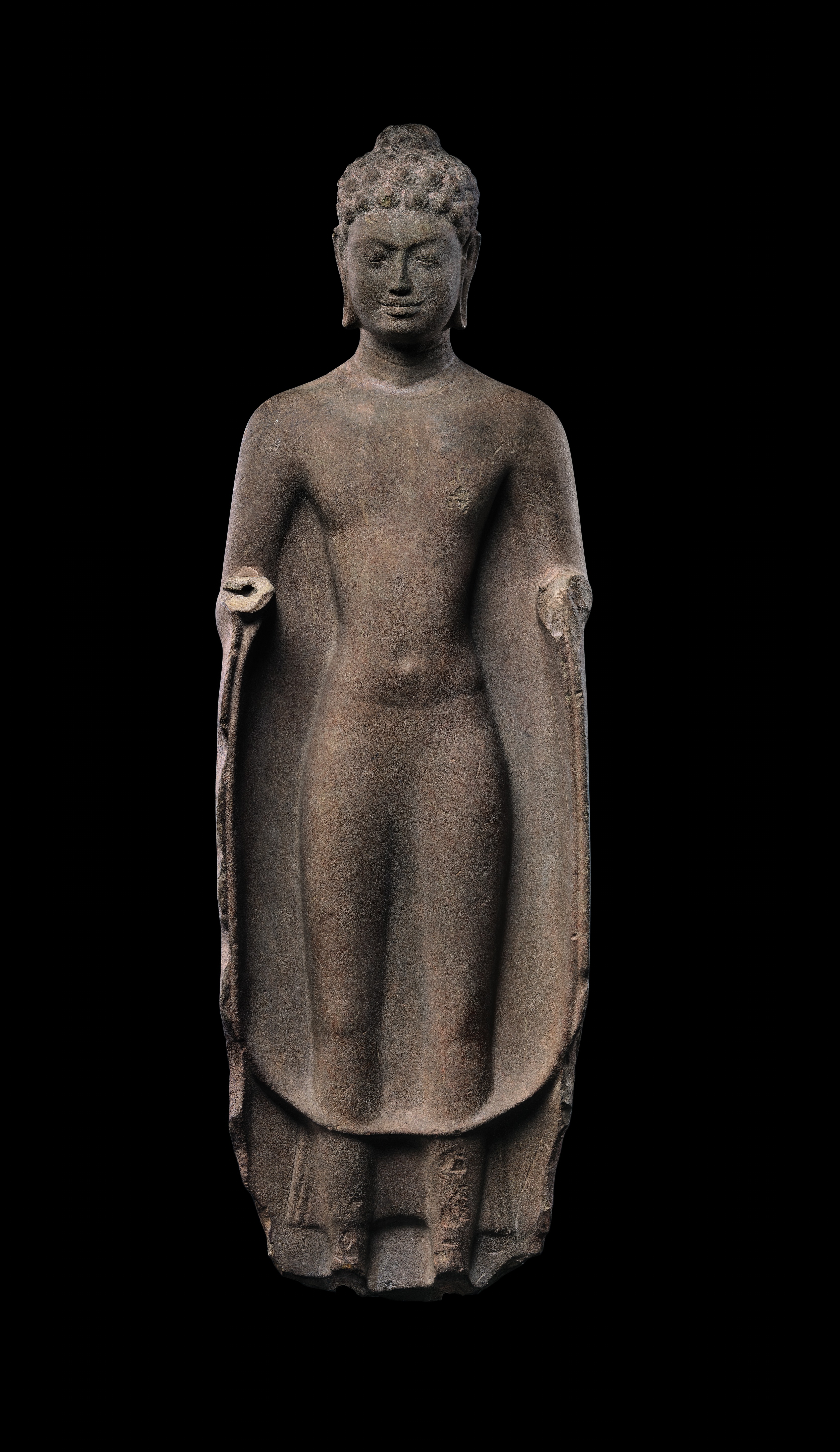
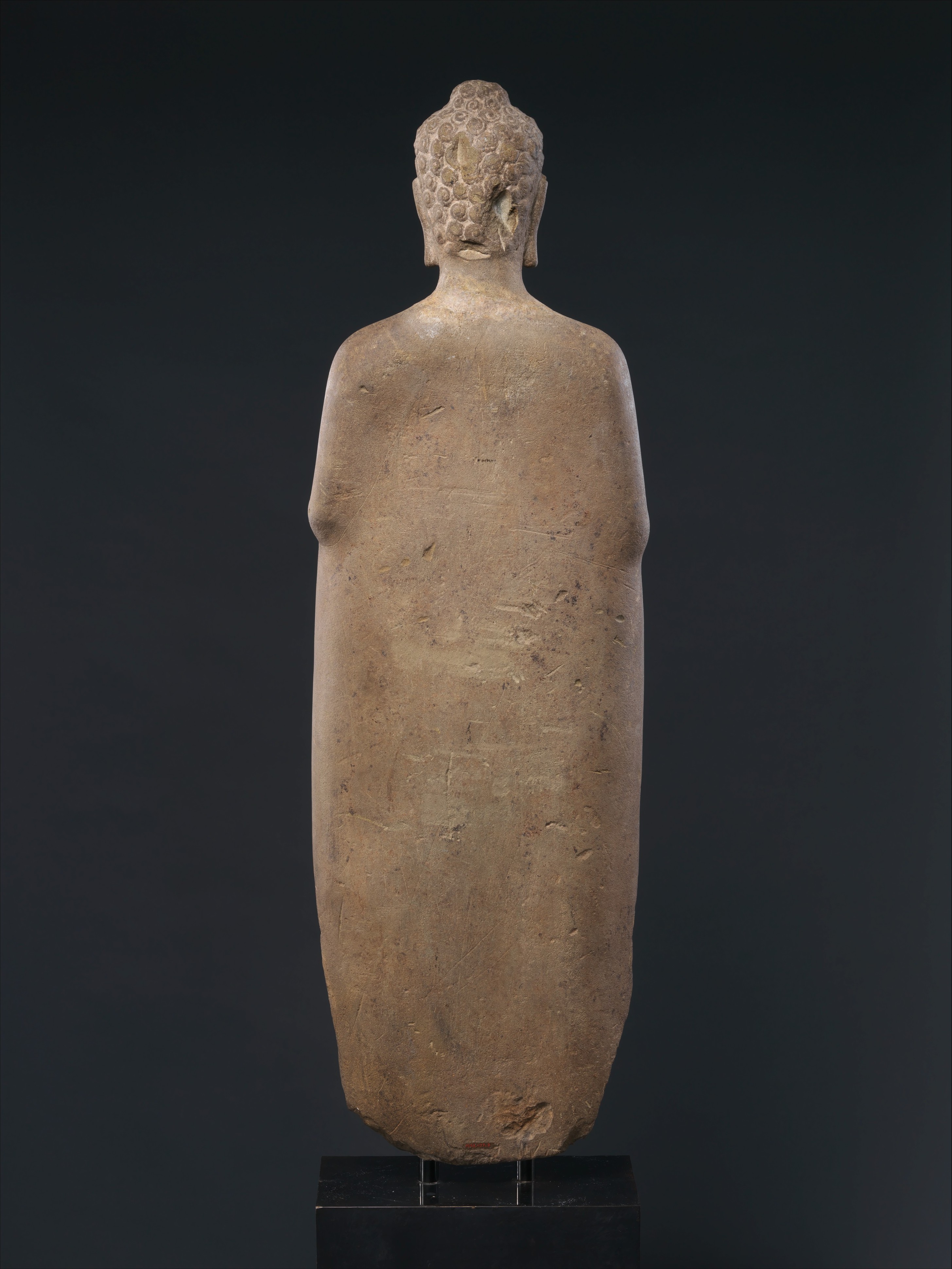 Early in the seventh century a new Buddha type appeared in Southeast Asia, inspired by innovations that were taking place in northern India. The wellspring was the important monastic school at Sarnath. Its workshops undoubtedly supplied Buddha images to a great variety of clients, including pilgrim-monks who would have purchased small images—often, one may surmise, made of wood—easily transportable to their homelands. This Buddha, slender and ethereal, is a superb example of the early acceptance of the northern Indian model of ideal Buddhahood, seen in the increasingly detached and otherworldly expression and the use of body-defining drapery.
来源:
[Spink & Son Ltd., London , 1982–1983 ]; Florence and Herbert Irving , New York (1983–1993; loaned to MMA in 1993; donated to MMA)
展览:
New York. The Metropolitan Museum of Art. “Lost Kingdoms: Hindu-Buddhist Sculpture of Early Southeast Asia, 5th to 8th Century,” April 14–July 27, 2014.
著录:
Pal, Pratapaditya. Light of Asia: Buddha Sakyamuni in Asian art. Exh. cat. Los Angeles: Los Angeles County Museum of Art, 1984.
Watt, James C. Y. “Art and History in China from the Third through the Eighth Century.” in China: Dawn of a Golden Age, 200–750 AD, by James C .Y. Watt et al. Exh. cat. New York: The Metropolitan Museum of Art, 2004, p. 35, fig. 29.
Guy, John. Lost Kingdoms: Hindu-Buddhist Sculpture of Early Southeast Asia. Exh. cat. New York: The Metropolitan Museum of Art, 2014, pp. 101–102, cat. no. 49.
Behrendt, Kurt. How to Read Buddhist Art. New York: The Metropolitan Museum of Art, 2019, p. 51, fig. 30.

