
侧边栏

11-12世纪大理国铜鎏金千手观音菩萨坐像(纽约大都会博物馆)
尺寸:21 x 17.8 x 11.1 cm
年代:11世纪
质地:铜鎏金 失蜡铸造
风格:大理
来源:纽约大都会博物馆
参阅:外部链接
鉴赏:
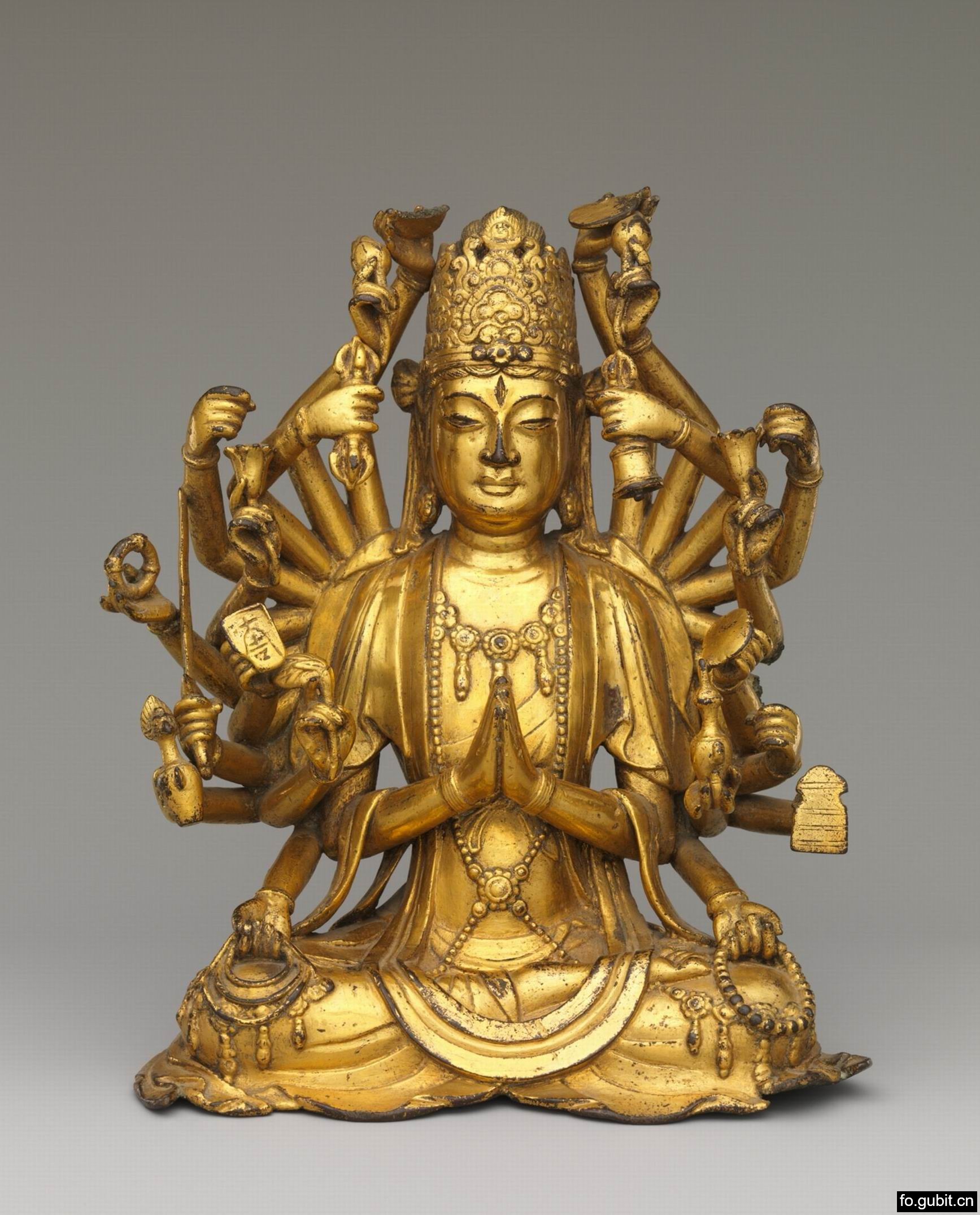
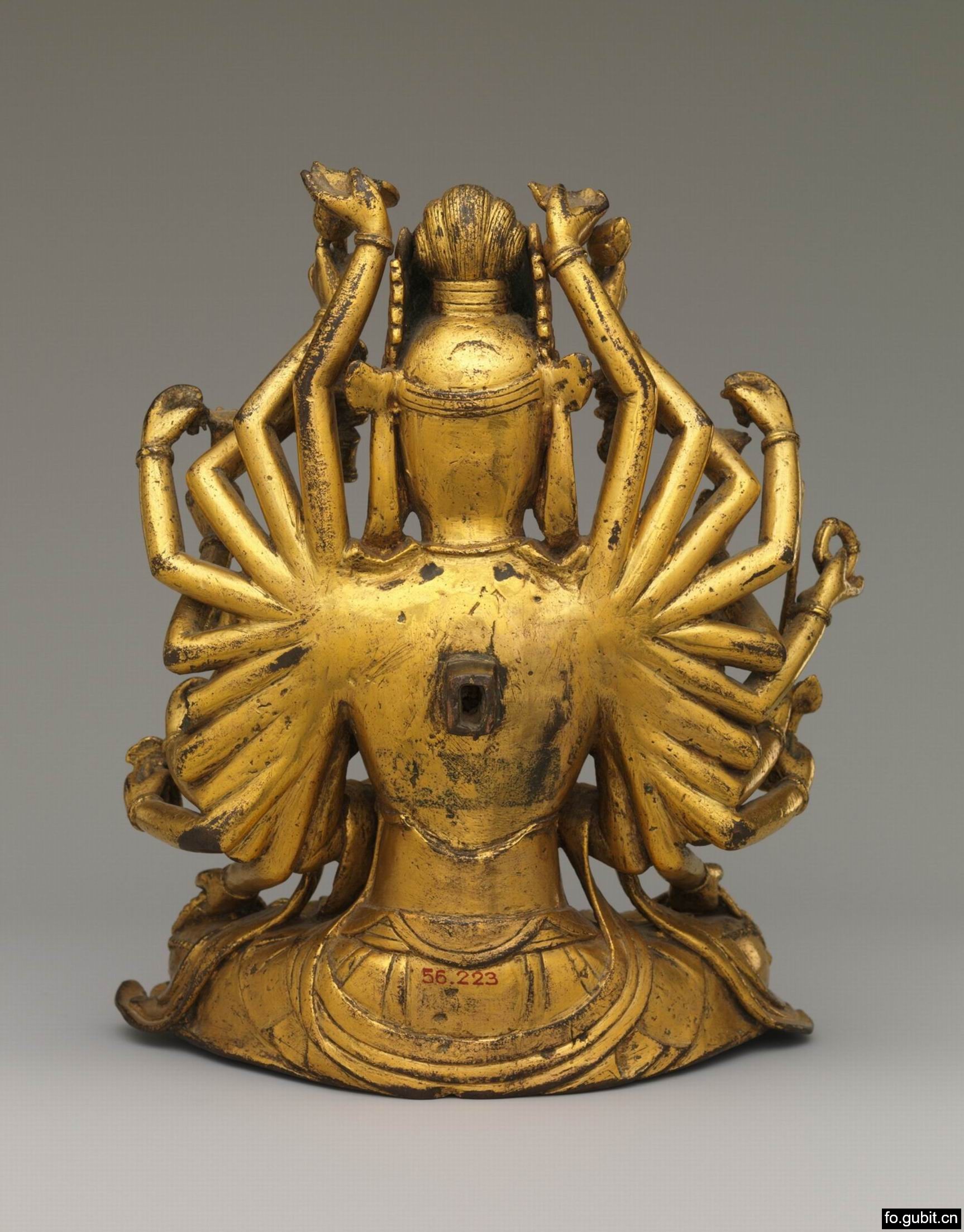 Avalokiteshvara in a Multiarmed Tantric Form
这是一尊十分稀有,铸造于十一世纪云南大理国的铜鎏金千手观音菩萨坐像,目前收藏于纽约大都会艺术博物馆之中。
这尊千手观音最大的特色是通体共有二十二只手,全部采用圆雕,结构稀疏排列有序,这是非常少见的。观音菩萨头戴宝冠,二侧发绺垂肩,面相圆润端庄,神态慈悲安详。身佩璎珞、手镯及挂珠庄严全身。共有二十二只手臂象征千臂;其中一双主臂当胸合掌,另有一双手臂向上高举日月轮,另有一双手臂膝前持套索和念珠,其余的手臂各持法器,双腿呈金刚跏趺坐安住于法座之上。
造像整体造像简洁明快,是典型的大理国金铜佛像。具有鲜明的云南古代少数民族的艺术审美感和地方特色。由于南诏大理国佛像存世量极少,特别是千手观音像存世更为稀有,且能保存如此完好的更是罕见,此像具有极高的艺术性和古代西南少数民族文物价值。
This esoteric form of Avalokiteshvara holds a range of attributes in his twenty-four hands, including the sun, the moon, a vajra, and a bell. Multiarmed, powerful tantric forms of Avalokiteshvara were introduced into East Asia by the monk Amoghavajra as part of an eighth-century effort to repel Tibet’s military expansion across Central Asia. Later, this protective form of Avalokiteshvara, who is able to aid his numerous devotees with his many arms, became especially popular in Tibet after the north Indian monk Atisha (980–1054) emphasized this tantric deity.
来源:
Probably Yunnan Province
[ John J. Klejman , New York, until 1956; sold to MMA]
展览:
New York. Asia House Gallery. “Chinese Art Under the Mongols,” January 9, 1969–February 2, 1969.
New York. The Metropolitan Museum of Art. “Arts from the Rooftops of Asia; Tibet, Nepal and Kashmir,” April 22–June 30, 1971.
Mead Art Museum, Amherst College. “From the Land of the Snows: Buddhist Art of Tibet,” October 3, 1984–November 15, 1984.
New York. The Metropolitan Museum of Art. “Arts of Ancient China,” 2005.
National Museum of Korea. “Goryeo: The Glory of Korea,” December 4, 2018–March 3, 2019.
New York. The Metropolitan Museum of Art. “Bodhisattvas of Wisdom, Compassion, and Power,” March 27, 2021–October 30, 2022.

