
侧边栏

11世纪尼泊尔冷金彩绘石雕莲花手观音立像(纽约佳士得)
尺寸:高60.6 cm
年代:11世纪
质地:冷金彩绘石雕
风格:尼泊尔
来源:拍卖会
成交:182,500美元(2011.09)
参阅:外部链接
鉴赏:
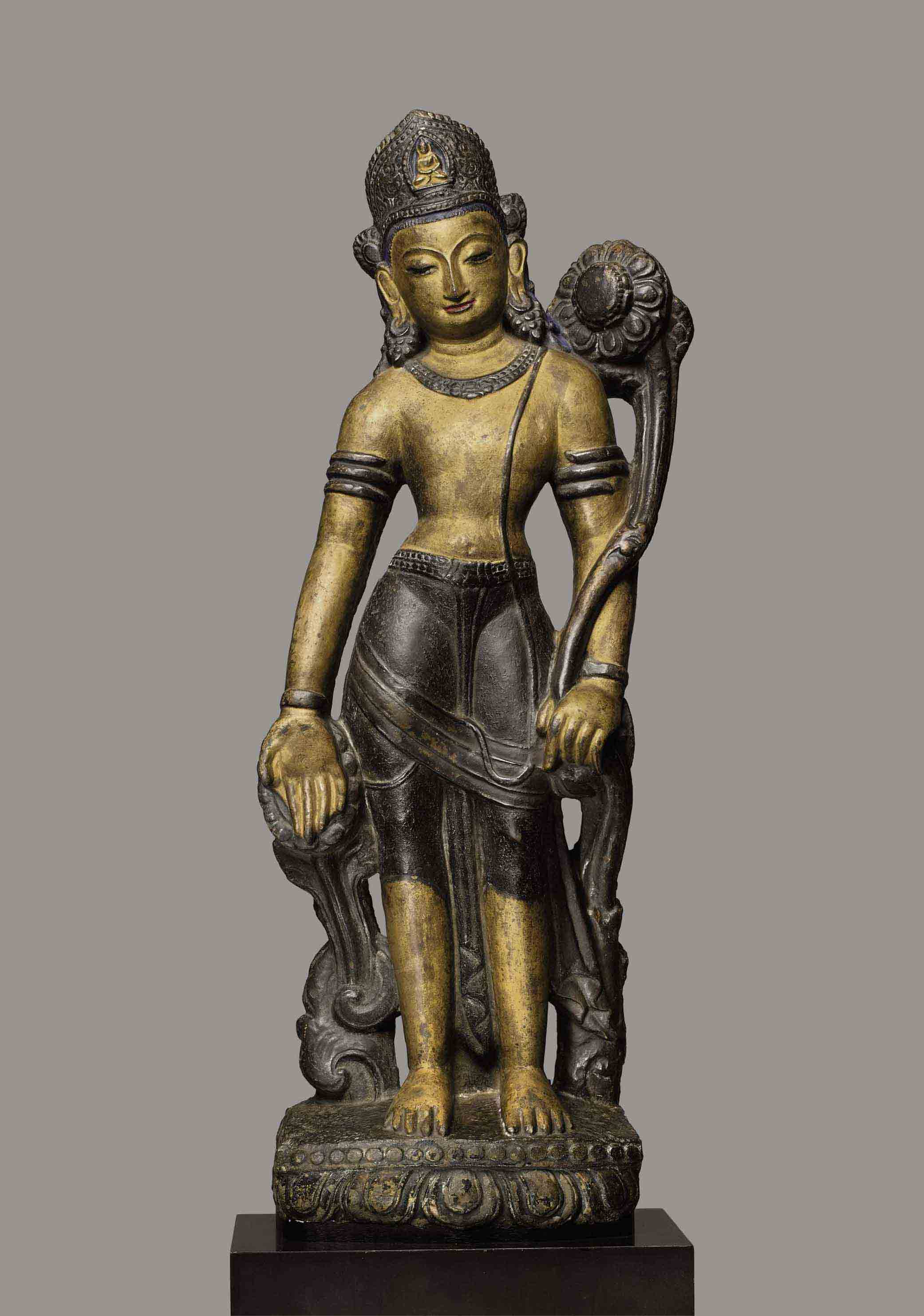 A rare cold gold painted stone figure of Padmapani
Nepal, 11th Century
Standing on a lotus base with his hips slight askance, his right hand in varadamudra and his left holding a lotus stem blossoming at the shoulder, clad in a short dhoti and adorned with a sash and various jewelry, the face serene with heavy-lidded downcast eyes surmounted by a tiara centered by a figure of Amitabha, the skin cold gold, the face and hair with polychromy
呈站立姿于莲座之上,髋部微扭。右手结施与印(varadamudra),左手持莲花茎,莲花绽放于肩侧。身着短裙(dhoti),佩戴圣带(sash)及多种珠宝。面容宁静,双目低垂,眼睑厚重,头顶宝冠(tiara),冠中央安奉阿弥陀佛像。全身施冷金(cold gold),面部及发髻饰有彩绘。
来源:
Acquired in New York, 1998
著录:
M. Slusser, Nepal Mandala, 1998, cat. no. 462
Avalokiteshvara was a popular deity in Nepal, and as such, his image, especially in the form of Padmapani, was extremely prevalent from an early period. Iconographically and stylistically, images of Padmapani varied little over time, and was originally inspired by Indian prototypes from the Gupta period.
观音菩萨(Avalokiteshvara)在尼泊尔是一位广受尊崇的神祇,因此其造像,尤其是莲华手(Padmapani)这一化身形式,自早期起便极为盛行。在图像学与风格上,莲华手造像随时间推移变化甚微,其最初灵感源自笈多时期(Gupta period)的印度范本。

