
侧边栏

16世纪西藏铜鎏金十一面观音立像(纽约佳士得)
尺寸:高31.75 cm
年代:15-16世纪
质地:铜鎏金
风格:西藏
来源:拍卖会
成交:341,000美元(2016.03)
参阅:外部链接
鉴赏:
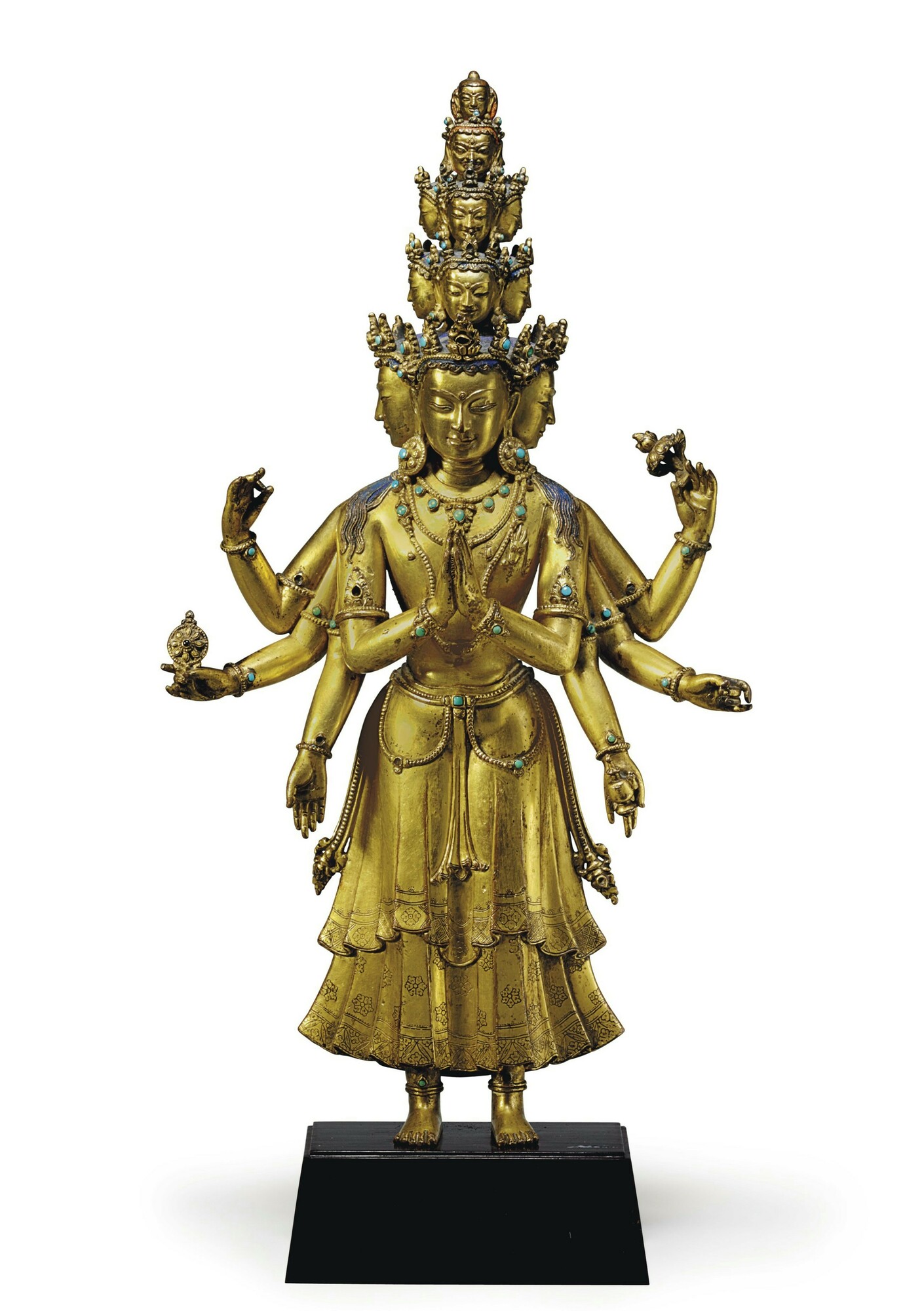
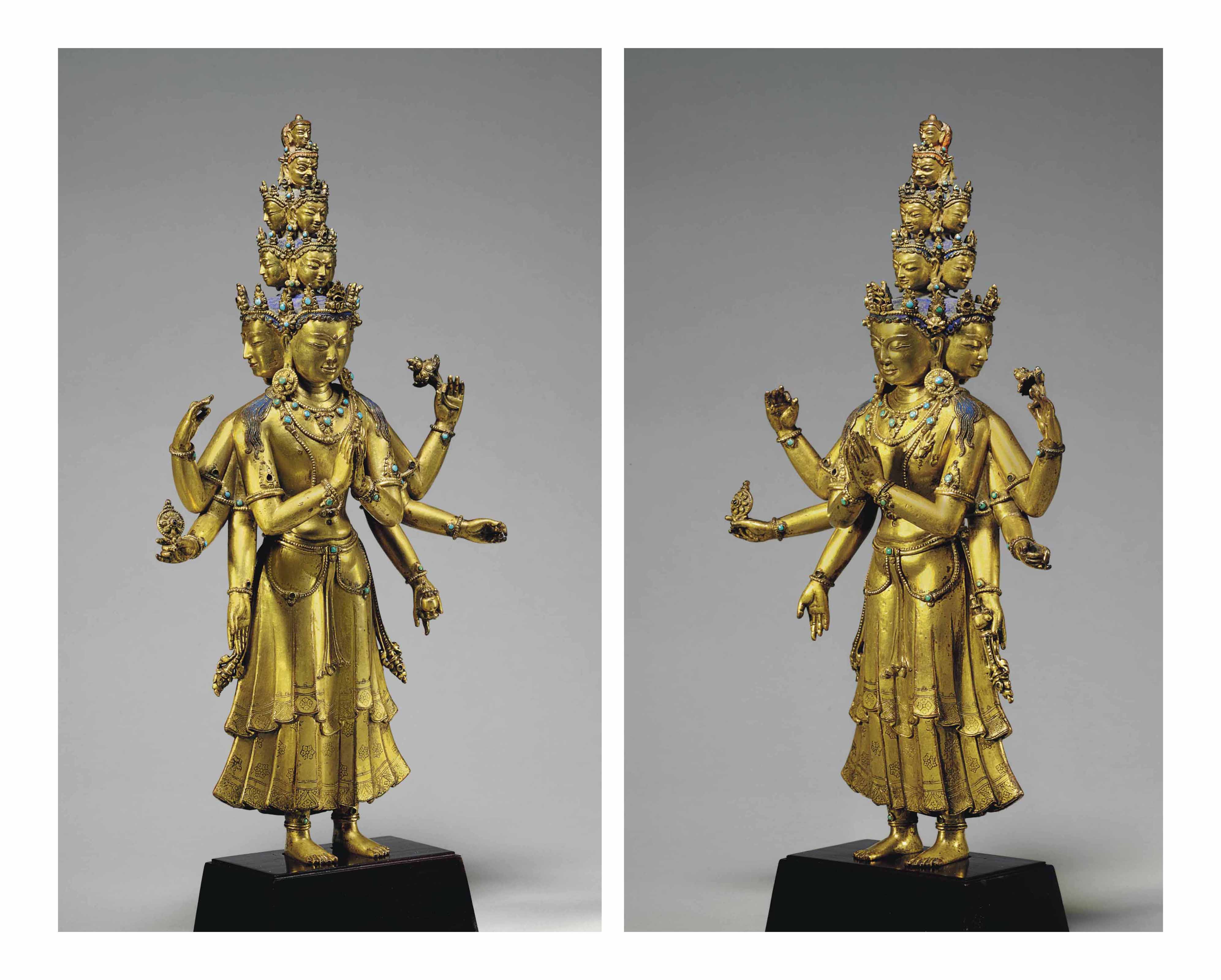 A Gilt Bronze Figure of an Eleven-Headed Avalokiteshvara
Tibet, 15th/16th century
Exquisitely modeled and standing with his two principle hands in front of his chest in anjalimudra and holding various implements in his six radiating hands, including a chakra, lotus blossom and water pot, dressed in a pleated two-tier ankle-length dhoti incised with a floral pattern, adorned with jewelry festoons and an antelope skin draped over the left shoulder, the eleven faces arranged in tiers, each surmounted by a jeweled tiara, the primary head with cascading locks of hair, the face with almond shaped eyes and bow-shaped mouth, the verso with a sealed consecration chamber, richly gilt overall with polychromy remaining
此尊十一面观音像造型精致,主臂双手于胸前合掌,其余六臂于身周展开,持轮、莲花、宝瓶等种种法器。下身著及踝双层百褶裙,裙上刻花叶纹样,佩珠宝璎珞,左肩披羚羊皮。十一面呈层级排列,各面顶戴宝冠,主面头发呈波浪状披泻。面容具杏仁状双目及弓形口唇。背面有封藏装藏室。通体鎏金厚重,尚存彩绘痕迹。
来源:
Private West Coast collection by 2010
著录:
Himalayan Art Resources (himalayanart.org), item no.24099
In Buddhist philosophy, the bodhisattva is a being who postpones his or her own liberation for the sake of ushering others along the path to enlightenment. The figure of Avalokiteshvara in his eleven-headed aspect represents the supreme, highest embodiment of compassion. Buddhist tradition holds that this bodhisattva, seeing the state of many beings throughout the world, was so moved to help alleviate others’ suffering that his single head became a tower of eleven in order to see panoramically, and his two arms multiplied such that he could reach out in all directions. In this superb representation of the Compassionate One, the universal aspiration of a Buddhist deity and the regal status of a prince are united in a single figure that combines spiritual wisdom with worldly authority.
The eleven-headed Avalokiteshvara was an important iconographic figure throughout the Buddhist world over a long duration of time. Masterfully crafted, the present Tibetan example can be compared with others from places as widespread as Nepal, Tibet, Mongolia, and East Asia. See a Nepalese example in the collection of LACMA, P. Pal, Art of Nepal, 1885, p.36, fig. 17; a Tibeto-Chinese example at the Pacific Asia Museum, acc.no.1995.20.2; and a closely related Tibetan example in a private collection, HAR item no. 66738.
在佛教哲学中,菩萨是推迟自身解脱,以引导众生走向觉悟之道的存在。十一面观音则代表了慈悲的最高、最极致的体现。佛教传统认为,此菩萨观照世间众生之种种境况,为救拔众苦而深感悲切,以至于其一头化为十一面叠垒,以便遍观一切;其二臂化为千臂,以便遍至十方。在这尊精美的观音像中,菩萨普度众生之宏愿与王子之尊贵身位融为一体,兼具出世智慧与世间威权。
十一面观音造像在佛教世界中长期广泛流传,具有重要的图像学意义。此尊西藏造像工艺精湛,可与尼泊尔、西藏、蒙古、东亚等诸多地区的同类作品相媲美。例如:洛杉矶郡艺术博物馆藏一尊尼泊尔例(见P. Pal,《Art of Nepal》,1885年,第36页,图17);太平洋亚洲博物馆藏一尊西藏—汉风例(馆藏号1995.20.2);以及一尊与本品密切相关之西藏私人收藏例(HAR 编号66738)。

