
侧边栏

13世纪西藏丹萨替寺铜鎏金莲花手观音立像和马头明王(香港邦瀚斯)
尺寸:高27 cm
年代:13世纪 约1267年
质地:铜鎏金
风格:西藏 丹萨替寺
来源:拍卖会
成交:10,134,000港元(2025.05)
参阅:外部链接
鉴赏:
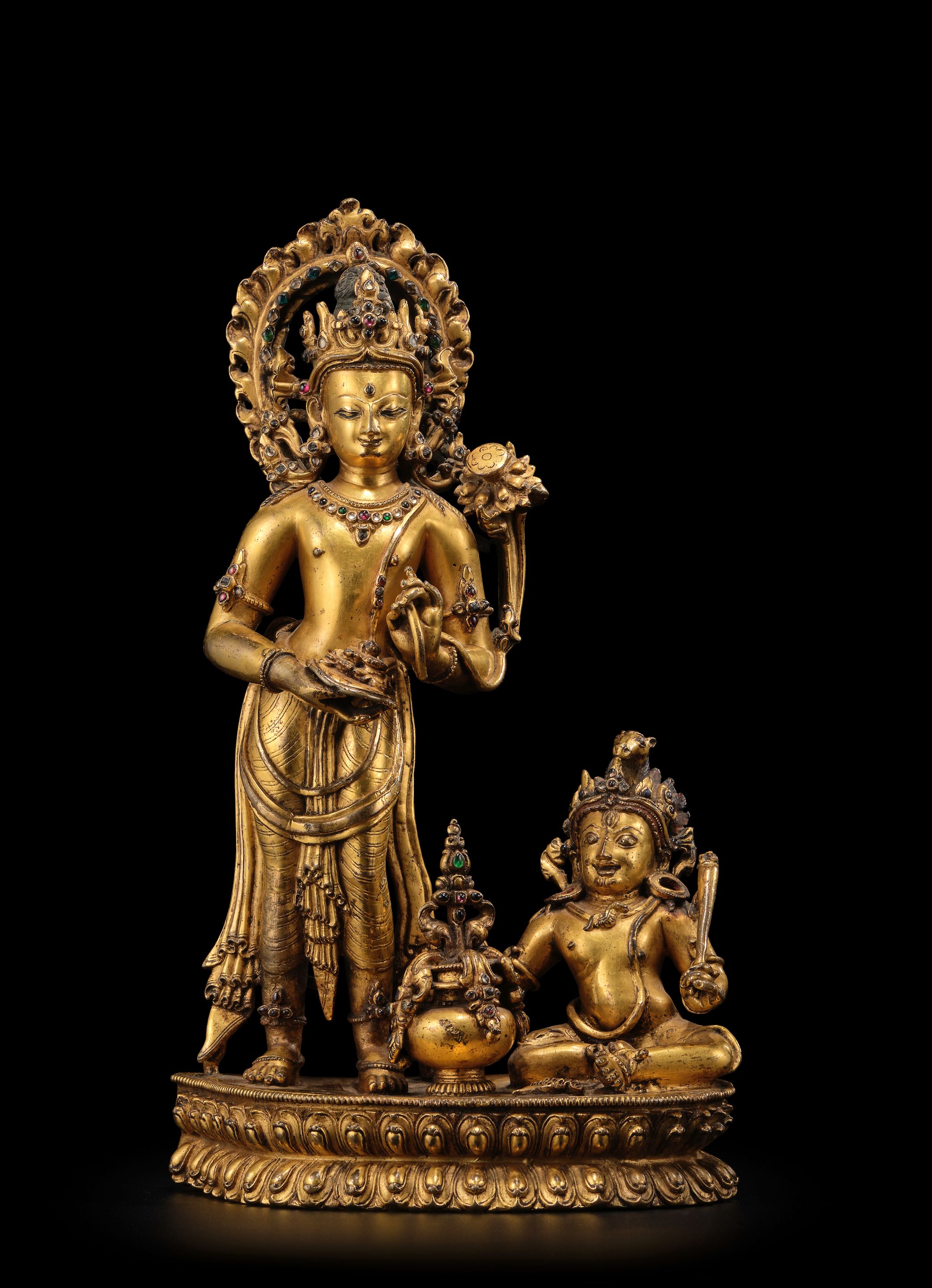
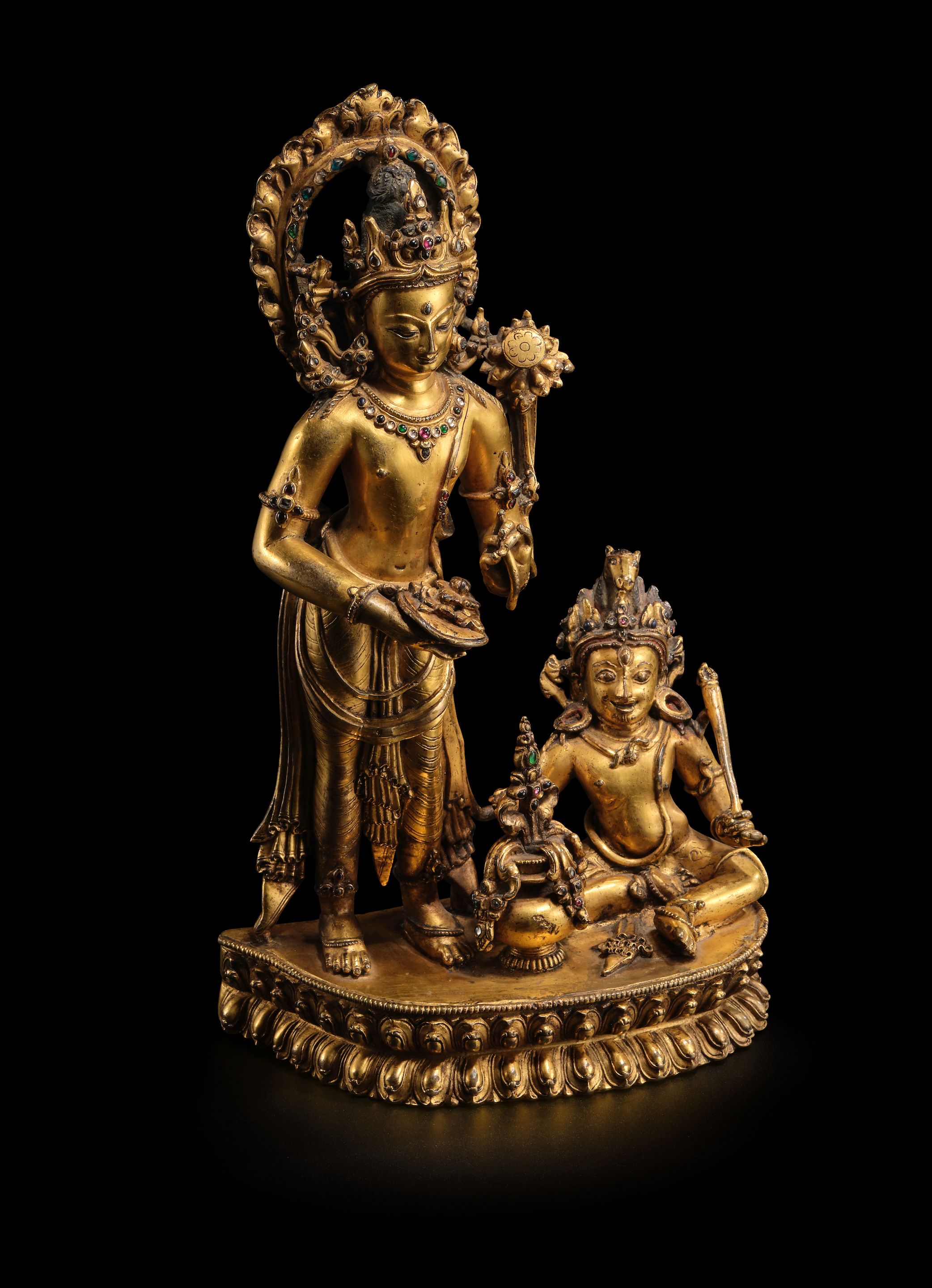
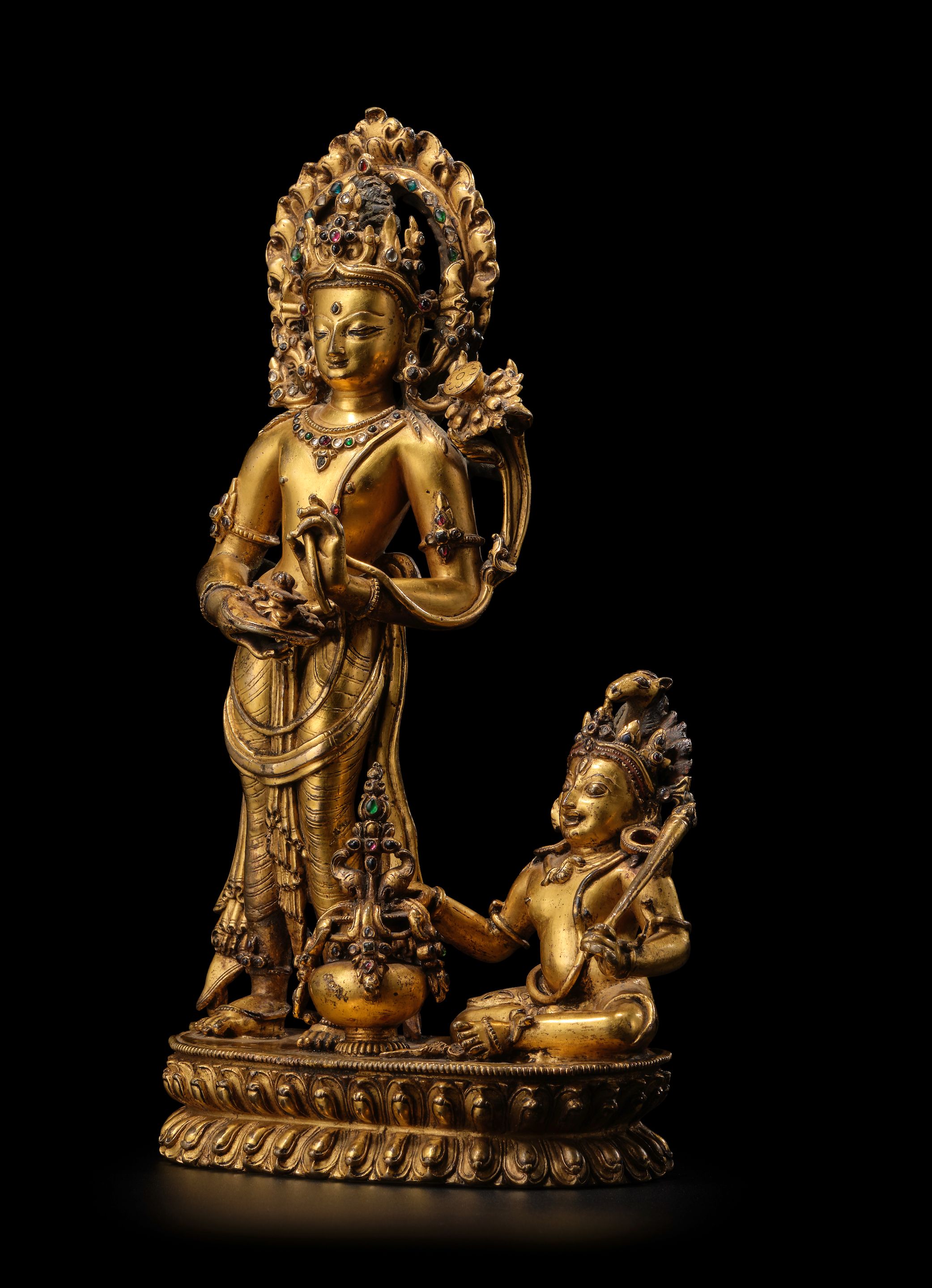
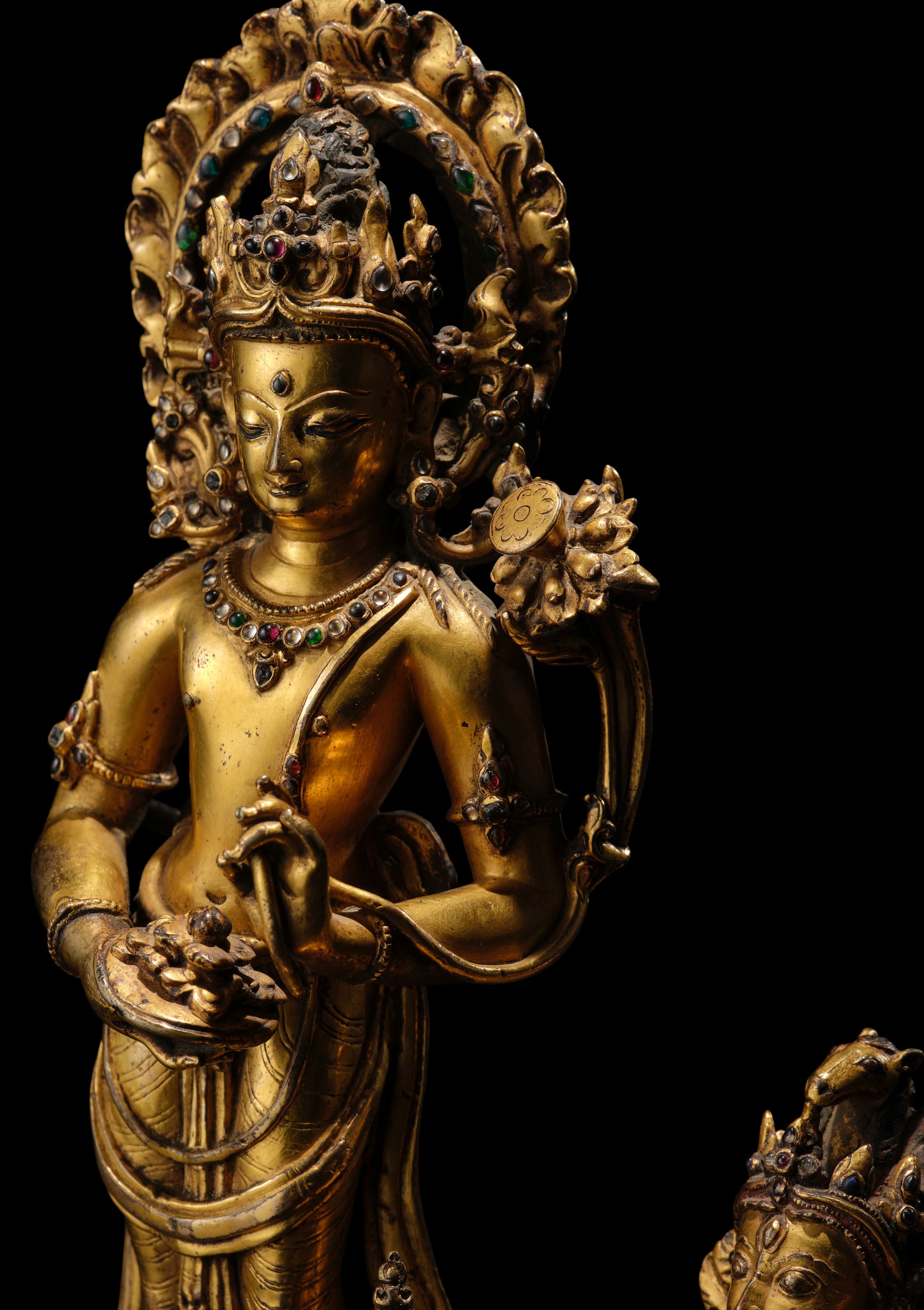
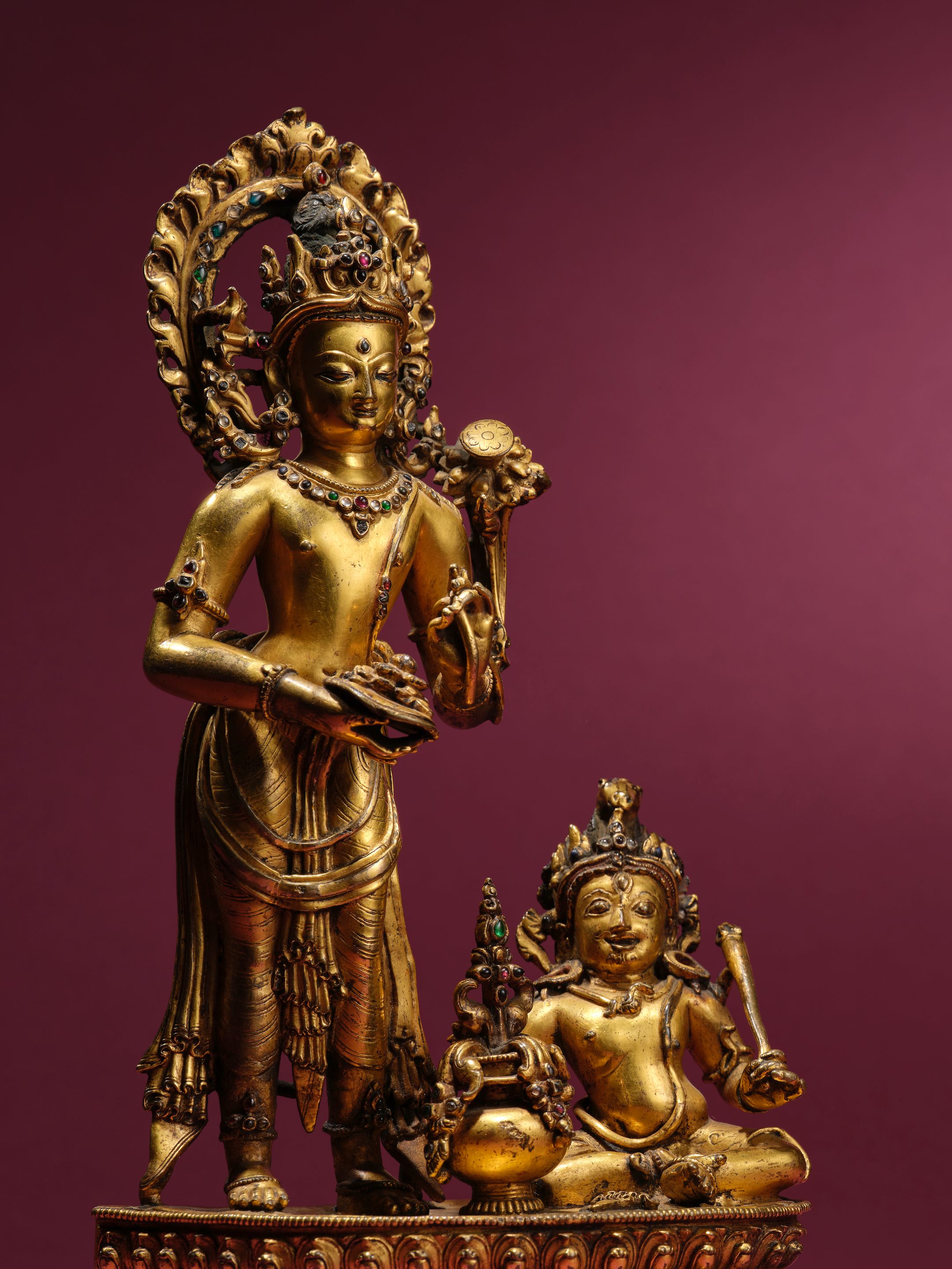
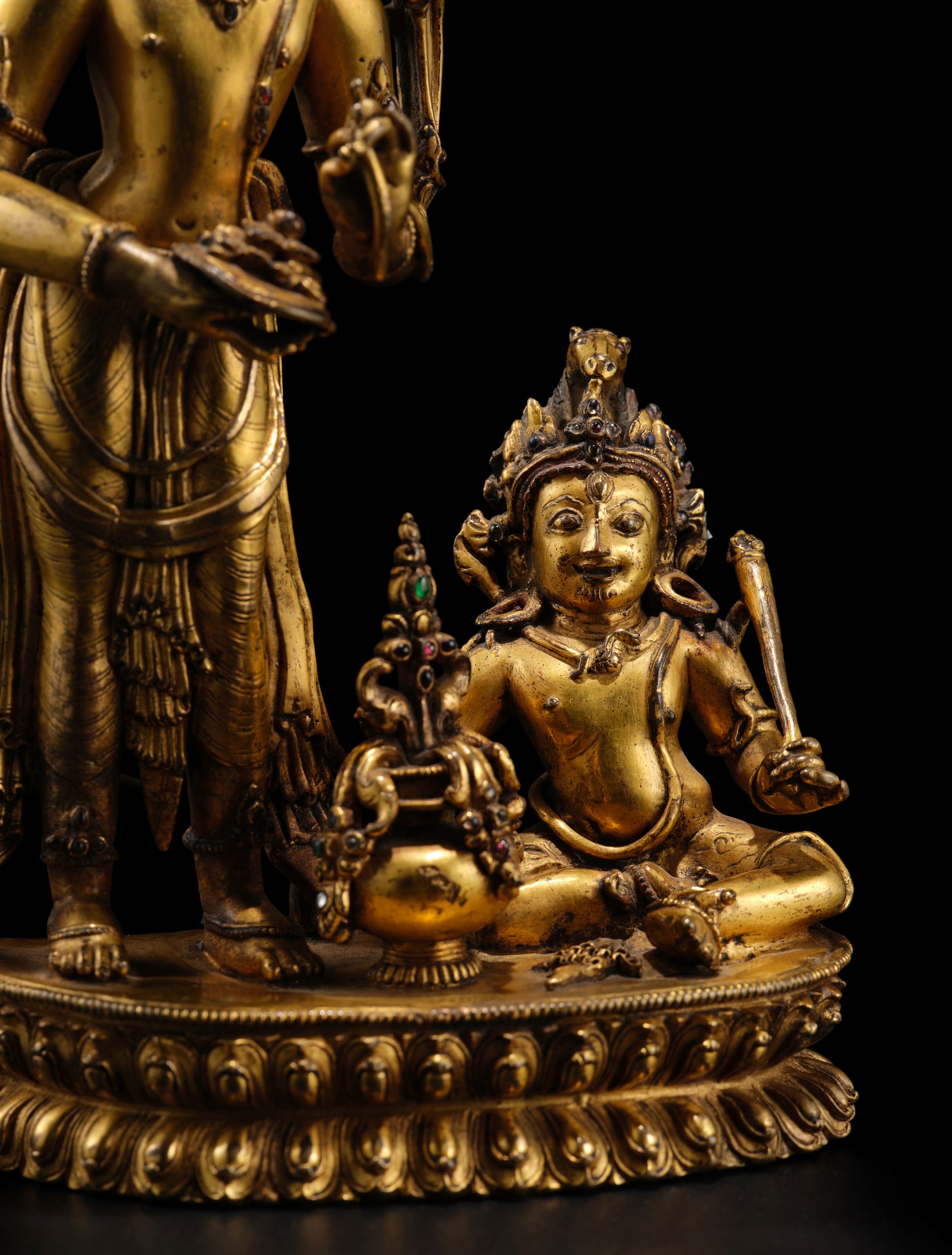
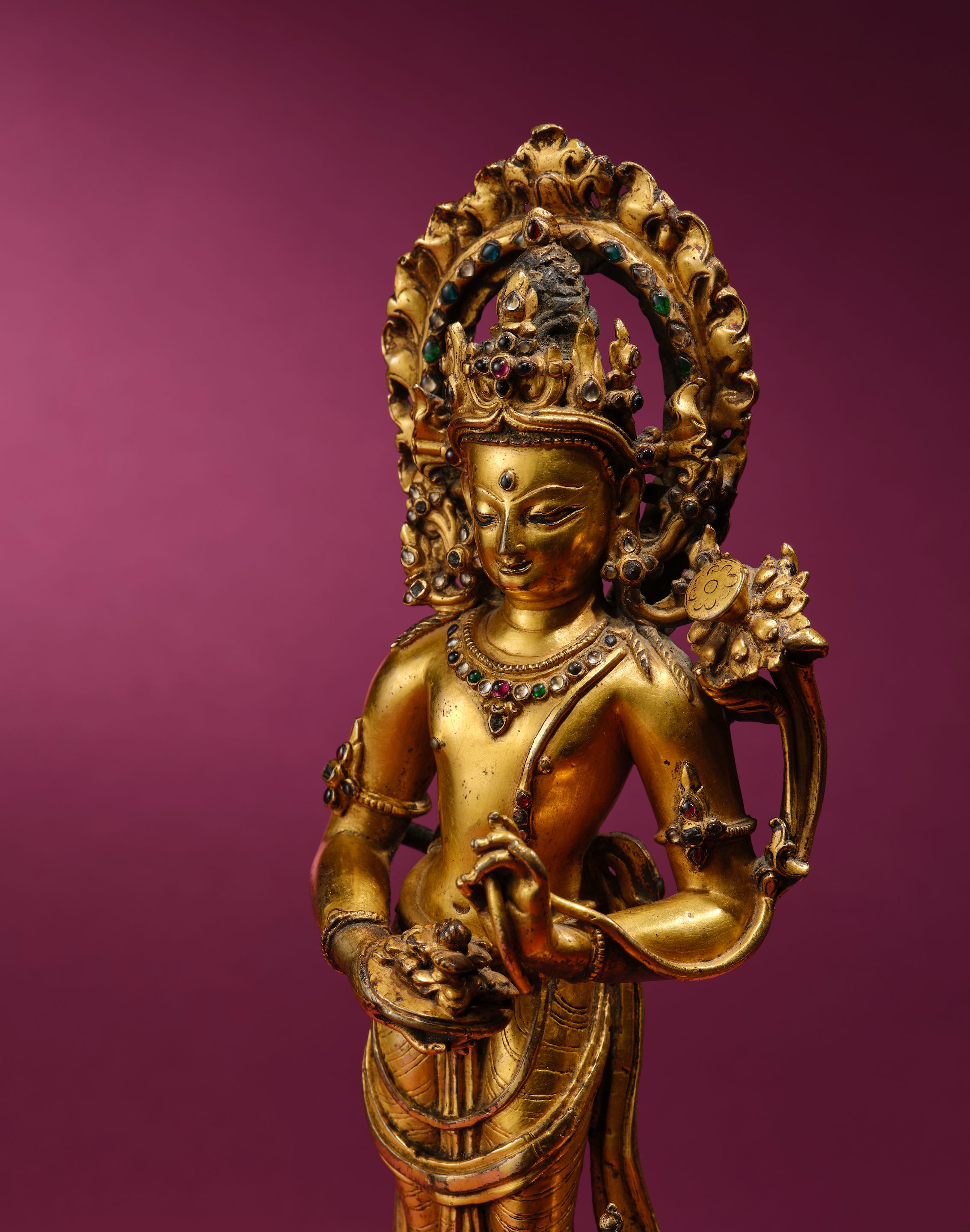 A GILT COPPER ALLOY FIGURE OF PADMAPANI LOKESHVARA AND HAYAGRIVA
CENTRAL TIBET, DENSATIL MONASTERY, CIRCA 1267
Himalayan Art Resources item no. 2804
铜鎏金莲华手观音及马头明王像
藏中 丹萨替 约1267年
著录 :
Meinrad Maria Grewenig 及 Eberhard Rist 編,《Buddha:2000 Years of Buddhist Art,232 Masterpieces》,弗爾克林根,2016年,頁328-9,編號137
展览 :
「 Buddha:2000 Years of Buddhist Art,232 Masterpieces 」,弗爾克林根,2016年6月24日至2017年2月19日
來源:
Bodhicitta Inc.,紐約,2007年
此铜鎏金像为拍卖市场上出现过的最为精美的丹萨替造像之一。大慈大悲的观世音菩萨与其随侍马头明王共立同一莲台,两者之间为一吉祥宝瓶。观世音菩萨以柔美的三折姿站立,手持莲花,另一朵莲花则绽放于左肩。马头明王盘腿安坐于观音身侧,大腹便便,面容英武,神采飞扬。这提醒观者:在密宗语境中,忿怒尊并非凶神恶煞,而是神圣佛教护法的无上力量与无尽慈悲。
此像与尼泊尔造像传统紧密相连,佐证了闻名遐迩的尼瓦尔艺术家曾参与丹萨替寺第一座辉煌的吉祥多门塔“Tashi Gomang”的伟大营造。丹萨替大殿中,八座佛塔巍然矗立,每塔皆有逾2000尊鎏金佛像,成为西藏史上最恢弘的艺术奇迹之一。此尊造像生动呈现了壮观无比的丹萨替吉祥多门塔独特而富有魅力的深奥图像,以及以近乎完美的品相流传至今的登峰造极的造像工艺。
1208年,尼瓦尔艺术家应直贡寺创建者吉天颂恭仁钦贝(1143-1217年)之邀前来,领导西藏第一座吉祥多门塔的建造。仁钦贝亦为丹萨替寺创寺祖师之一,他将重任委托给尼瓦尔大师摩尼跋陀罗,督造一座金光灿然的圣山,幻现密宗本尊胜乐金刚之坛城如天宫,环绕于2800尊神祇之中(Proser及Czaja编,《Golden Visions of Densatil》,2014年,页29)。此像展现尼泊尔造像的诸多特征:由红铜合金铸造并施以厚厚鎏金,各色宝石镶嵌于珠宝饰物之上,人物身形柔美、优雅玲珑,正是尼泊尔造像为人喜爱的曼妙灵动。纽约鲁宾艺术博物馆藏一尊十三世纪尼泊尔观音立像(图1),与此尊相近之处令人赞叹,身形塑造、珠宝及堆褶天衣皆如出一辙。另有一尊大致同时期的四臂观音像,为卡萨马拉统治者而造——他们正是尼瓦尔以及丹萨替寺重要的供养人(图2;邦瀚斯,纽约,2015年3月16日,拍品5)。此拍品及其相似铜像共同呈现了无比精湛的尼瓦尔工艺。显而易见,尼瓦尔人应确于1267年再次受邀为藏地兴建吉祥多门塔——此次是为丹萨替所造。
Estournel认为可归为丹萨替第一座吉祥多门塔的其他造像与此拍品紧密相关(见Estournel,“About the 18 Stupas and Other Treasures Once at the Densatil Monastery”,asianart.com,2020年)。例如,两尊不动明王像底座之莲瓣、珠宝及人物身形均遵循相同风格,显然出自同一工坊。其中一尊藏于苏黎世瑞特堡博物馆(图3),另一尊位于西藏拉萨布达拉宫(见von Schroeder,《Buddhist Sculptures in Tibet》,卷二,2001年,页1038,编号259A;或Estournel之文章,2020年,图34)。另可参阅一尊亚洲私人收藏中的金刚鏁菩萨像(Estournel,2020年,图5)。此外,Robert H. Blumenfield珍藏中有一尊精美且极为相似的菩萨立像,应与这对观音与马头明王像曾立于同一灵塔之上(图4;此造像于2017年6月13日由苏黎世Koller拍出,拍品127)。
马头明王憨态可掬,如矮小的精灵,活灵活现。将马头明王与观音并列而造,是丹萨替寺独有的图像学创造之一例证。这一样式与早期印度记载相符,而马头明王于七世纪中期前便已成为密宗中的一位本尊(Buswell及Lopez,《The Princeton Dictionary of Buddhism》,2014年,页1179)。马头明王最终成为重要的观想本尊,因而在绝大多数西藏艺术中呈现为摄人心魄的忿怒相神祇。这尊造像也成为对这一主题的独特而和谐的呈现,无比珍罕。
藏传佛教神祇的艺术形象之创造几乎皆依循某一具体文本典范,然而丹萨替的吉祥多门塔却独一无二地依一位创寺祖师的观想愿景而兴造。在直贡寺,吉天颂恭仁钦贝愿将尊师帕木竹巴(1110-1170年)之圣物安置于辉煌的胜乐金刚坛城之顶。这座宏伟构造的多重神祇体系呈现诸多大乘佛教及金刚乘佛教之传承,除此语境外或不会如此相邻而列,构成被描述为“坛城之坛城”的吉祥多门塔。最终,八座灵塔实现了仁钦贝的初始构想。
一份十三世纪时对直贡与丹萨替吉祥多门塔的记述,令此尊造像的题材以及在灵塔的原本位置得以清晰确知。此旧档描述观音手持纯净莲花,而马头明王手持短杖(Czaja,《Medieval Rule in Tibet》,2013年,卷一,页527)。此造像原应位于吉祥多门塔面西之第四层,自左侧烘托中央佛陀像。第四层造像再现八大菩萨之天宫眷属,每一尊皆有随侍,分别位于四面中央佛陀的两侧身旁。
可能与此尊造像同出自第一座吉祥多门塔此层的例子,包括一尊除盖障菩萨与欲帝明王造像,以及另一尊金刚手菩萨与不动明王造像(分别为西泠印社拍卖,杭州,2016年12月17日,拍品3800,以及喜马拉雅艺术资源网23151号)。此尊Speelman珍藏之观音与马头明王像无比珍罕,身形展现出鲜有可比的柔美风格,硕大宝瓶亦华丽细致。上述三尊造像所展现的工艺水准,更胜于丹萨替寺此后一百五十年间其他灵塔的菩萨与胁侍造像(可参考金申,《智慧无限:合缘堂藏金铜佛像》,2011年,编号144-7;黄春和,《西藏丹萨替寺历史研究》,北京,2016年,页167及385;Estournel,2020年,图27、73、108、277及322-4;或喜马拉雅艺术资源网8717、44480、49410及56989)。
This gilded sculpture is one of the finest Densatil bronzes ever appearing at auction. The Great Bodhisattva of Compassion, Avalokiteshvara, and his attendant Hayagriva share a lotus base with an auspicious vase-of-plenty (purna kalasha) placed between them. Avalokiteshvara stands in a sinuous, thrice-bent pose (tribhangha), holding a container housing a lotus flower, while another blooms by his left shoulder. Horse-headed Hayagriva sits cross-legged beside him with a pot belly and a plucky countenance, reminding us that in a Tantric context, wrathful imagery is not meant to represent anything malign but to express the invincible power and compassion of Buddhism's divine guardians.
Bearing close affinity to Nepalese sculpture, the bronze is testament to the involvement of renowned Newari artists in producing the first of Densatil monastery's glorious tashi gomang monuments. Housing eight such stupas, each a towering sculptural ensemble of more than 2,000 gilded deities, Densatil's central hall was one of the tremendous artistic wonders of Tibet. The present sculpture exemplifies these monuments' unique and fascinating iconography and the highest quality of sculptural production for Densatil, surviving in near-pristine condition.
Newari artisans headed the creation of Tibet's first tashi gomang stupa in 1208 upon being invited to Drigung monastery by its founder, Jigten Sumgon Rinchen Pel (1143-1217), who also co-founded Densatil. Rinchen Pel tasked the Newar master, Manibhadra, with supervising the construction of his shimmering vision of a sacred mountain wherein the Tantric deity Chakrasamvara presided over a heavenly palace surrounded by a retinue of 2,800 deities (Proser & Czaja (eds.), Golden Visions of Densatil, 2014, p. 29). The figure exhibits many traits of sculpture from Nepal. It is cast in copper alloy and richly gilded. The finely wrought jewelry is inset with gems. The bodies are delicate, with diminutive proportions and elegant, sensuous poses for which the sculpture of Nepal is renowned. A 13th-century Nepalese masterpiece of Standing Avalokiteshvara in the Rubin Museum of Art, New York (fig. 1), offers compelling similarities with its figural modeling, jewelry, and pleated garments. See also a roughly contemporaneous sculpture of Shadakshari Lokeshvara produced for Khasa Malla rulers, who were important patrons of Newari artisans and Densatil at this time (fig. 2; Bonhams, New York, 16 March 2015, lot 5). It is clear from these hallmarks of exquisite craftsmanship in the present bronze and others like it that the Newars were called upon once again to construct the first tashi gomang stupa at Densatil in 1267.
Other sculptures attributed by Estournel to Densatil's first tashi gomang are closely related to the present bronze (see Estournel, “About the 18 Stupas and Other Treasures Once at the Densatil Monastery”, in asianart.com, 2020). For example, two gilded figures of Acala share the same type of lotus petals, jewelry, and figural modeling, clearly indicating the same workshop made them. The first is in the Rietberg Museum, Zurich (fig. 3). The second is in the Potala Palace Collection, Lhasa (see von Schroeder, Buddhist Sculptures in Tibet, Vol. II, 2001, p. 1038, no. 259A or Estournel, 2020, fig. 34). Also, see a figure of Vajrasphota in a private Asian collection (Estournel, 2020, fig. 5). Finally, another refined and closely related standing bodhisattva, sold at Koller Auction, Zürich, 13 June 2017, lot 127 and now in the Robert H. Blumenfield Collection (fig. 4) would have resided on the same monument as this Avalokiteshvara and Hayagriva pairing.
Hayagriva's delightful appearance as a cheery dwarf-like nature spirit (yaksha) accompanying Avalokiteshvara is an example of Densatil's unique iconographic program. The subject conforms to the earliest Indian depictions of the deity before Hayagriva was transformed into a central tantric deity in his own right by the mid-7th century (Buswell & Lopez, The Princeton Dictionary of Buddhism, 2014, p. 1179). Eventually becoming a meditational deity (yidam), in most other cases in Tibetan art, Hayagriva appears as a terrifying wrathful deity. Thus, this sculpture provides a scarce opportunity to collect a uniquely harmonious rendition of this key subject.
Whereas particular texts informed most artistic renditions of Tibetan Buddhist deities, Densatil's tashi gomang stupas were uniquely inspired by a vision of one of the monastery's founders. At his own Drigung monastery, Jigten Sumgon Rinchen Pel wanted to place the reliquary of his beloved teacher, Phagmodrupa (1110-70 CE), on top of the glorious spectacle of Chakrasamvara's celestial abode. The monument's multitude of deities drew on many Mahayana and Vajrayana traditions, which otherwise might not appear alongside one another; it has been described as a 'mandala of mandalas.' The eight tashi gomang of Densatil followed Rinchen Pel's initial model.
An early 13th-century text charting the iconography of Drigung and Densatil's tashi gomang allows for a concrete identification of this bronze's subject and its original location on the monument. The text describes Avalokiteshvara as “holding a pure lotus in the hand” while Mahakrodha Sri Hayagriva holds a stick (after Czaja, Medieval Rule in Tibet, 2013, vol. 1, p. 527). The sculpture would have flanked the left side of a central Buddha positioned on the western face of the stupa's fourth tier. The fourth tier depicted a celestial host headlined by the Eight Great Bodhisattvas, each joined by an attendant, on either side of four central Buddhas in each cardinal direction.
Other bronzes, depicting Bodhisattva Nivaranaviskambhin with Takkiraja and Vajrapani with Acala, likely joined the present sculpture on the same tier of Densatil's first tashi gomang (see 西泠印社拍賣 [Xiling Seal Society Auction Co.], Hangzhou, 17 December 2016, lot 3800 and HAR 23151, respectively). The present sculpture is the most prized, having more sensuous figural modeling and its remaining intricately cast vase-of-plenty. Meanwhile, all three compare favorably to several other bodhisattva-with-attendant pairings known from Densatil's other tashi gomang stupas produced over 150 years approximately (see Jin Shen, Eternal Wisdom: Collection of Gilt-Bronze Buddhist Sculptures from the Hall of Harmony, 2011, nos. 144-7; Huang Chunhe, Studies on History of gDan-sa-mthil Monastery of Tibet, Beijing, 2016, pp. 167 & 385; and Estournel, 2020, figs. 27, 73, 108, 277 & 322-4; or HAR 8717, 44480, 49410 & 56989).

