
侧边栏

14世纪日本绘画六臂如意轮观音菩萨坐像(奈良国立博物馆)
尺寸:H 101.7, W 41.6
年代:14世纪
质地:挂轴;绢本设色
风格:日本
来源:奈良国立博物馆
参阅:外部链接
鉴赏:
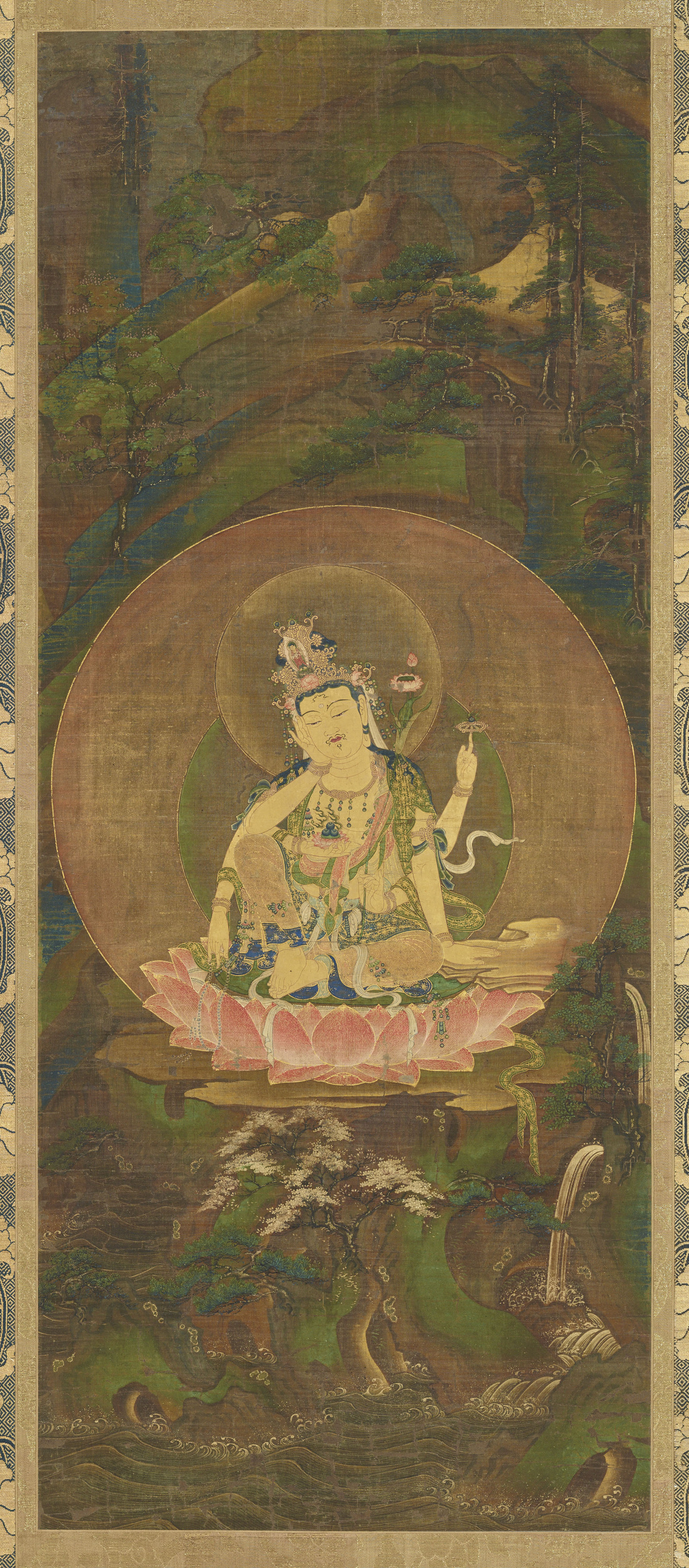 Nyoirin Kannon (Cintāmaṇicakra)
The abode of the bodhisattva Kannon (Skt. Avalokiteśvara) is a mountainous island, Mount Fudaraku (Skt. Potalaka). Here, an emanation of Kannon appears seated within this abode, the six-armed deity Nyoirin Kannon (Skt. Cintāmaṇicakra). The six arms are believed to symbolize the bodhisattva’s power to rescue sentient beings from each of the Six Realms, the worlds into which one can be reborn after death. Mount Fudaraku is replete with pine trees and cherry blossoms: a landscape of familiar beauty.
Buddhist Art Paradise: Jewels of the Nara National Museum. Nara National Museum, 2021.7, p.343, no.99.
观音菩萨的居所为补陀落山,此山乃海中仙峰。此处所现观音化身形相,即六臂如意轮观音。六臂象征菩萨救度六道众生之悲力。补陀落山上松樱繁茂,风光旖旎,令人心生亲切。
——《佛教美术 paradise:奈良国立博物馆珍宝展》,奈良国立博物馆,2021年7月,第343页,第99号
This is a common figure of Nyoirin-kannon (Cintāmaṇicakra) with a golden body and six arms as introduced in the Kanjizai Nyoirin-bosatsu Yuga-hō-yō sutra (Guanzizai Ruyilun-pusa Yuqie-fayao). The posture of the image—touching the cheek with its first right hand is based on the iconography of the Kannon-in section of the Taizō-kai (Garbhadhātu or womb) Mandala. This Nyoirin-kannon is sitting with one knee drawn up on the elegant and graceful lotus seat which is decorated with gold lines. The whole figure is placed within the circumference of the disk of the moon. The body is painted in gold and outlined in red. The garment and ornaments are beautifully colored, and several kinds of designs such as Tatewaku, Kōshi-checkered pattern, and Manji-tsunagi pattern were added in cut-gold foil rendering, which contributes to the gorgeousness of this scroll. This gorgeous decoration is one of the characteristics of this painting. In the background, the Sanctuary of Mt. Fudaraku (Potalaka), which is rising up from the sea, is depicted together with seasonal objects in the manner of the Yamato-e painting style. Mountain folds were described with soft brush strokes in ink, and green was added between the ink lines. Gold pigment was also added at some places. Tree trunks and leaves of pine trees and cherry trees on the mountain were painted colorfully. Cherry blossoms are painted on top-view and colored white. It is unconventional to adopt such grand natural views to Buddhist paintings.
Masterpieces of Nara National Museum. Nara National Museum, 1993, p.59, no.42.
本图为常见的如意轮观音像,据《观自在如意轮菩萨瑜伽法要》所载,呈六臂金身。右第一臂作思惟相,其样式源自胎藏界曼荼罗观音院之图像。菩萨坐于典雅秀丽的莲华座上,一膝半跏,莲座以金线纹饰庄严。整体像容安置于月轮之中,身施金泥,以朱线勾勒轮廓。衣饰色彩华美,施以立涌、格子纹、万字繋等各式纹样的截金箔,使此幅挂轴更显绚烂。此种华美装饰为本作特色之一。背景以海中山岛补陀落净土的景观为主题,采用大和绘技法描绘四季景物。山峦以柔和墨线勾勒皴法,墨线间施以绿彩,部分点缀金泥。山上松樱之树干与叶片敷色艳丽,樱花以俯瞰视角描绘,施以白彩。于佛画中融入如此宏大之自然景致,实属罕见。
《奈良国立博物馆名品选》,奈良国立博物馆,1993年,第59页,第42号。

